Keeping Garage Doors Running Through Loveland Winters
Loveland homes mostly date to the 2000s and face severe cold winters - here's what that means for your garage door, how long repairs take, and what they cost.
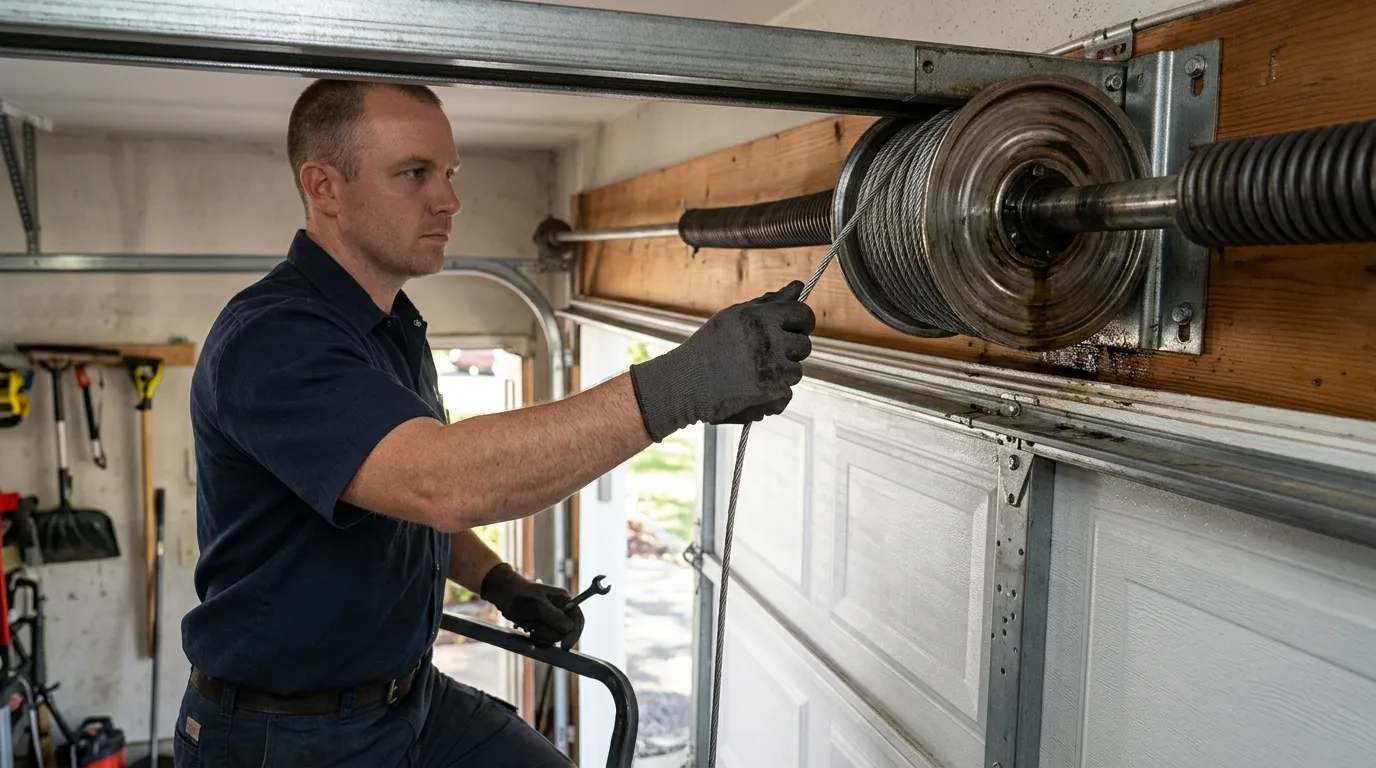
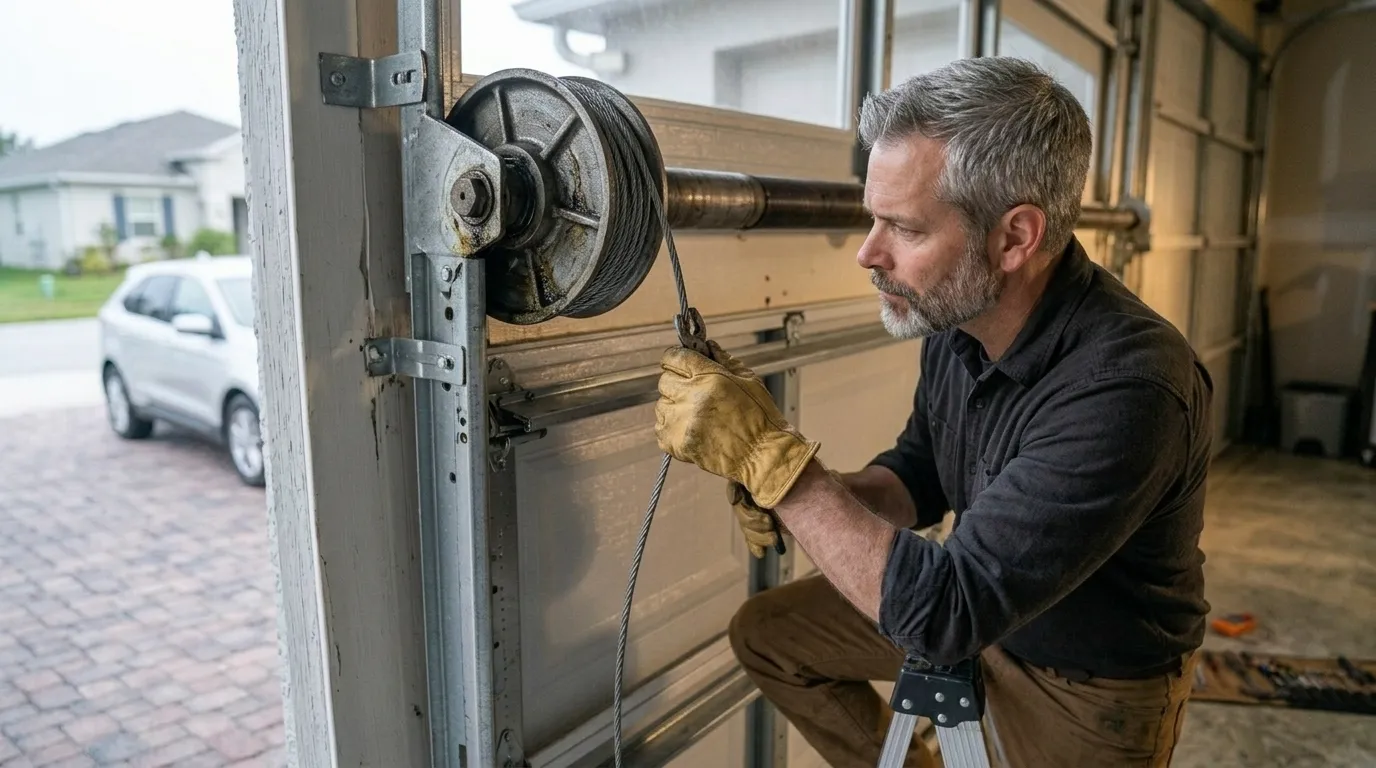
Most calls we get start the same way: the door hesitates, reverses on its own, or the opener runs but the door barely lifts. In a lot of Loveland neighborhoods, that's a torsion spring giving out on a door that's been in service since the house was built - and across this service area, most houses went up between 1975 and 2012, with the median right around 2003. That means a big share of the springs, cables, and rollers out there are original equipment pushing twenty years old.
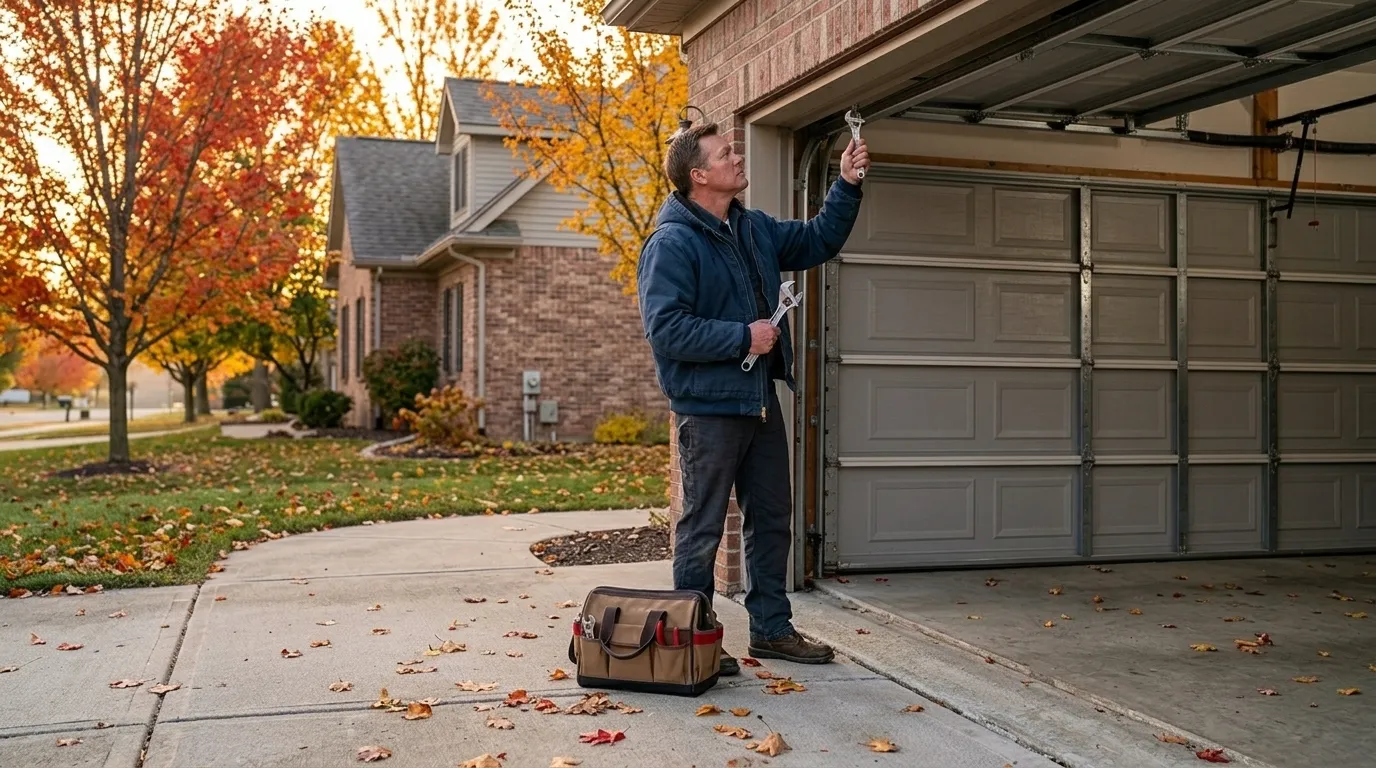
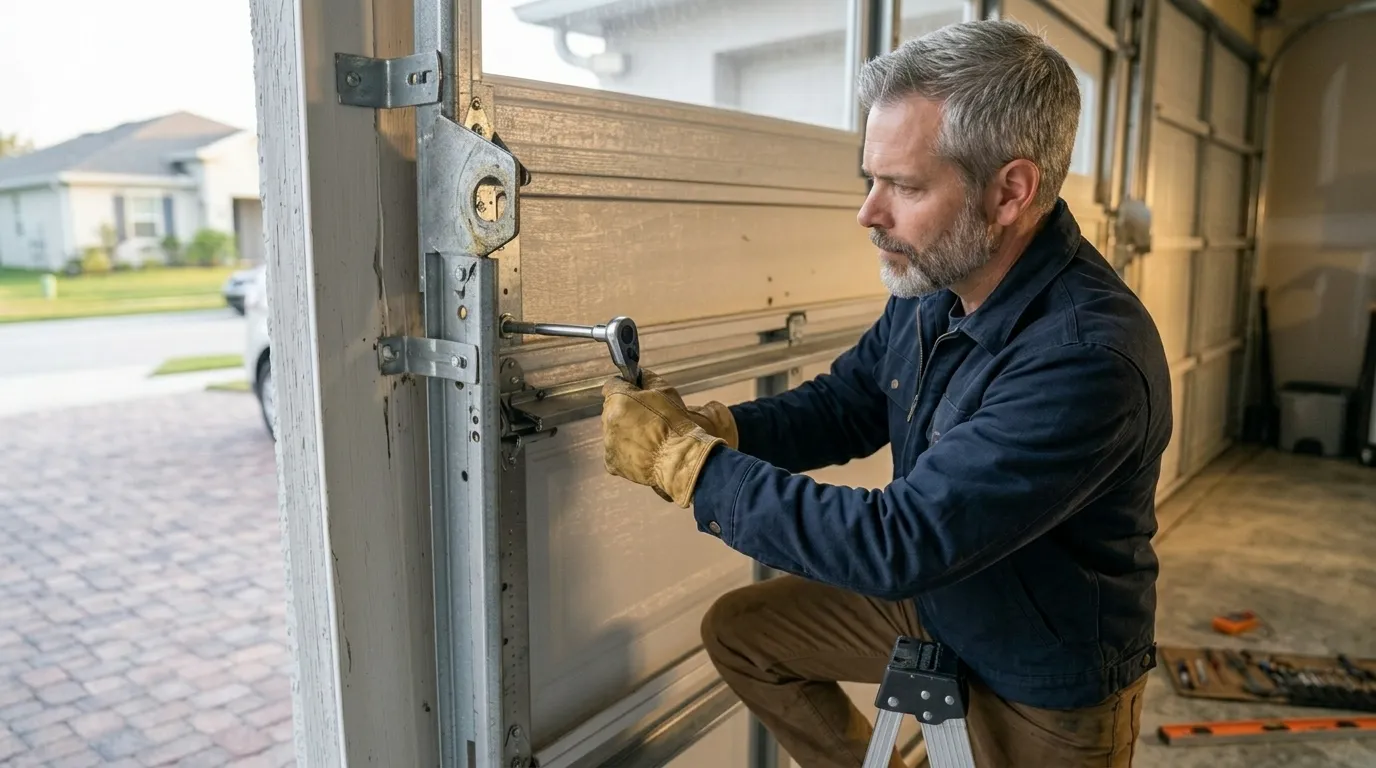
Sometimes it's simpler than a spring: a track knocked out of alignment, a bottom roller worn through its bracket, or a sensor that's gotten dirty enough to stop seeing the beam. On steel doors from that early-2000s build wave, we also see bottom panels starting to flex or rust at the seam where the weatherstrip channel holds moisture. None of these are emergencies you need to guess about - if the door won't move, or it moves and drops, stop using the opener and call before you force it. Forcing a stuck door is how a bent track becomes a bent track and a cracked panel.
How Long It Takes
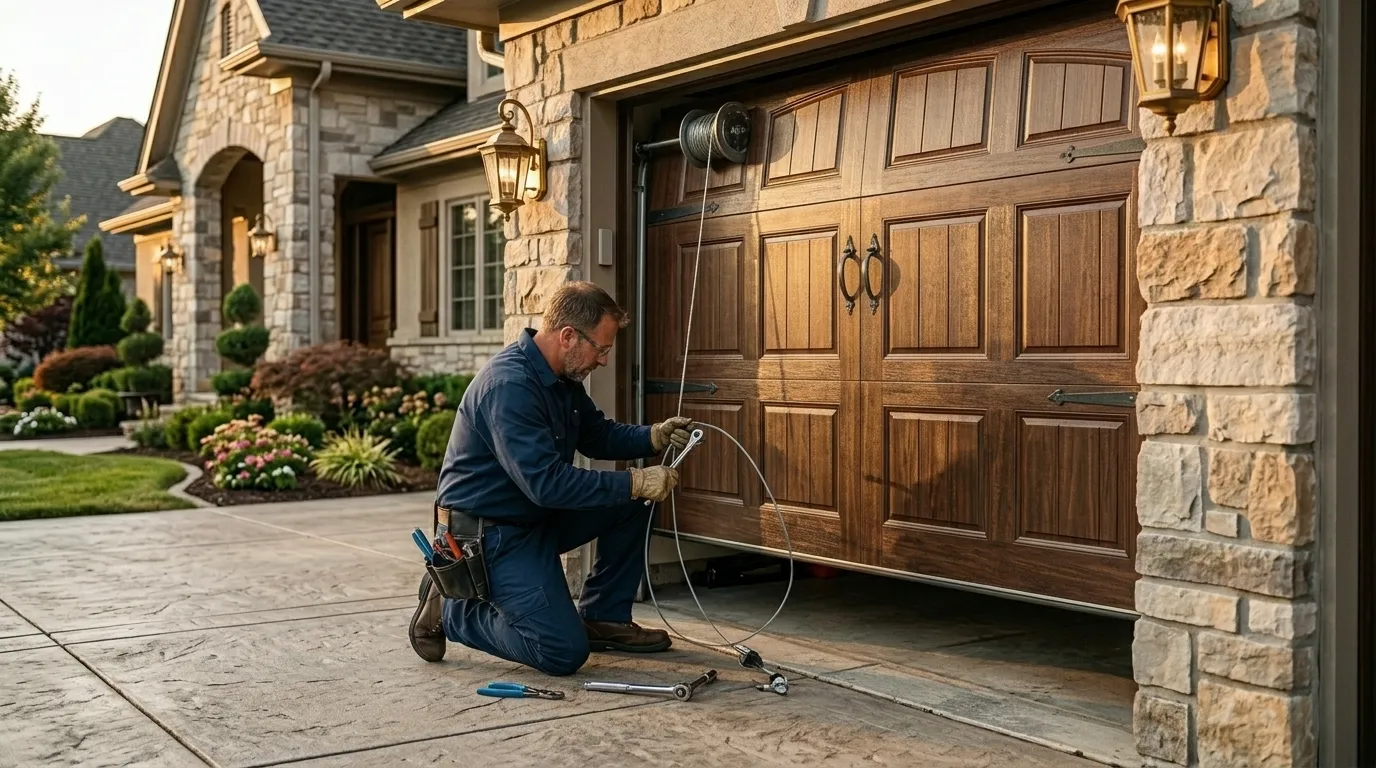
A straightforward spring replacement or roller swap is usually a same-visit job - we bring the sizes that fit the torsion hardware common on 2000s-era production doors, since that's what most of Loveland's housing stock is running. Track realignment and sensor work go quicker still.
Where it stretches out is parts. If a panel's damaged or an opener board has failed on an older unit, we may need to order the specific part, and that can add days rather than hours - we'll tell you straight when that's the case instead of guessing at a date. We won't quote a turnaround we can't back up, and if a job needs a special-order panel, we say so up front rather than promising a same-day fix we can't deliver.
Why It Happens Here
Two things drive most of the service calls in this area: the age of the housing stock and the winters. With most homes built between 1975 and 2012 and heavily concentrated in the 2000s, a large number of torsion springs and openers are simply reaching the end of their working life at the same time, across the same subdivisions built in the same few years.
The climate does the rest. This area sits in a severe cold band, and cold steel contracts - springs lose tension faster, nylon rollers get brittle, and grease in old bearings thickens up right when the door has to work hardest lifting against a stiff, cold spring. We see the pattern spike every winter: doors that ran fine in September start binding, groaning, or refusing to fully close once temperatures drop and stay down. It's not bad luck. It's a 20-year-old spring meeting a Colorado winter.
The Cost of This Job
We don't publish a flat number here because the job varies - a roller or sensor fix costs a lot less than a full spring and cable replacement on a heavier insulated door. What we can tell you: this is a market where the median household income runs $108,721 and the great majority of the roughly 37,006 owner-occupied houses in the area are the kind of single-family homes with an attached garage and a torsion-spring door, not the lighter builder-grade setups you'd find in an apartment complex. That's the housing stock we size parts for every day.
One honest limitation: if a door is old enough and beat up enough that repair costs start approaching half of replacement, we'll tell you that instead of nickel-and-diming a door that's better off swapped. We'd rather lose the repair invoice than have you pay twice.
How it works
From “it’s stuck” to “it’s fixed”
1
Tell us what’s wrong
Describe the symptom - won’t open, loud bang, opener runs but the door won’t move.
2
On-site diagnosis
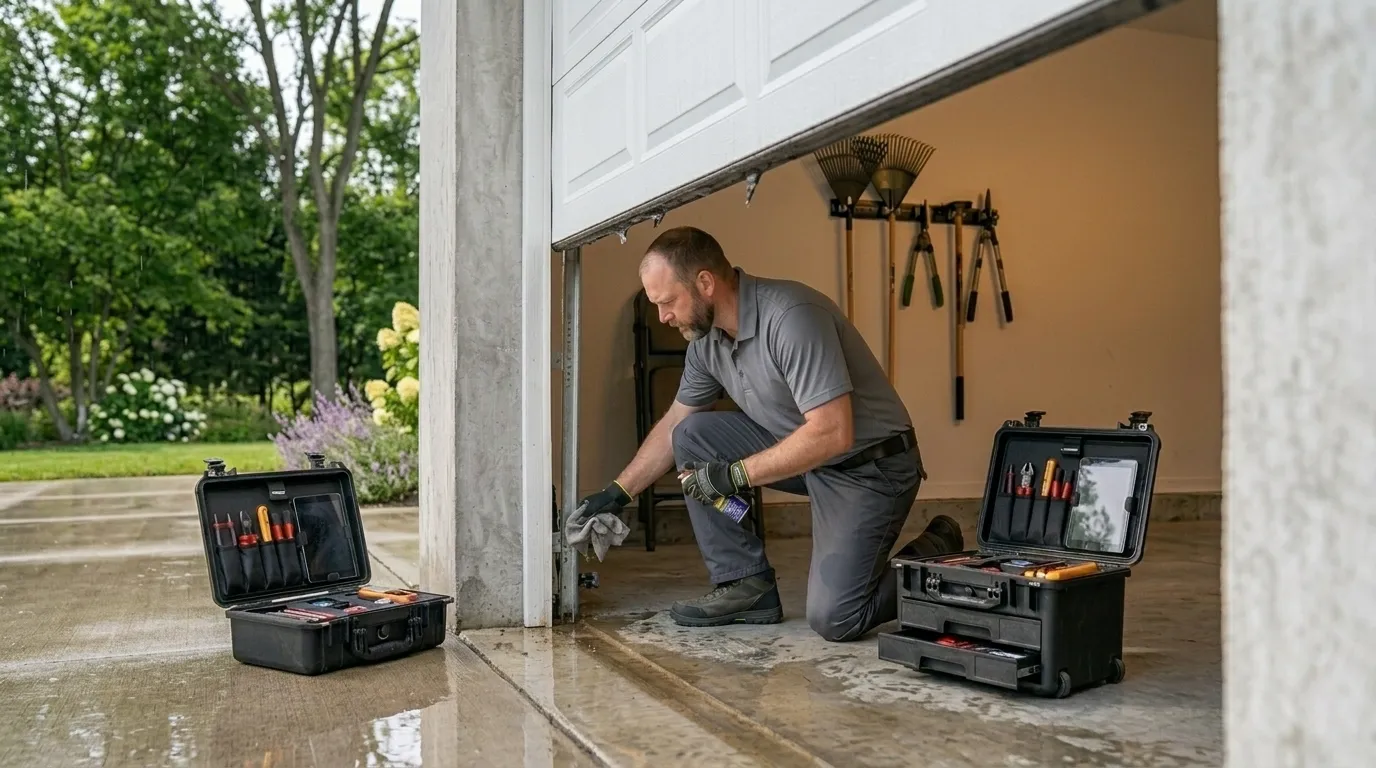
A technician tests the door under power and by hand and finds what actually failed.
3
Clear, up-front plan
You get the fix that’s needed and what drives the cost - before any work starts.
4
Repaired & tested
The repair is done, the door is set true and tested, and the work area left clean.
Serving Loveland, CO - tell us what your door’s doing and we’ll take it from there.
Why did my garage door spring break in the winter and not before?
Cold steel loses flexibility, so a torsion spring that's been slowly weakening for years often finally snaps once temperatures drop and stay down. This area sits in a severe cold climate band, and we see spring failures cluster hard in the colder months for exactly that reason.
How old does a garage door have to be before parts get hard to find?
Most homes in this service area were built between 1975 and 2012, with the bulk from the 2000s, so parts for that era are usually still stocked. Doors older than that, or with discontinued hardware, sometimes need a special order, which we'll flag before starting work.
Do you serve towns near Loveland?
Yes - we work throughout the surrounding area, including Windsor, Berthoud, Johnstown, Milliken, Severance, and nearby communities like Centerra and Kings Corner.
Is it ever cheaper to replace than repair?
Sometimes. If the springs, opener, and panels are all failing around the same time on an older door, patching each piece separately can cost more than one replacement. We'll walk you through the real numbers on your specific door rather than push one answer.
Ready to get your garage door sorted?
Tell us what it’s doing and where you are in Loveland - we’ll take it from there.