What That Sound From Your Garage Door Is Telling You
Loveland's 2000s housing stock and severe cold winters create specific garage door noises. Here's how to tell a normal sound from one that needs a call.
Most houses across this service area went up between 1975 and 2012, with the heaviest building in the 2000s - the median build year sits right around 2003. That matters for noise because it means a huge share of doors in the fourteen named areas we cover are running the same generation of hardware: steel-clad rollup doors on torsion springs, factory-lubed once and mostly left alone since. That hardware ages in a predictable way, and the noise it makes as it ages is predictable too.
Loveland also sits in a cold-severe climate band, and cold is the other half of this story. Grease that felt fine in September turns thick and gummy once temperatures drop hard, and a thickened lubricant makes rollers bind, hinges stick, and springs creak louder than they would in a mild-winter town. A door that ran quiet all summer can start groaning the first real cold snap, not because anything broke, but because the cold is exposing wear that was already there. If your house is one of the roughly 37,006 owner-occupied homes in this area built in that same 1975-2012 window, there's a decent chance your door and your neighbor's are aging on the same clock.
Checking It Yourself
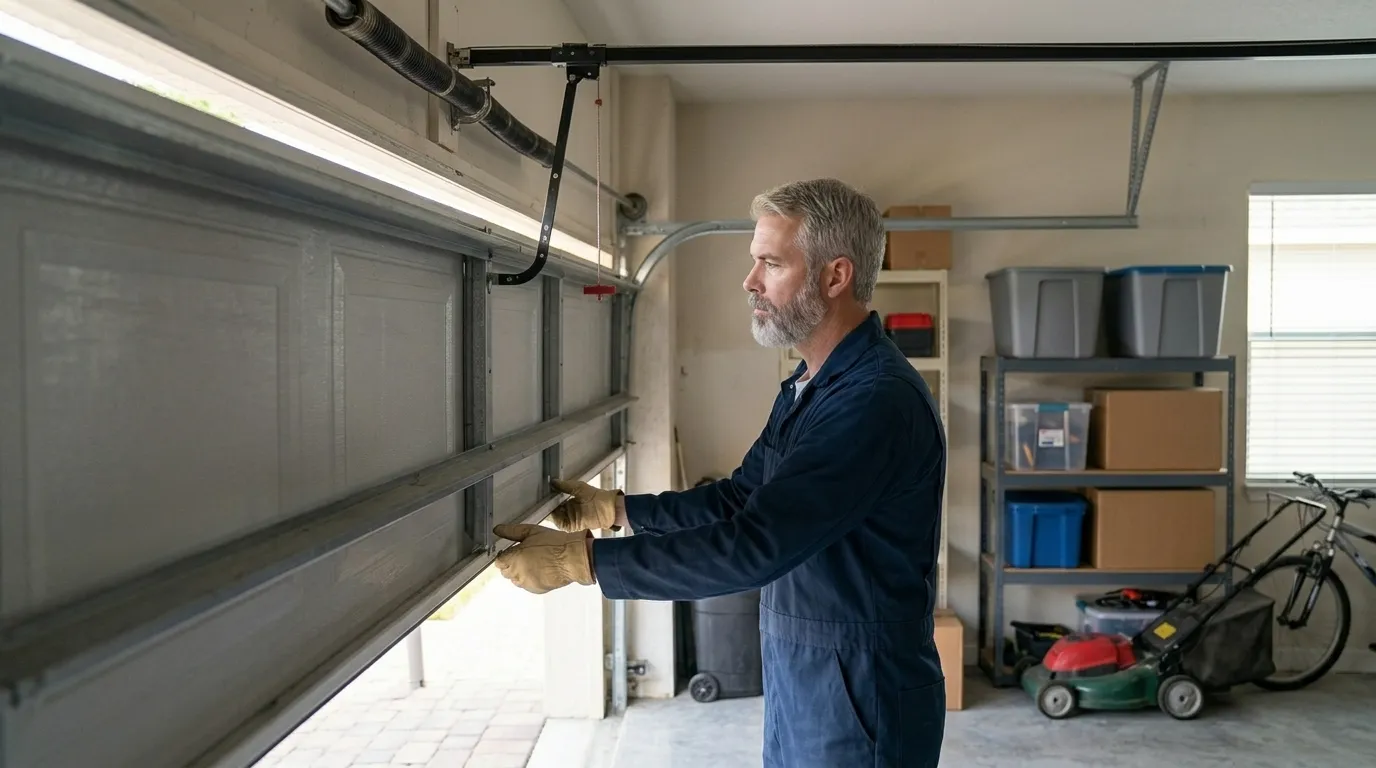
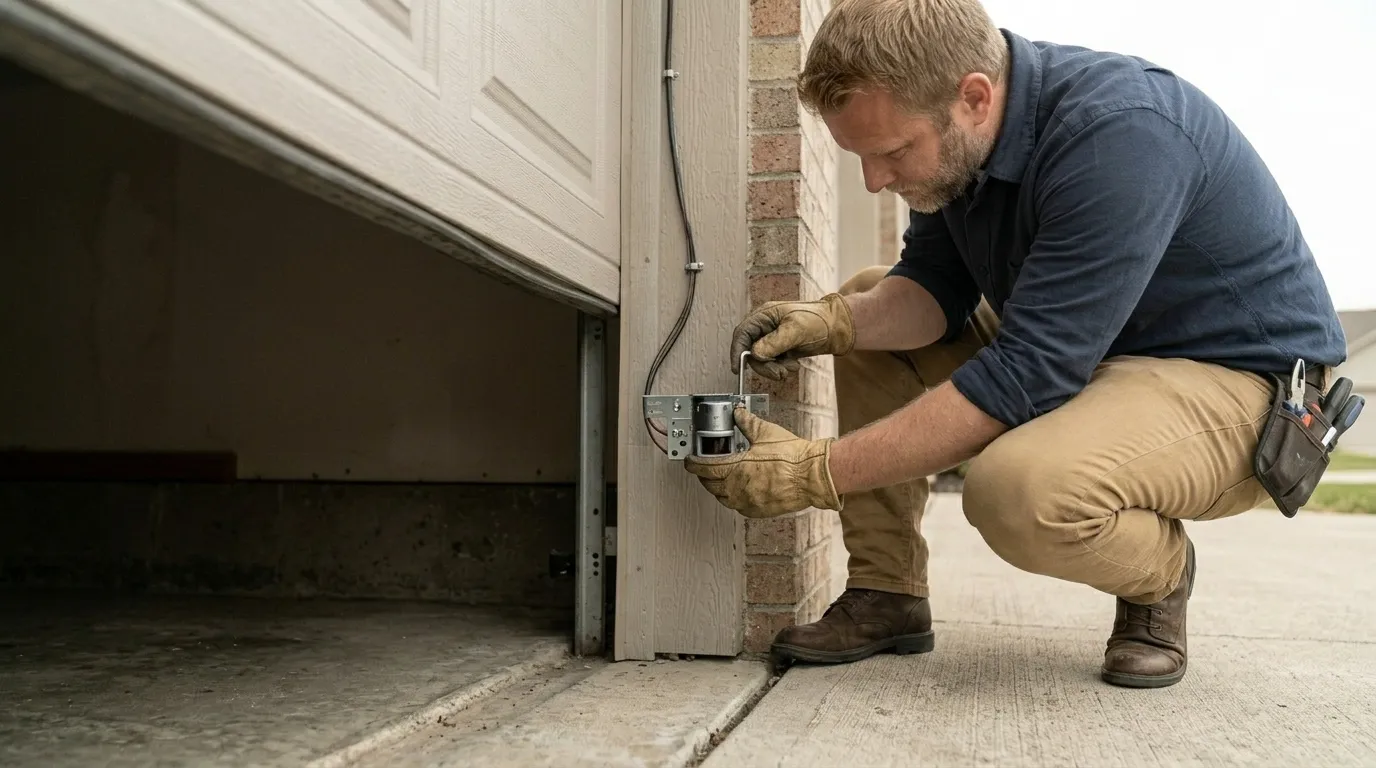
Start by watching the door move, not just listening. Stand to the side, run it up and down once, and look at the rollers as they pass through the track. If they're wobbling side to side instead of rolling straight, that's wear, and no amount of lubricant fixes a bent roller.
Next, listen for where the sound comes from. A rhythmic thump-thump every foot or so as the door travels usually means a roller has flattened out or a hinge is loose - common on doors from the 2000s build wave once the original hardware hits fifteen-plus years. A sharp metallic pop, especially right at the top of the door's travel, points to the torsion spring, and that's not a DIY fix - springs under tension can hurt you.
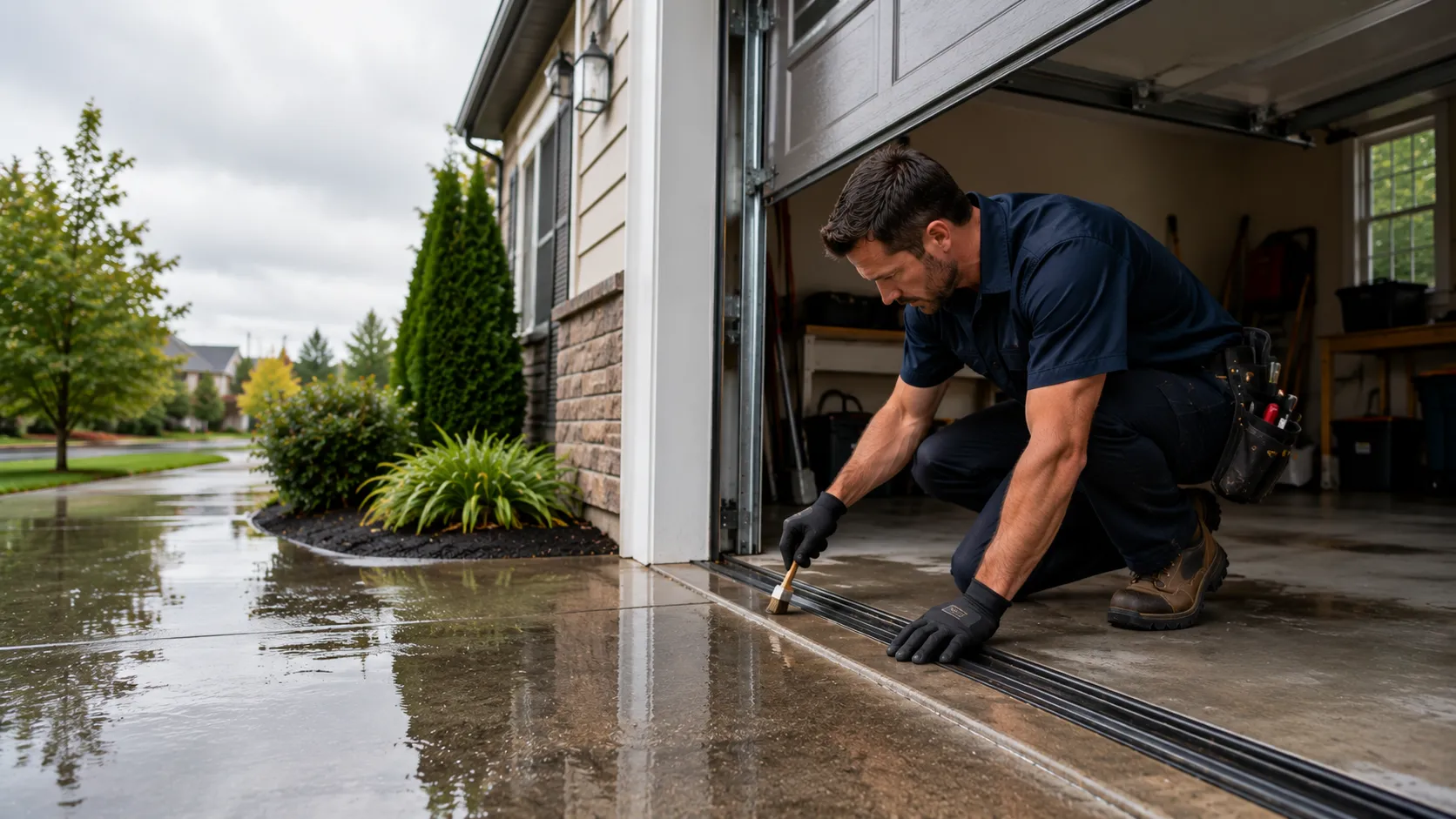
If the noise gets noticeably worse on a cold morning and quiets down by afternoon, that's the cold-thickened grease doing exactly what it does in this climate. A light garage-door-rated lubricant on the rollers and hinges (not the springs) usually knocks that down. If it doesn't change after a few days of lubricating, the noise is mechanical, not seasonal, and lubricant was never going to fix it.
Doing Nothing For Now
Not every noise means you need a truck out that week. A dry squeak on the hinges that shows up only in the first cold stretch of the season is usually just the grease catching up - lube it and move on. Same with a soft rattle from an opener chain that's a little loose; that's a five-minute tighten, not an emergency.
Here's the honest limit, though: we can't tell you over the phone whether your noise is the harmless kind or the kind that ends with a spring letting go on someone's hand. If you're not sure which category you're in, that's a reasonable thing to ask about rather than guess at. And if your door is already near the older end of that 1975-2012 build range, waiting on a spring noise specifically isn't a great bet - torsion springs have a duty cycle, and a door that's been cycling for two decades in a cold climate is closer to the end of that cycle than a newer one. Waiting on a roller noise costs you nothing. Waiting on a spring noise can cost you a trip to the ER.
What Is Going On
Put together, most of what you're hearing traces back to two things: the age of the hardware and the cold. A grinding or scraping sound as the door travels is almost always metal-on-metal where a roller has worn down to its bearing - very common once a door from that 2000s building wave passes the fifteen-year mark. A loud bang partway through the cycle is often a hinge that's cracked rather than worn, which happens faster on doors that see a lot of freeze-thaw stress on the panels.
A groan specifically at start-up, especially on a below-freezing morning, points to the torsion spring fighting cold-stiffened lubricant rather than anything broken outright - though if that groan turns into a bang, the spring has likely gone. A rattling opener with no matching door noise is usually just a loose chain or a mounting bracket working itself free over years of vibration, which is a maintenance item, not a structural one. None of this is guesswork specific to any one house - it's the pattern you'd expect from housing stock this age sitting through winters this cold, over and over.
How it works
From “it’s stuck” to “it’s fixed”
1
Tell us what’s wrong
Describe the symptom - won’t open, loud bang, opener runs but the door won’t move.
2
On-site diagnosis
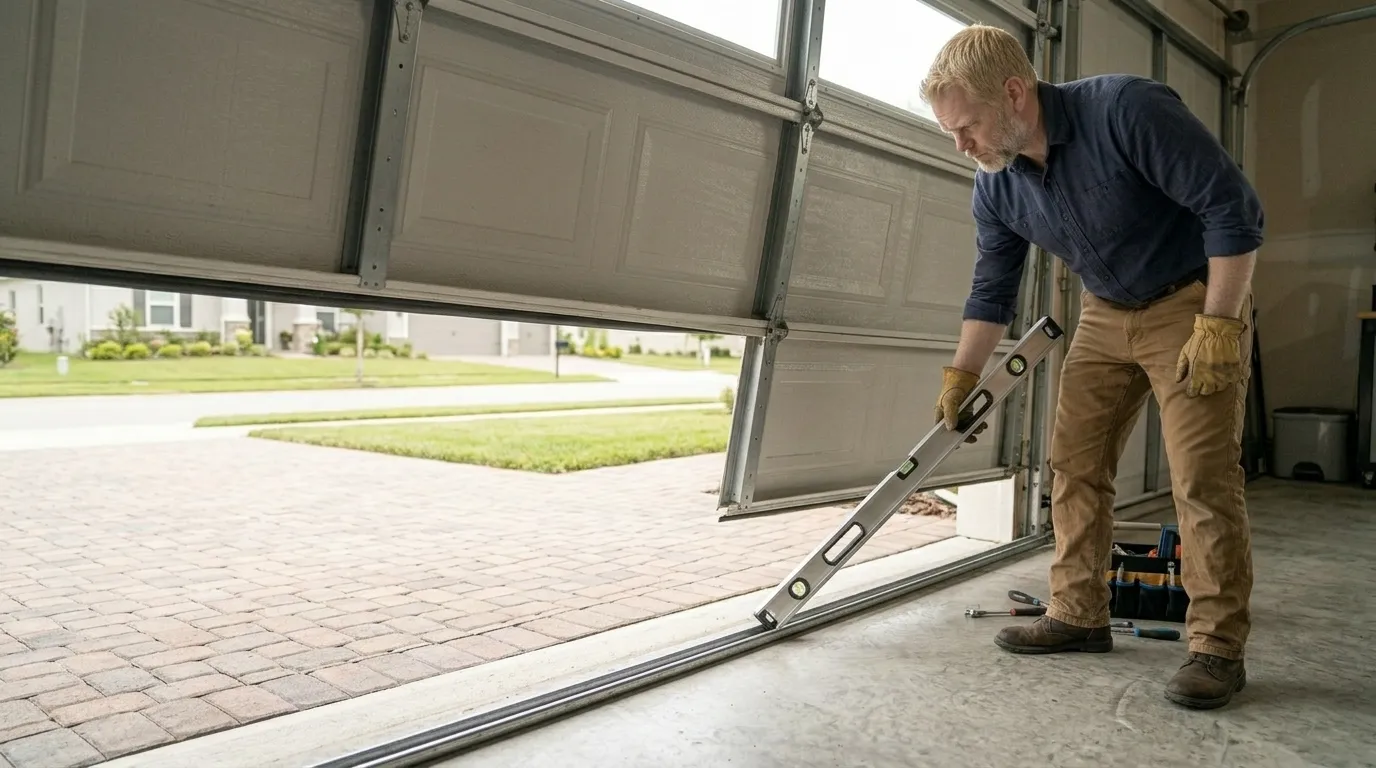
A technician tests the door under power and by hand and finds what actually failed.
3
Clear, up-front plan
You get the fix that’s needed and what drives the cost - before any work starts.
4
Repaired & tested
The repair is done, the door is set true and tested, and the work area left clean.
Serving Loveland, CO - tell us what your door’s doing and we’ll take it from there.
Why does my garage door only make noise in the winter?
Cold thickens the grease on rollers and hinges, and in a cold-severe climate like Loveland's, that happens fast once temperatures drop. The hardware itself hasn't changed - the lubricant has just stopped doing its job as well, so wear that was already there suddenly makes noise.
My house was built in the early 2000s - should I expect more noise than a newer build?
Likely yes. A big share of homes in this area were built in that same window, with the median right around 2003, so a lot of original torsion springs and rollers are now fifteen-plus years into a duty cycle that wasn't designed to last forever.
Is a squeaky hinge something to worry about?
Usually not on its own. A dry squeak that responds to lubricant is normal wear. It becomes a concern if lubricant doesn't quiet it down after a few days, or if the squeak is paired with a hinge you can see is cracked or bent.
Can I lubricate the spring myself to quiet it down?
Don't put lubricant directly on a torsion spring under load - it's under tension and not something to work on yourself. Lubricate the rollers and hinges instead, and if the spring noise continues or turns into a bang, that's a call, not a DIY job.
Ready to get your garage door sorted?
Tell us what it’s doing and where you are in Loveland - we’ll take it from there.