Loveland sits in a climate band the federal data marks COLD severe, which means the swing between a mild afternoon and a hard overnight drop happens often enough to matter. Steel contracts when it's cold, and a torsion spring that's already fatigued from years of cycling loses whatever margin it had left. That's when it lets go - usually early morning, usually on the coldest day of a stretch. Layer that on top of Loveland's housing: most of the stock here went up between 1975 and 2012, with the median build year landing at 2003. A door installed when a house went up is now anywhere from 15 to nearly 50 years old, and the spring almost never got replaced unless something already broke. That combination - an aging first-generation spring, a cold snap, and a driveway full of ice - is why we see clusters of spring calls right after temperatures drop hard, not during the warm months. It isn't the door failing gracefully over time. It's a strained spring finding the one cold morning it can't stretch through, on hardware that's been doing the same job since the house was framed.
Checking It Yourself
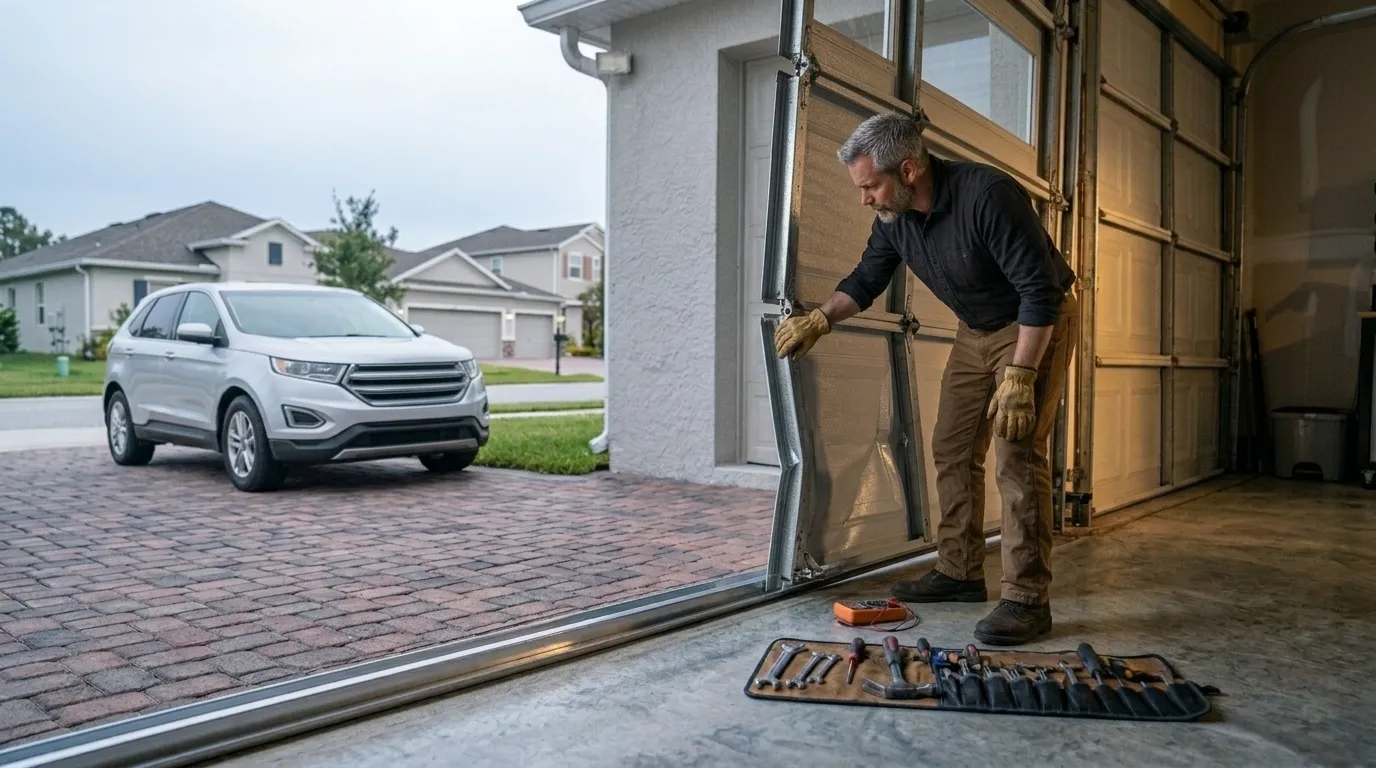
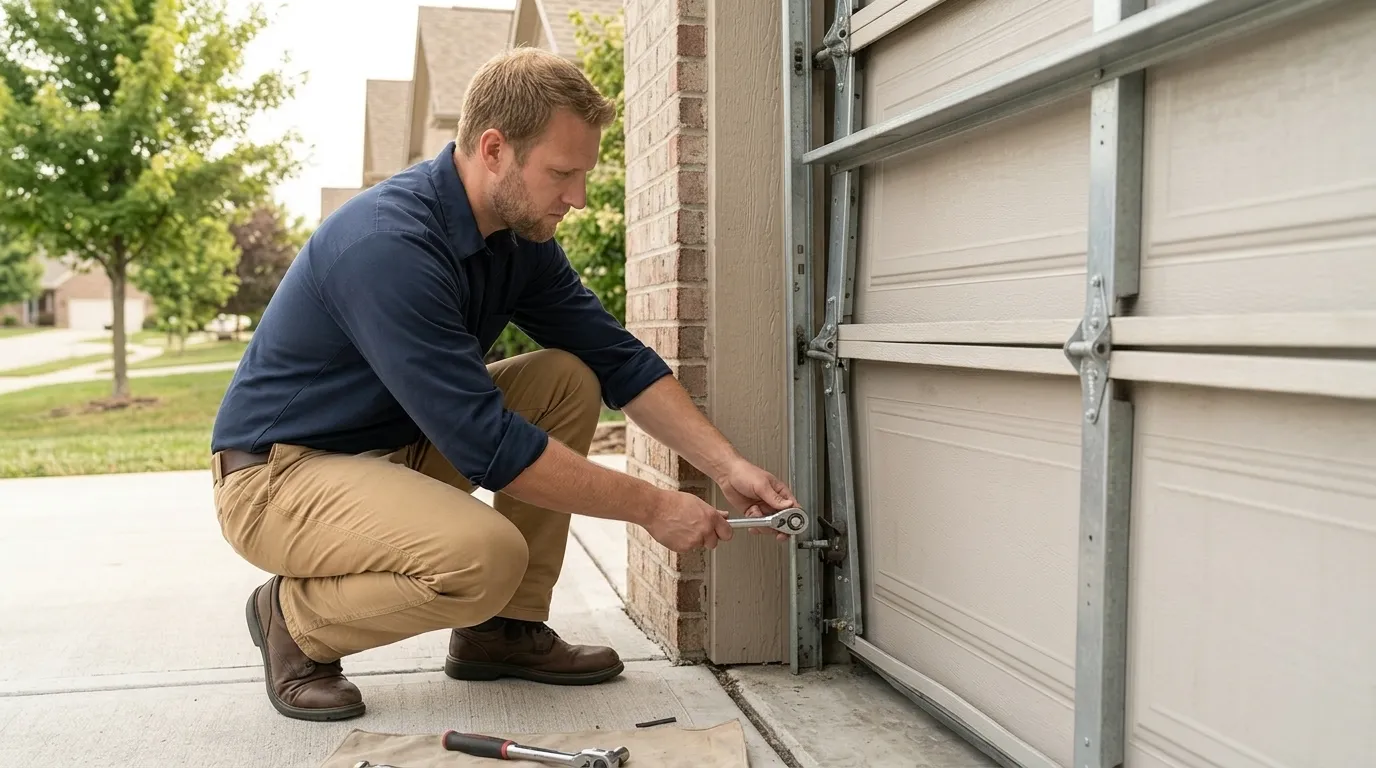
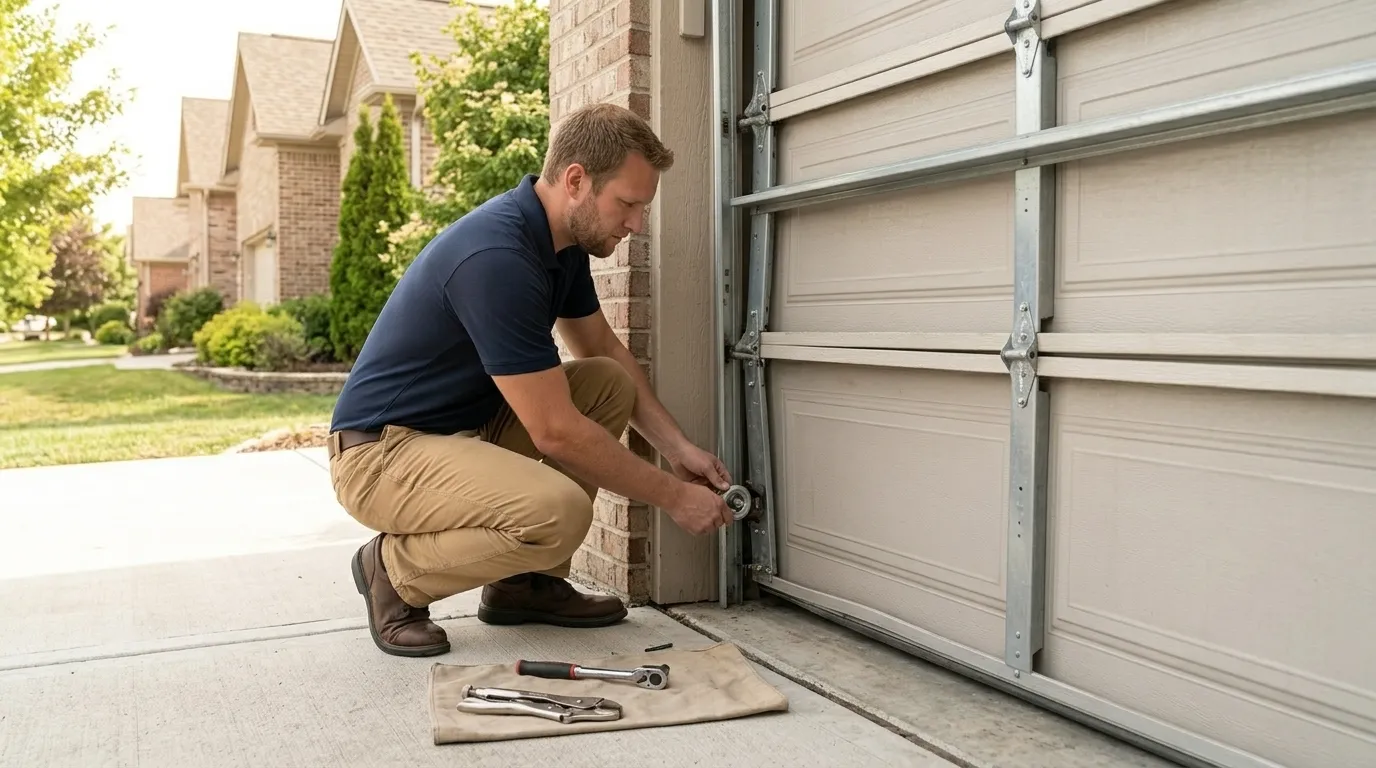
Before you call anyone, look at the spring itself - the coiled bar mounted horizontally above the door. A visible gap in the coil, or one half separated from the other, means it's already broken and the door will feel dead heavy or won't move. Next, with the door closed and the opener disconnected, check whether the door stays put when lifted about halfway by hand. A properly tensioned spring holds it there. If it drops on its own, the spring has lost tension even if it hasn't snapped yet - worth flagging before it breaks with a car underneath. Check the cables running down each side of the track too; a frayed or kinked cable near the bottom fixture means the spring already handed off part of its job to the cable, which it wasn't built to carry. Don't cut a spring loose yourself and don't try to rewind one under tension - that bar stores enough force to break a hand. Checking is fine. Adjusting the coil is not a homeowner job, no matter how straightforward the video made it look.
Doing Nothing For Now
If the spring is intact and the door still holds its position by hand, you don't need to act today. A slightly stiff opener on a cold morning isn't the same emergency as a snapped spring, and a same-day call for a door that's just working a little harder in the cold isn't worth the money. Where waiting makes sense: a door that's noisier or slower in low temperatures, with no visible gap in the coil and no dropped cable. Where it doesn't: any door that won't hold itself half-open, because that spring is close to done and cold weather is exactly when it lets go. One honest limit - if a spring has already broken, we don't keep every size in the truck for every door built between 1975 and 2012, and matching an older, non-standard spring sometimes means a short order delay instead of a same-day fix. That's rare on newer doors from the 2000s-era stock that makes up most of Loveland, more common on the handful of houses at the older end of that range.
What Is Going On
A torsion spring stores mechanical energy by twisting around a steel shaft above the door. Every open-and-close cycle flexes that metal, and over years of cycling the steel work-hardens and gets brittle at a microscopic level. That process is slow and invisible until cold weather adds a second stress: contraction. Steel that's already fatigued has less give left when it's cold, so a spring that would have held on for another six months in July can snap in January instead. Loveland's housing - mostly built 1975 to 2012, median 2003, across the fourteen named areas that make up the local stock - put a huge number of these springs in the ground at roughly the same time, on roughly the same torsion hardware. That's why cold-weather spring failure isn't random here: it clusters, because a lot of doors are the same age doing the same job under the same COLD severe conditions. It's not a defect. It's steel fatigue meeting a cold morning at the worst possible time, on a shaft that's been twisting the same direction for two decades.
How it works
From “it’s stuck” to “it’s fixed”
1
Tell us what’s wrong
Describe the symptom - won’t open, loud bang, opener runs but the door won’t move.
2
On-site diagnosis
A technician tests the door under power and by hand and finds what actually failed.
3
Clear, up-front plan
You get the fix that’s needed and what drives the cost - before any work starts.
4
Repaired & tested
The repair is done, the door is set true and tested, and the work area left clean.
Serving Loveland, CO - tell us what your door’s doing and we’ll take it from there.
Why did my spring break on the coldest morning of the week?
Steel loses flexibility as it gets colder, and a spring that's already fatigued from years of cycling has less margin left to absorb that stiffness. Loveland's COLD severe winters push a lot of aging springs past their limit on the hardest overnight drops, which is why breaks cluster right after a cold snap instead of spreading evenly through the year.
How old is too old for a garage door spring in Loveland?
Most of Loveland's housing went up between 1975 and 2012, median year 2003, so a lot of original springs are now 15 to nearly 50 years old. There's no fixed cutoff, but a spring that's never been replaced on a house from that era is well past the point where cold weather can finish it off.
Can I still open my garage door if the spring just broke?
Not safely by opener, and not by hand without real effort and risk. Once a torsion spring snaps, the door's full weight is on the cables and track, which weren't built to hold it alone. Leave it closed and call for a repair rather than forcing it open.
Ready to get your garage door sorted?
Tell us what it’s doing and where you are in Loveland - we’ll take it from there.