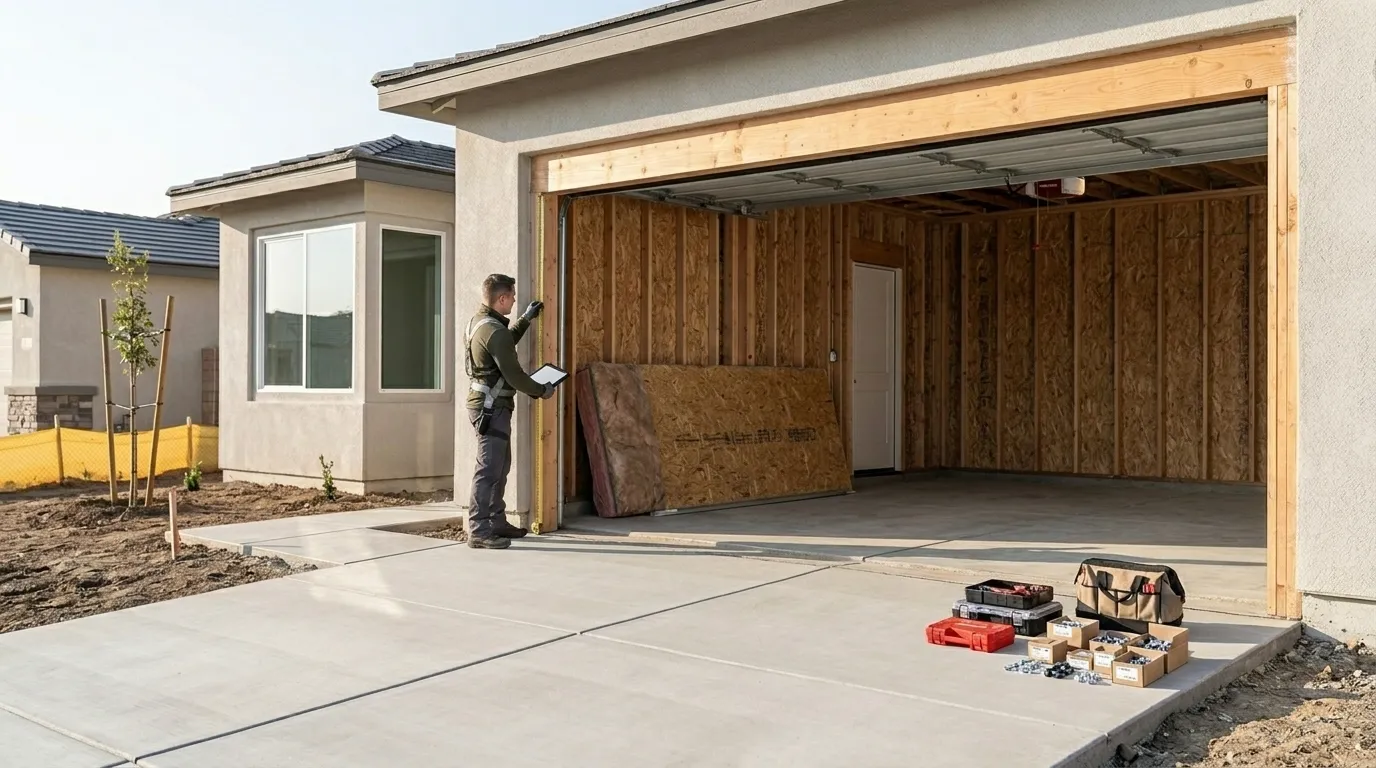
Most homes here went up between 1975 and 2012, with the median built around 2003, so a lot of the doors on this side of town are original builder-grade steel panels put in during that stretch. That 2000s tract-building boom favored single-layer, non-insulated steel panels because code back then didn't require garage doors to meet the same insulation standard as the rest of the house. Fourteen named areas around here carry that same 2000s stock, which means a lot of neighbors are running the same hardware from the same few production years.
Loveland sits in a cold-severe climate band, so a door installed in 2003 has now been through roughly two decades of hard freeze-thaw cycles on its hinges and rollers. Steel contracts in cold and expands in heat, and a thin, uninsulated panel does that faster than a foam-core one. Torsion springs lose a little tension every winter as the metal stiffens, and the factory grease inside the bearings thickens up, which is why a door that swings easy in July can sound like it's dragging gravel in January. None of this means the door is failing. It means it's aging the way a 20-year-old steel door in a cold climate ages, and it's worth knowing what that looks like before it becomes a Saturday morning problem.
Checking It Yourself
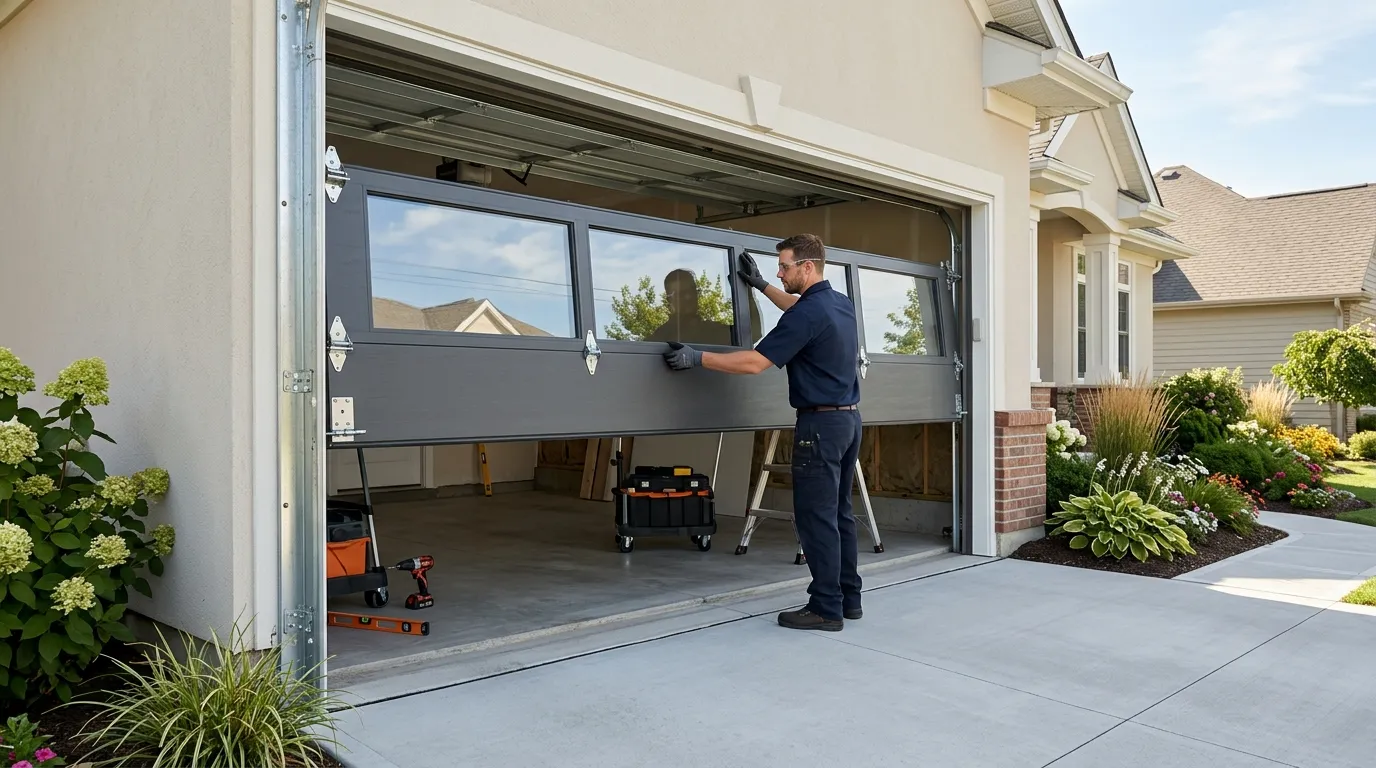
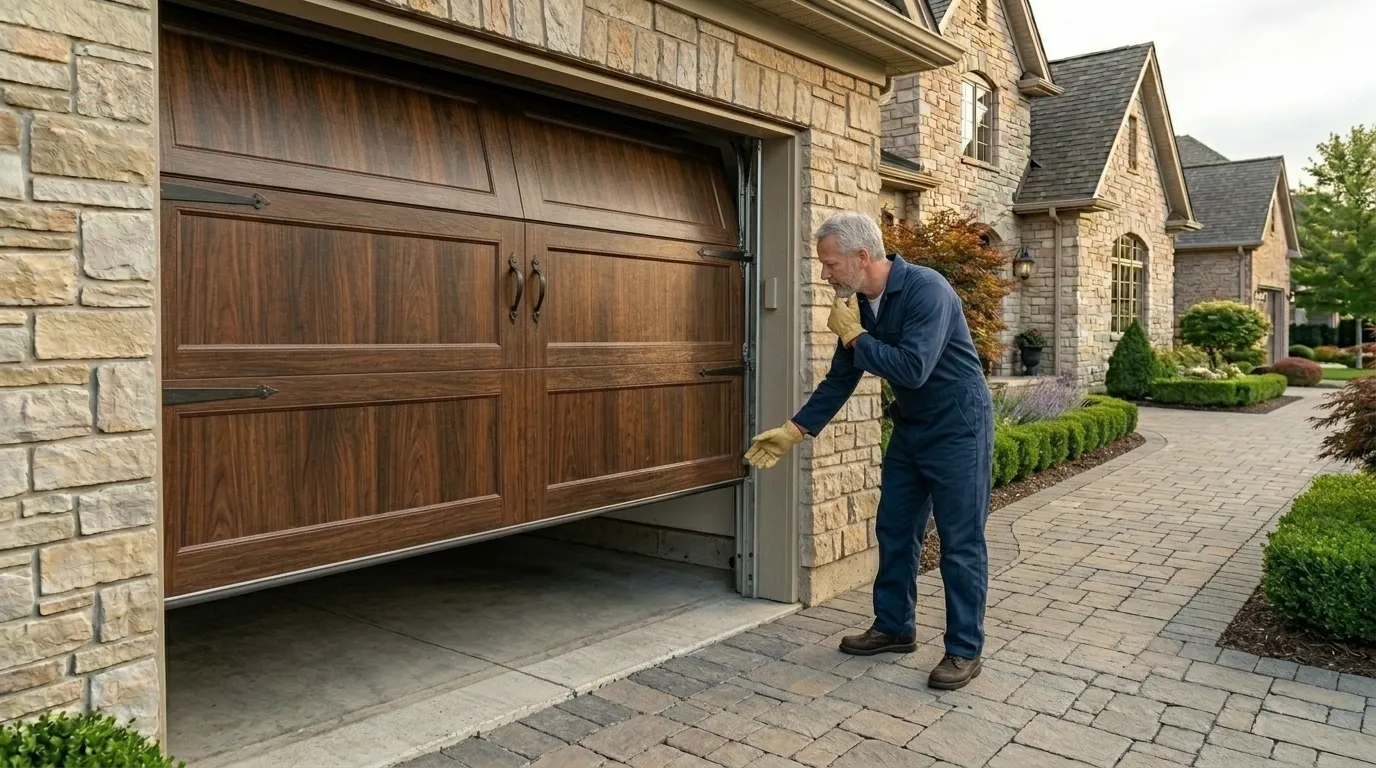
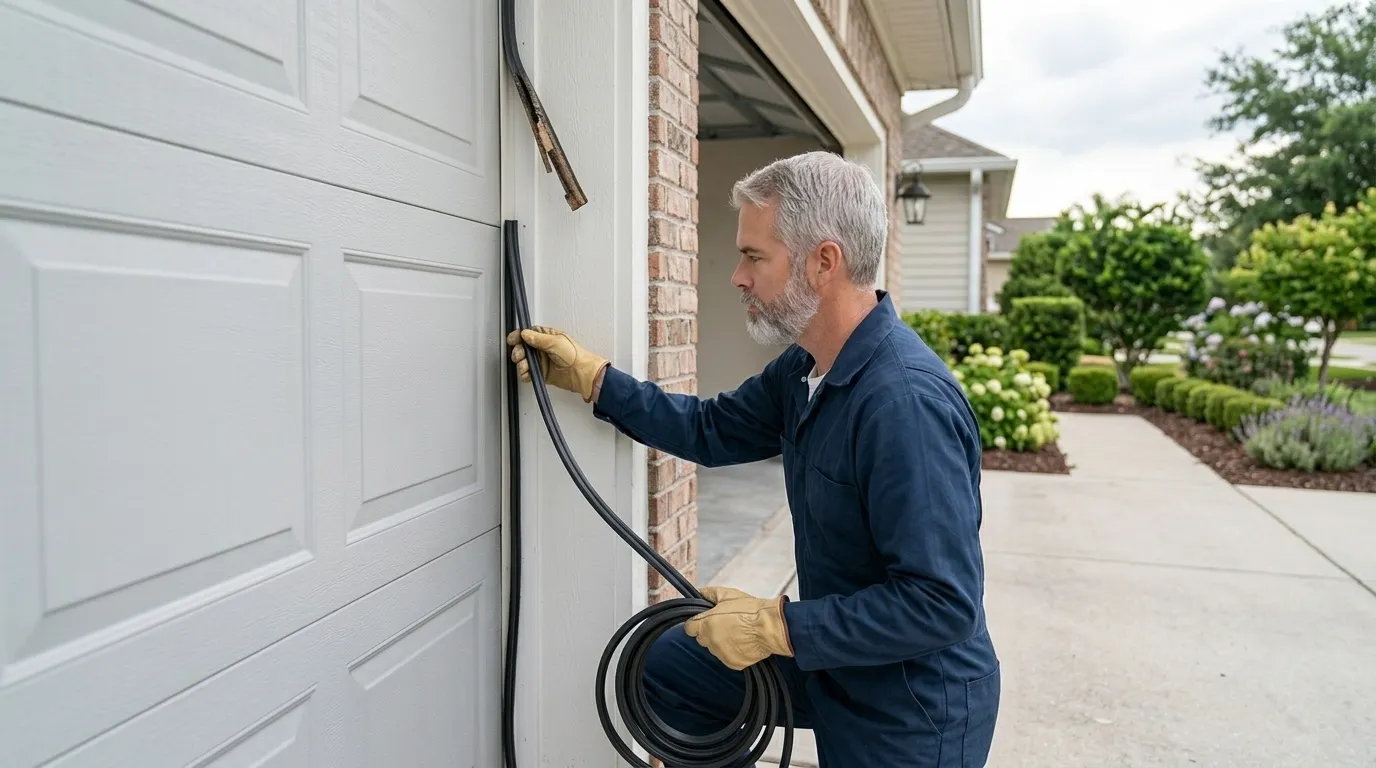
Pull the door down partway and look at the bottom edge of a panel where it meets the frame. Builder-grade panels from the 2000s boom are usually a single skin of steel with no foam backing visible when you look at the cut edge - if you see a hollow gap with nothing in it, that's the standard non-insulated panel from that era, not a defect.
Next, check for frost or condensation on the inside face of the door on a cold morning. A thin uninsulated panel will fog or frost first, especially near the bottom corners, before an insulated one would. That's a climate effect, not damage.
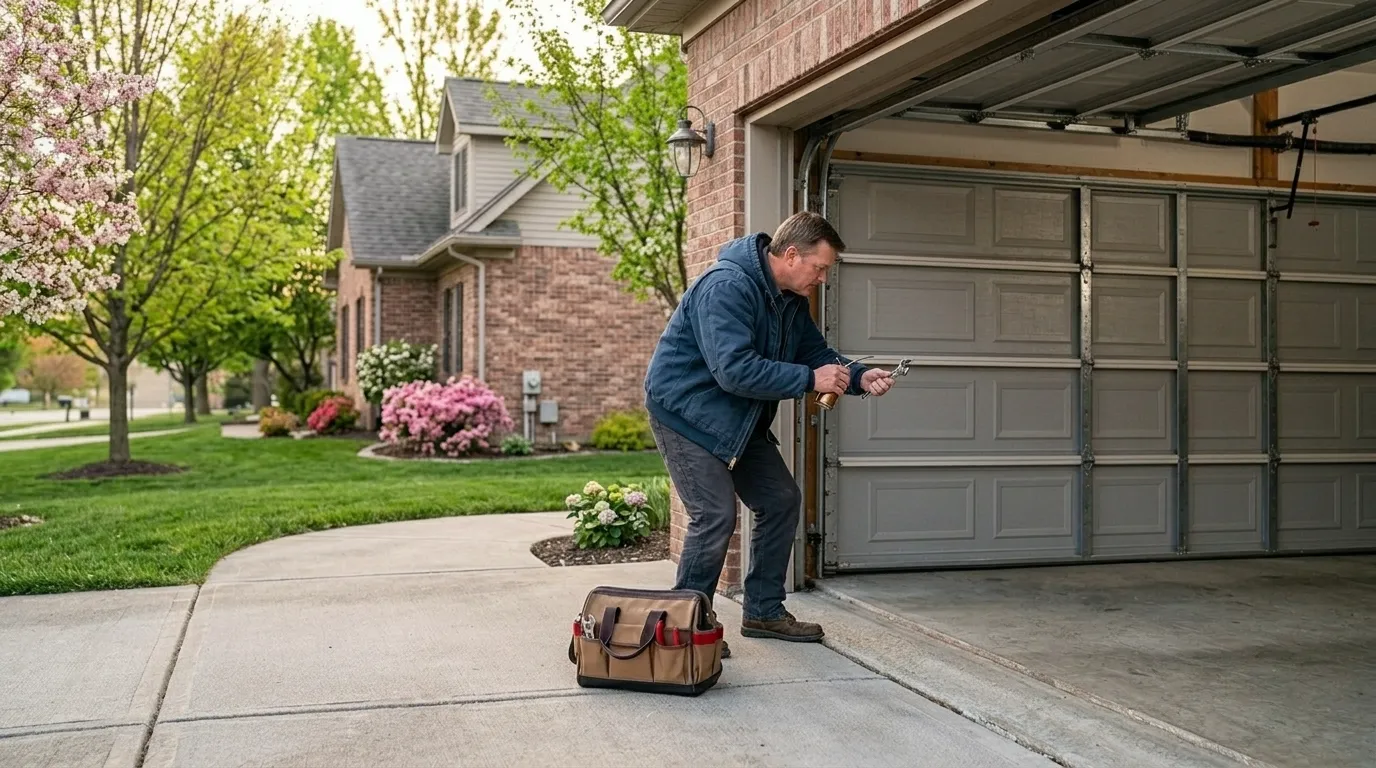
Listen when the door runs. A grinding or squealing sound in cold weather, especially first thing in the morning, usually means the lubricant in the rollers and hinges has thickened up overnight rather than anything being broken. Try running it a second time after it's been open a few minutes - if the noise fades, that's cold grease, not a failing part.
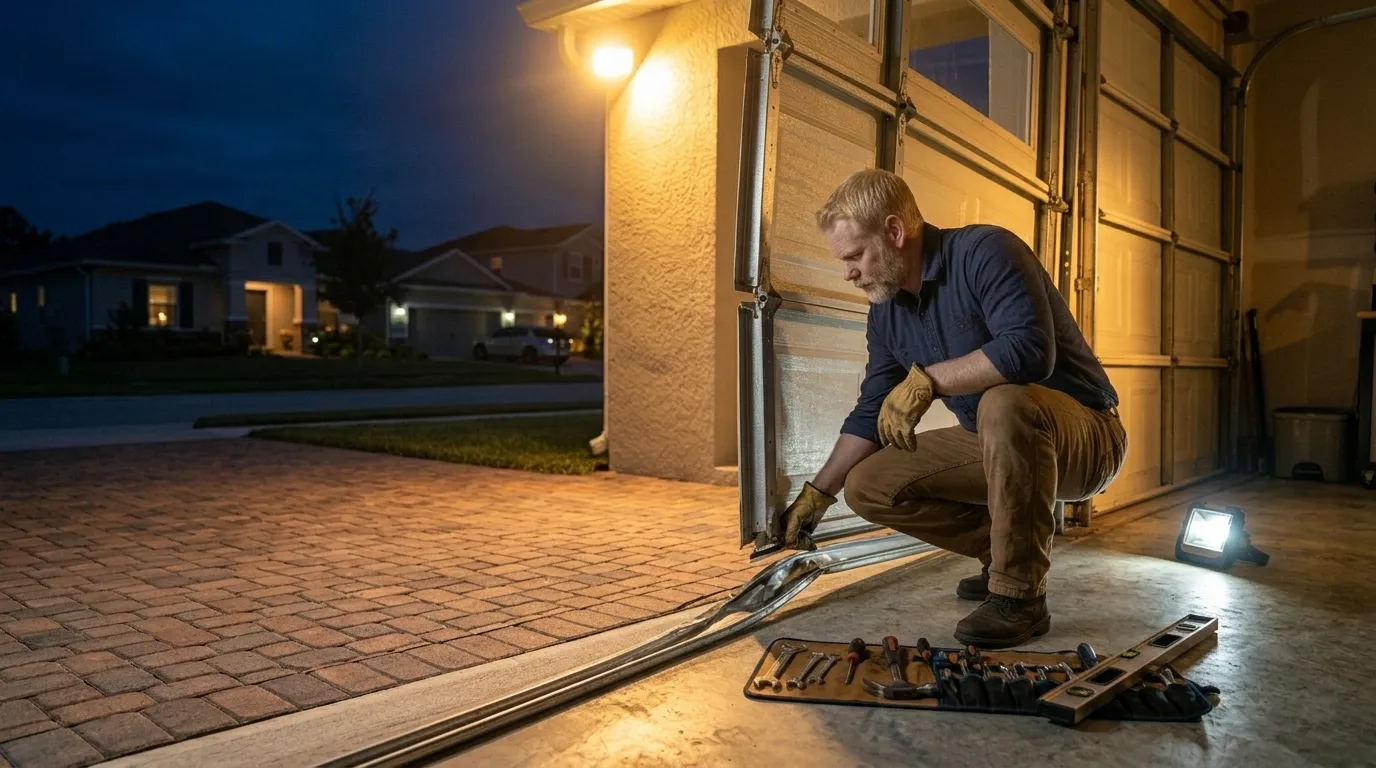
Last, look at the rollers themselves if you can see them. Nylon rollers on doors from this construction period are old enough now that some have started to crack or flat-spot from repeated cold cycling, and a flat spot will show up as a thump once per rotation.
Doing Nothing For Now
Here's the honest part: if your door still opens and closes smoothly, holds its position halfway up without drifting, and isn't making a new noise, you don't need to call anyone yet. A stiff, slow door on a cold morning that loosens up once it's run a few times is normal wear on a builder-grade panel from the early 2000s boom, not an emergency.
Where I'd stop waiting: if the door jerks or shudders instead of running smooth, if you see a gap opening up between spring coils, or if a panel has visibly bowed. Those are load-bearing symptoms, and a spring that's already lost tension from years of cold cycling can let go without much warning.
I'll also say plainly - not every stiff door needs a repair call. Sometimes it needs the hinges and rollers hit with the right lubricant and nothing else. I'd rather tell you that than have you pay a truck fee for a five-minute fix you could've done yourself.
What Is Going On
The mechanics are simple. Steel expands and contracts with temperature, and a door built during the 1975-2012 boom, especially the single-layer steel common in that period's tract construction, moves more than an insulated door would because there's no foam core to buffer the swing. In a cold-severe climate, that swing happens every single day from fall through spring.
Nylon rollers get brittle with age and cold. A roller that's cracked from fifteen or more winters of contraction will still turn, but it'll thump and eventually shed pieces. Torsion springs work the same way - they're rated for a certain number of cycles, and cold makes the steel less forgiving on each one, so a spring nearing the end of its life is more likely to give out in January than in July.
With 37,006 owner-occupied houses in the service area and most of that stock dating from the same construction window, a lot of these doors are aging out on a similar timeline. That's not a reason to panic about any one door - it's just why this time of year is when these calls tend to come in.
How it works
From “it’s stuck” to “it’s fixed”
1
Tell us what’s wrong
Describe the symptom - won’t open, loud bang, opener runs but the door won’t move.
2
On-site diagnosis
A technician tests the door under power and by hand and finds what actually failed.
3
Clear, up-front plan
You get the fix that’s needed and what drives the cost - before any work starts.
4
Repaired & tested
The repair is done, the door is set true and tested, and the work area left clean.
Serving Loveland, CO - tell us what your door’s doing and we’ll take it from there.
Not necessarily. If your house was built during the 1975-2012 boom that shaped most of this area, especially the 2000s stretch, the original garage door code at the time didn't require insulated panels. A single-layer steel door with no foam core is normal for that era, not a sign anything was done wrong.
Why does my door get loud only in winter?
Cold thickens the grease in the rollers and hinges and makes steel and nylon parts stiffer, so a door that's quiet in summer can grind or squeal on a cold morning. If the noise fades after the door's run a couple of times, that's cold hardware warming up, not a broken part.
How do I know if my springs are original?
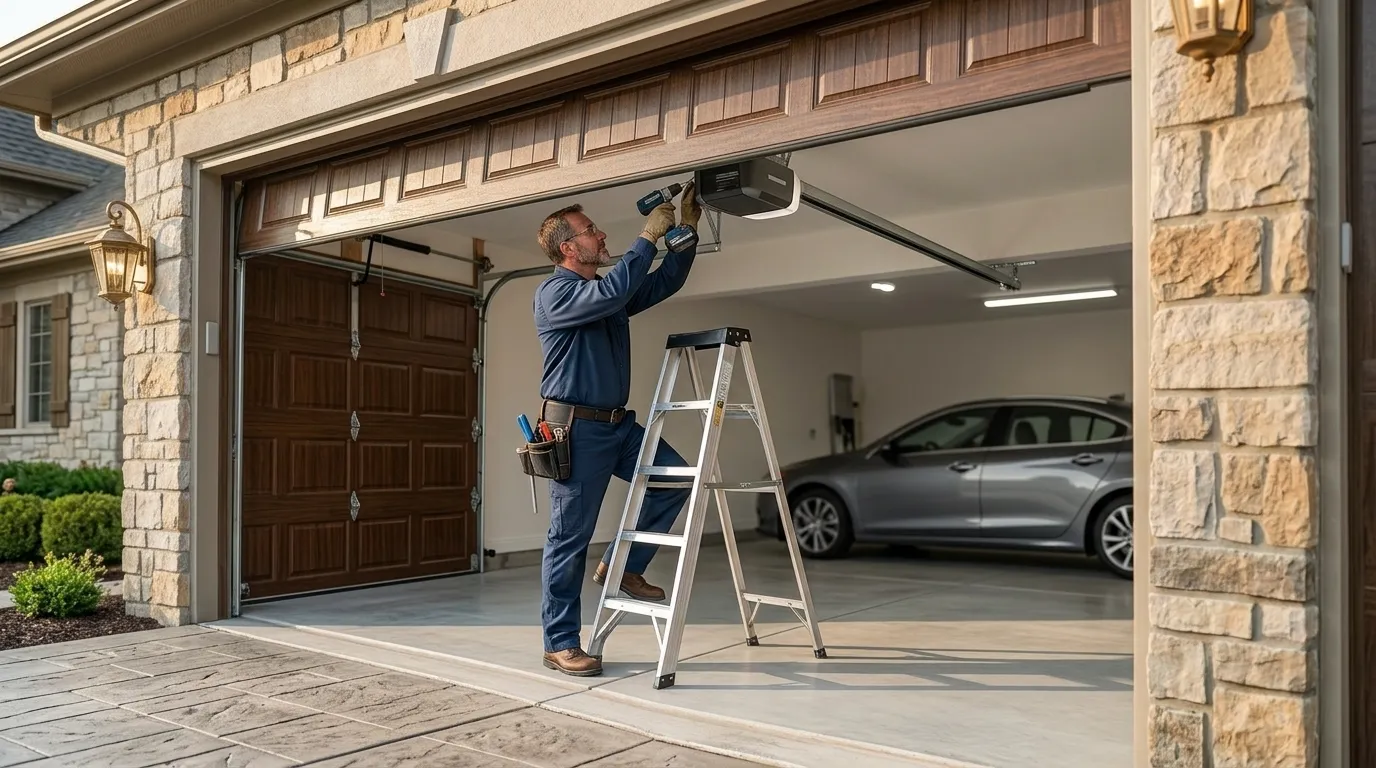
If your house dates to the 1975-2012 building period common in this area, there's a decent chance the torsion springs have never been replaced. Look for a gap opening between the coils when the door is down, or a door that feels heavier than it used to - both point to springs losing tension with age.
Ready to get your garage door sorted?
Tell us what it’s doing and where you are in Loveland - we’ll take it from there.