
What Can Go Wrong
A torsion spring under tension that snaps doesn't just stop the door - it can whip the winding cone or bend the center bracket if the door was already being forced up on one side. On newer doors like most of Windsor's stock, we more often see one spring go while the other is still rated for years of cycles, because the doors were installed as matched pairs from the factory around 2007 and have aged evenly. That's different from a mixed-vintage door where one spring was swapped years after the other.
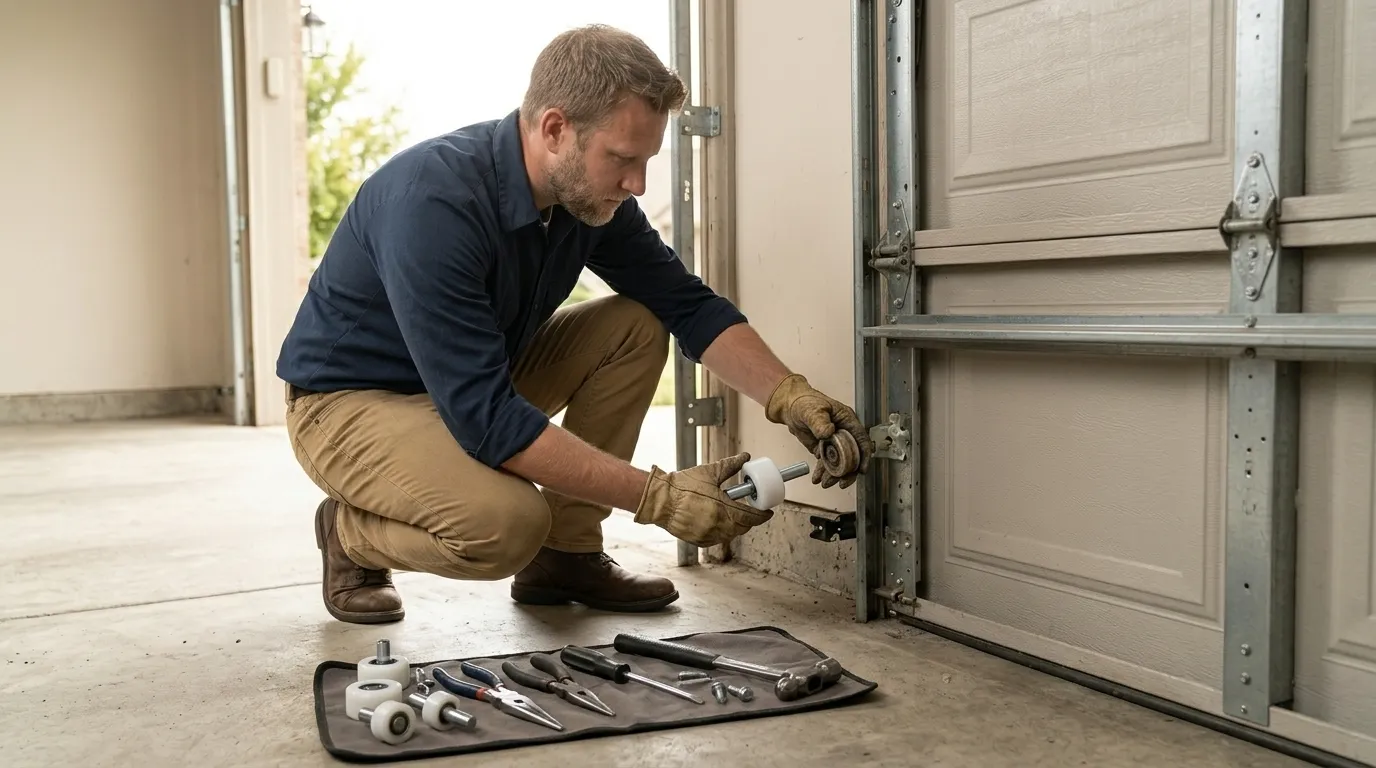
Cables can fray where they wrap the bottom bracket, rollers wear out of their tracks, and on double-wide doors the extra width means more strain on a single failed spring trying to hold the whole panel. None of this is unique to Windsor, but the age and uniformity of the stock here means we're usually dealing with one clean failure point rather than three compounding issues.
Doing It Yourself
Torsion springs store enough force to break fingers, and unwinding one without the right bars is how people end up in an ER. We're not going to walk you through it. If you want to do something yourself before we get there, the safe move is to disconnect the opener, prop the door if it's up, and leave the springs alone. Everything past that point needs the right tools and someone who's done it before.
How We Fix It
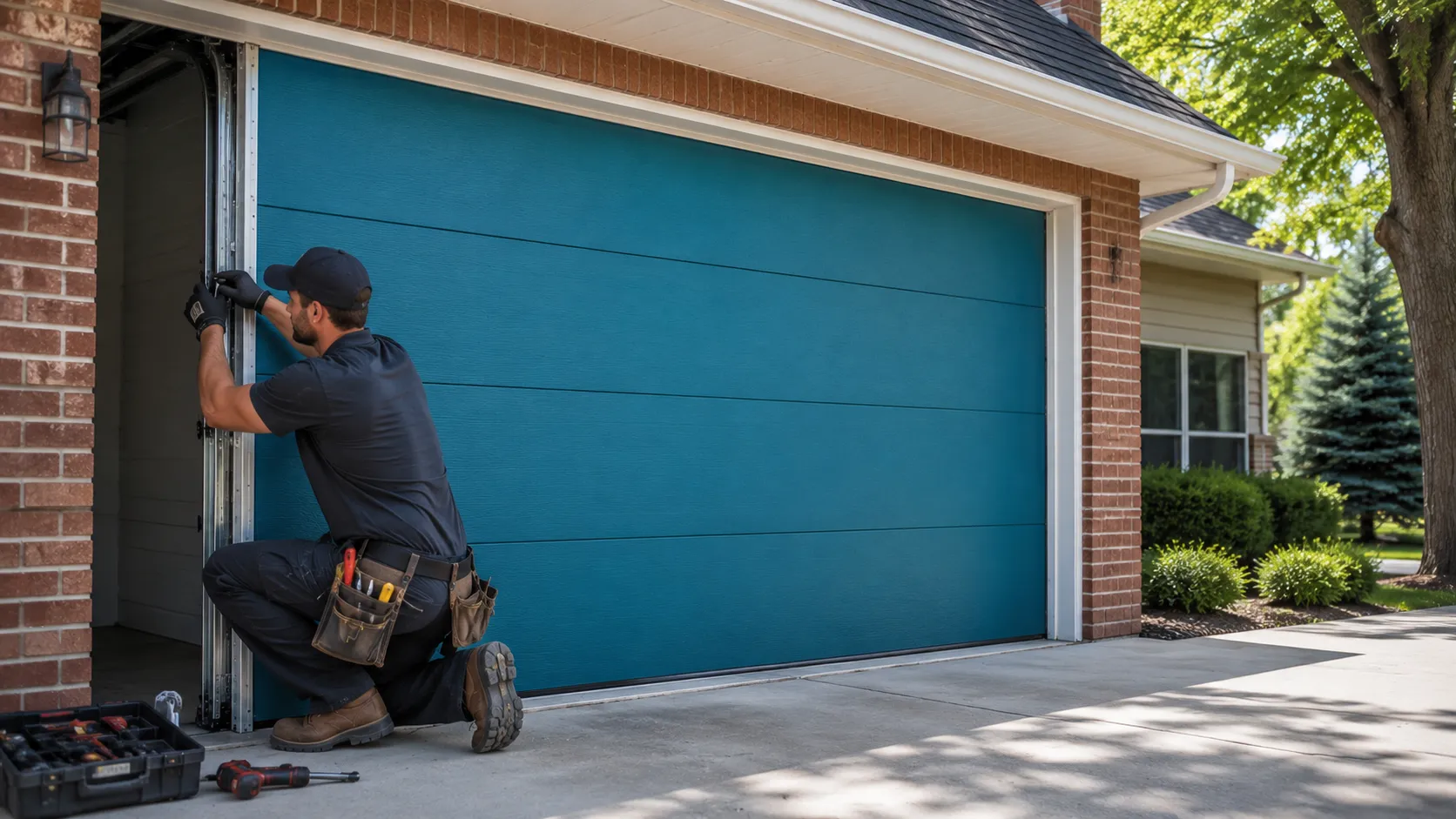
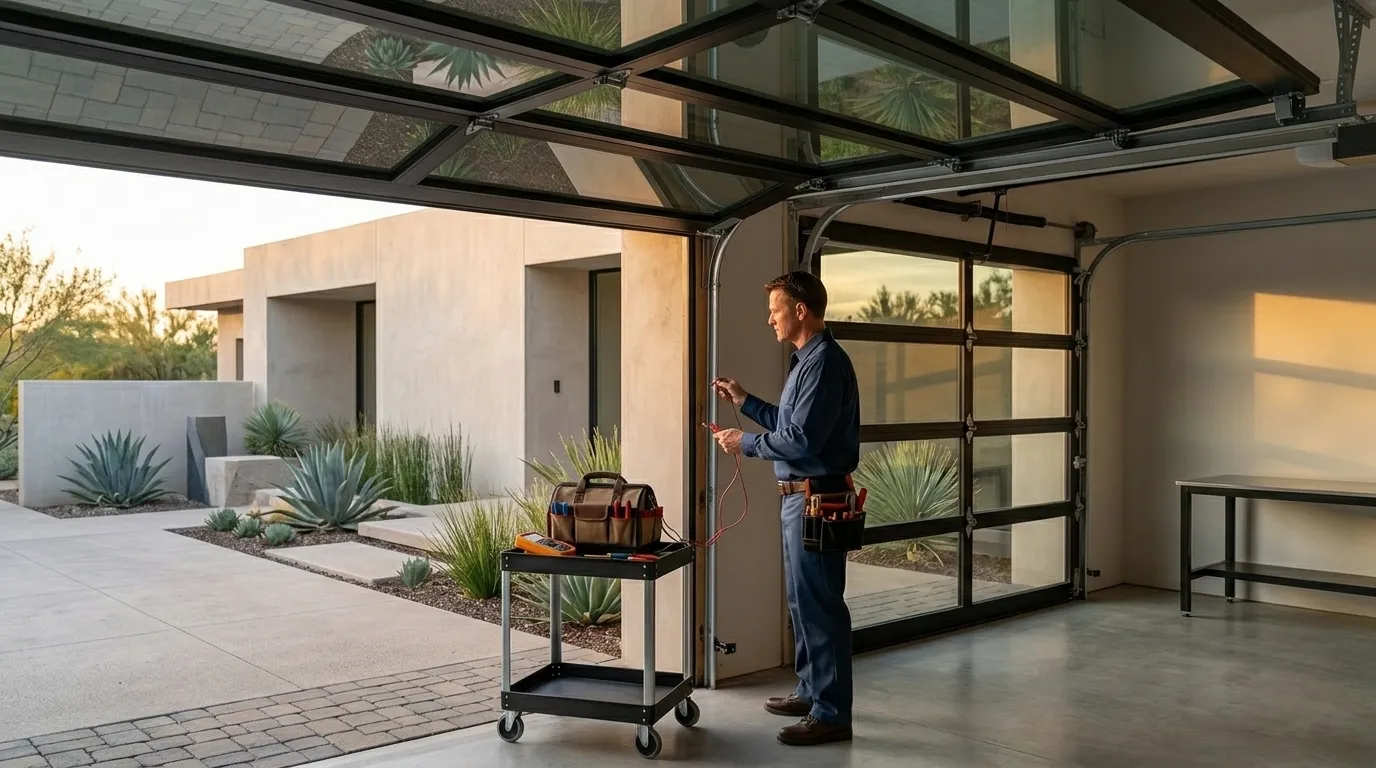
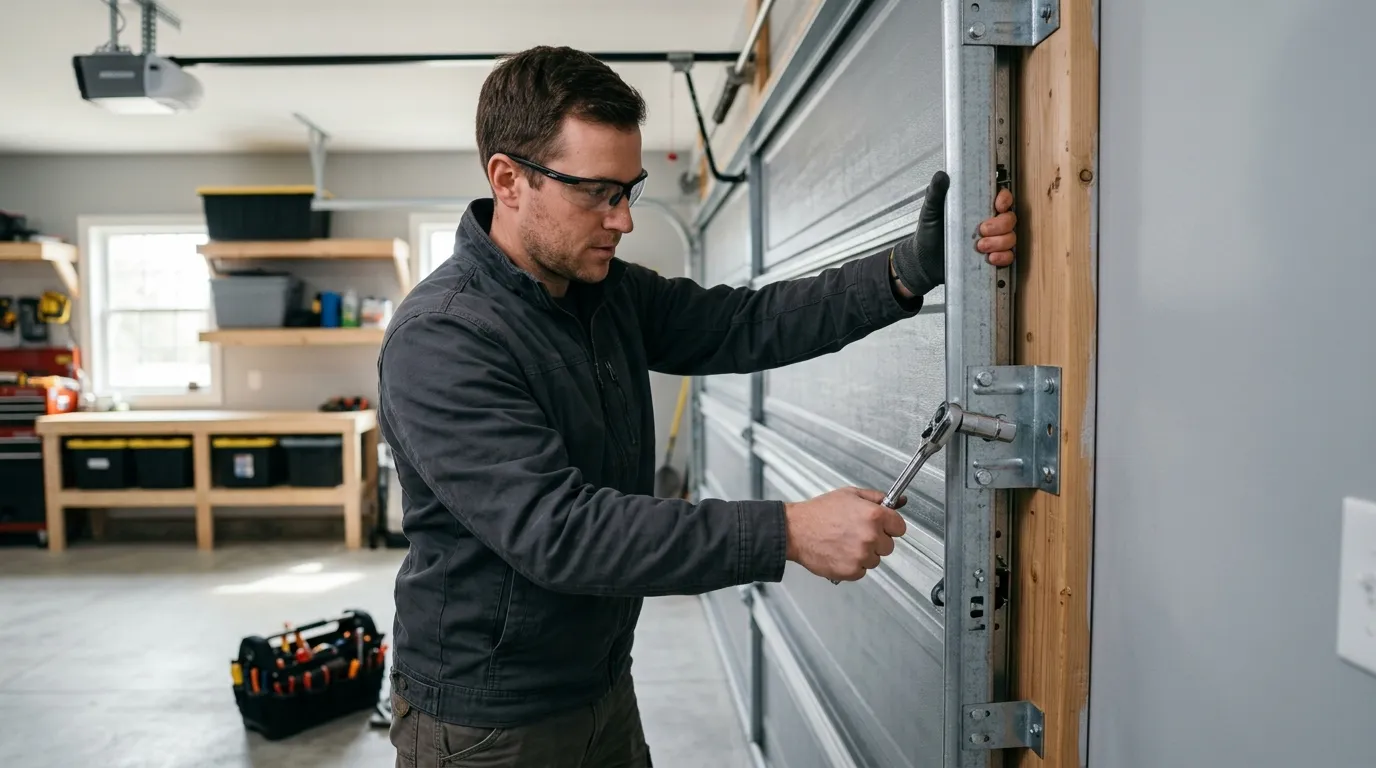
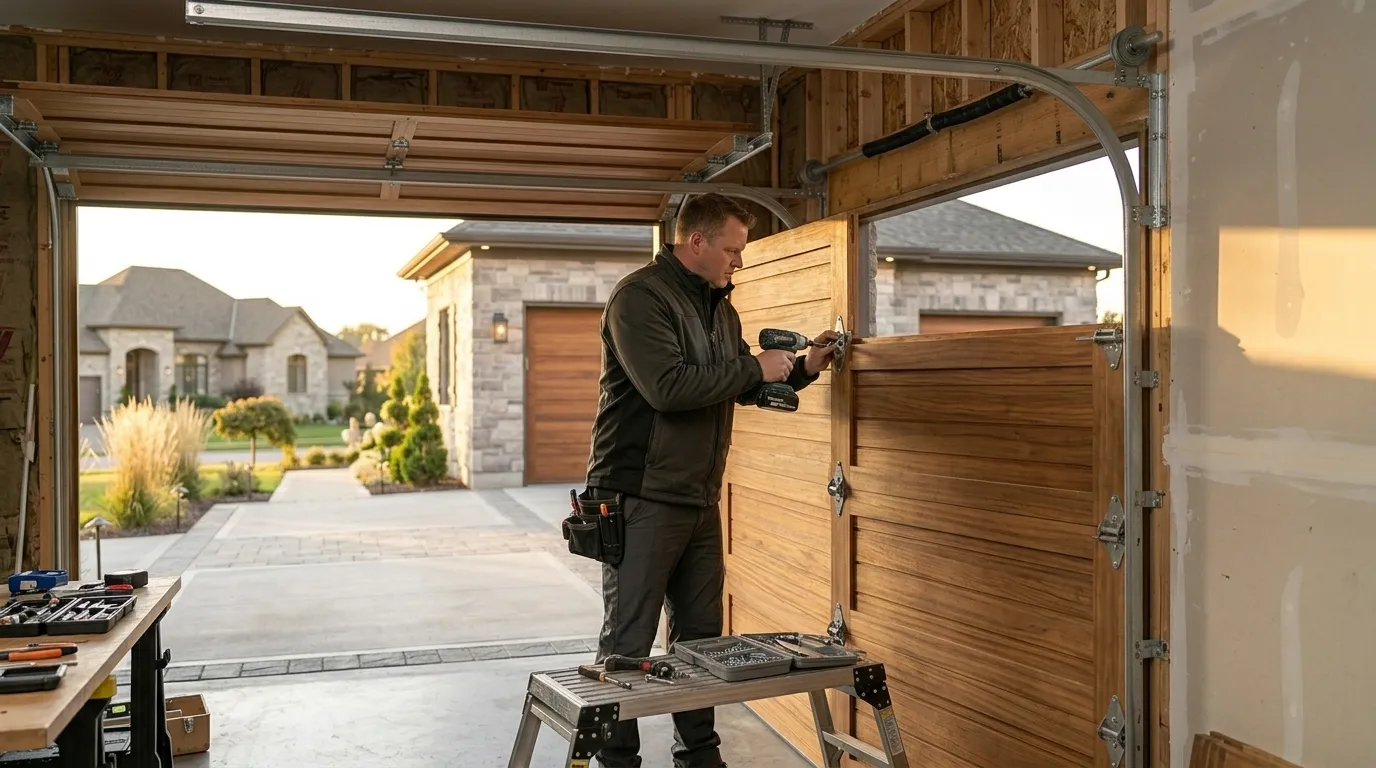
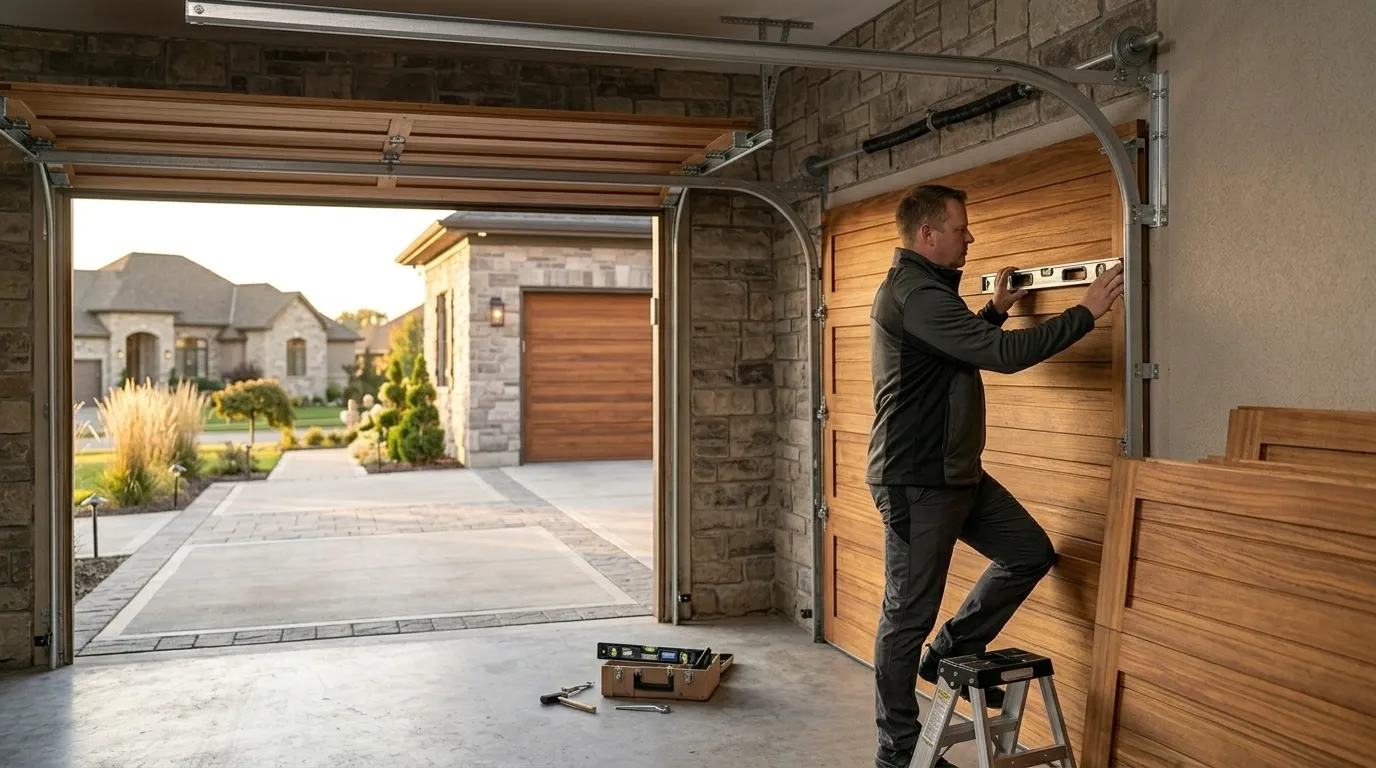
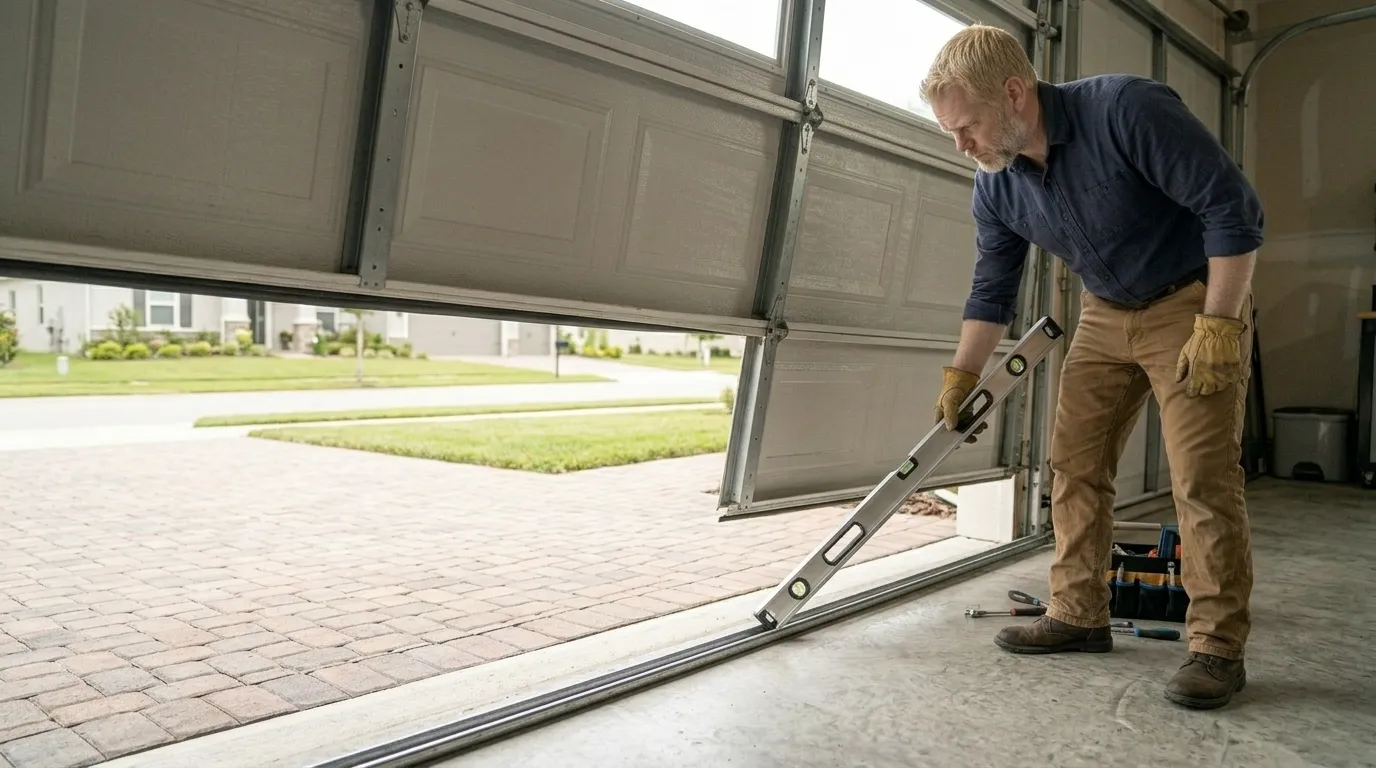
We come from Loveland, about 9 miles out, so we bring the spring sizes that match what's common on Windsor's newer builds - standard torsion sets sized for the door weights typical of 2000s construction, not the older wind-up extension springs you'd find on much older stock elsewhere in the area. We measure the door, wire size, and drum before we commit to a spring, replace both springs as a set when one has gone (so you're not back here in a year for the second one), and check the cables, drums, and center bracket while the door's open. We test the balance with the opener disconnected before we hand it back to you.
Why It Happens Here
Windsor's build years cluster tighter than the region as a whole - most of the housing here dates to the 2000s, with a median around 2007, which is newer than a lot of the broader service area's 1975-to-2012 spread. Newer doors mean torsion springs rated for a normal 10,000-cycle lifespan are hitting that mark now, roughly two decades in, which is exactly when original springs start to fail regardless of use. Add in a cold, severe winter climate that stiffens steel and thickens grease in the bearings, and a spring near the end of its life is more likely to snap on a January morning than a mild fall afternoon. It's not that Windsor's doors are built worse - they're just old enough now to be at that point together.