What Can Go Wrong
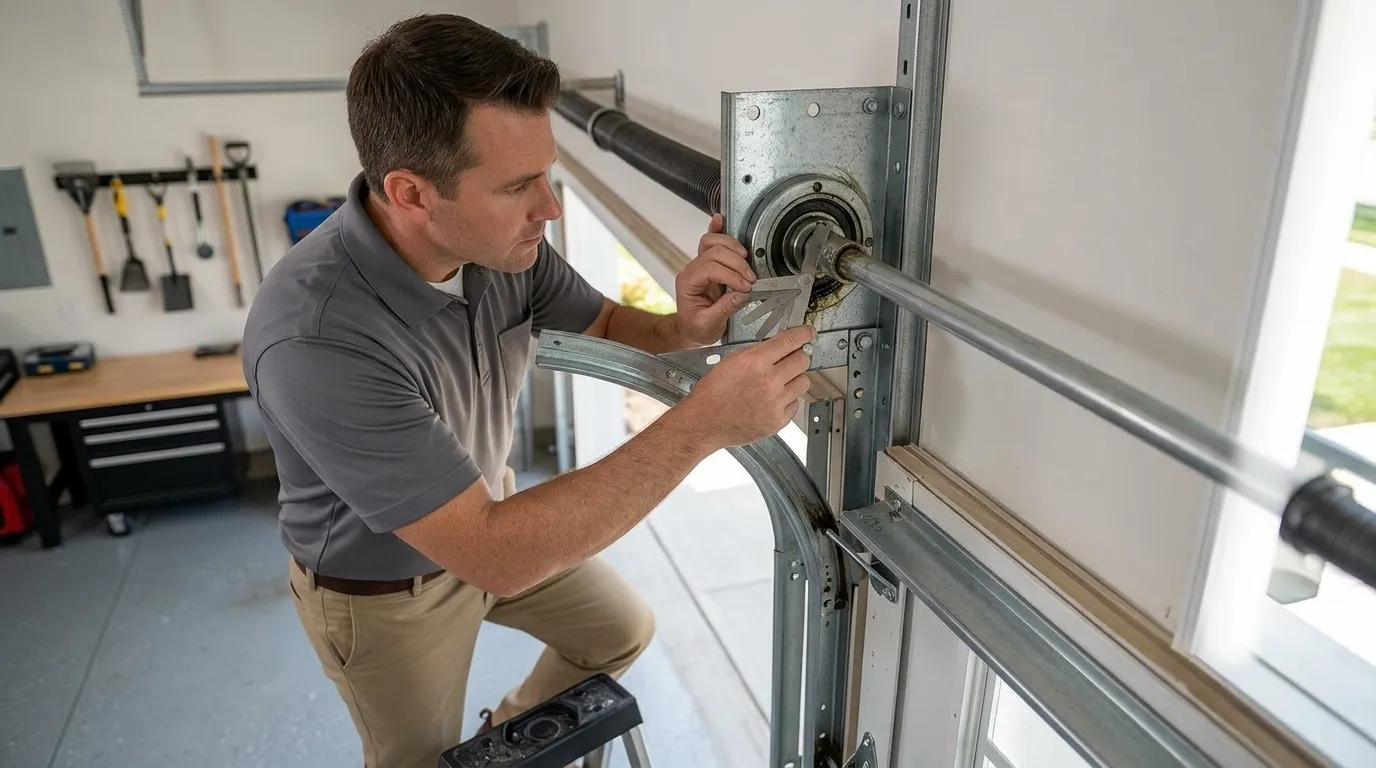
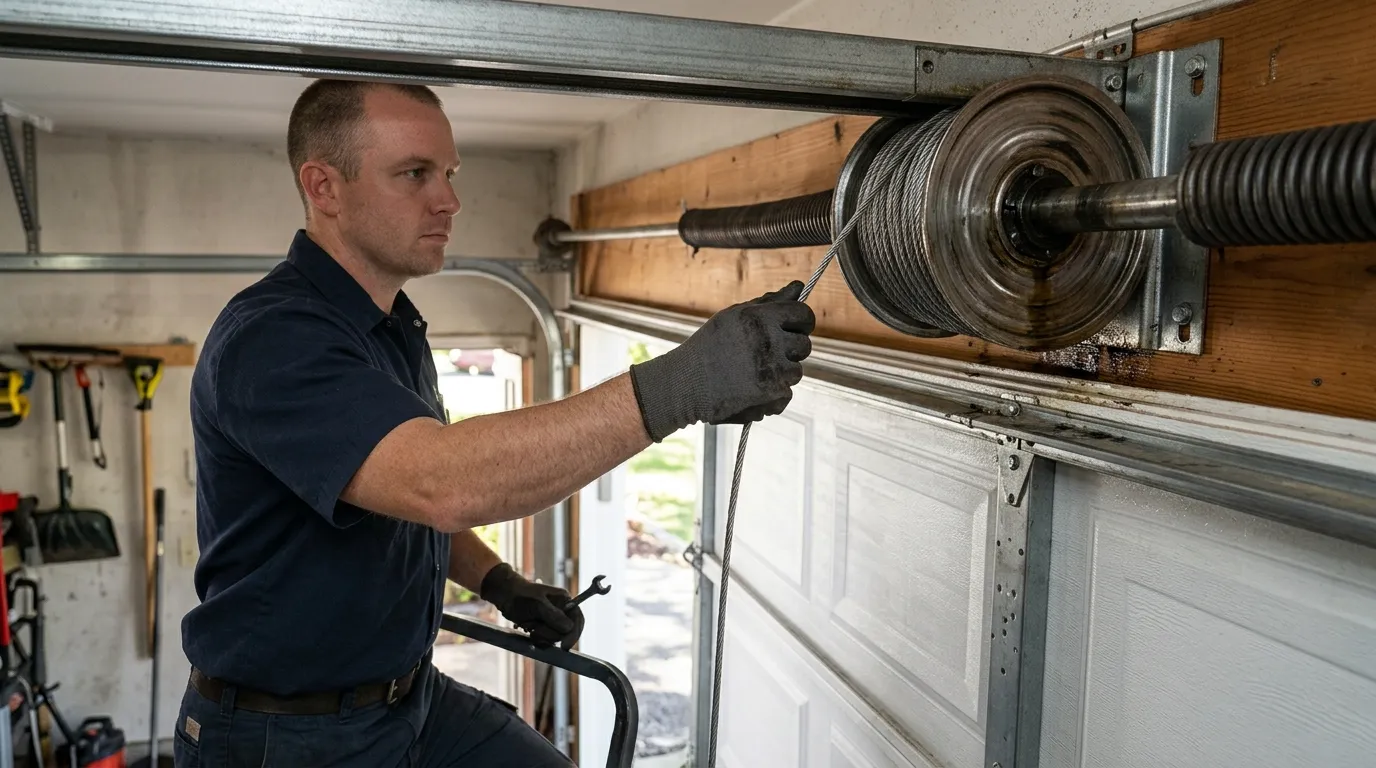
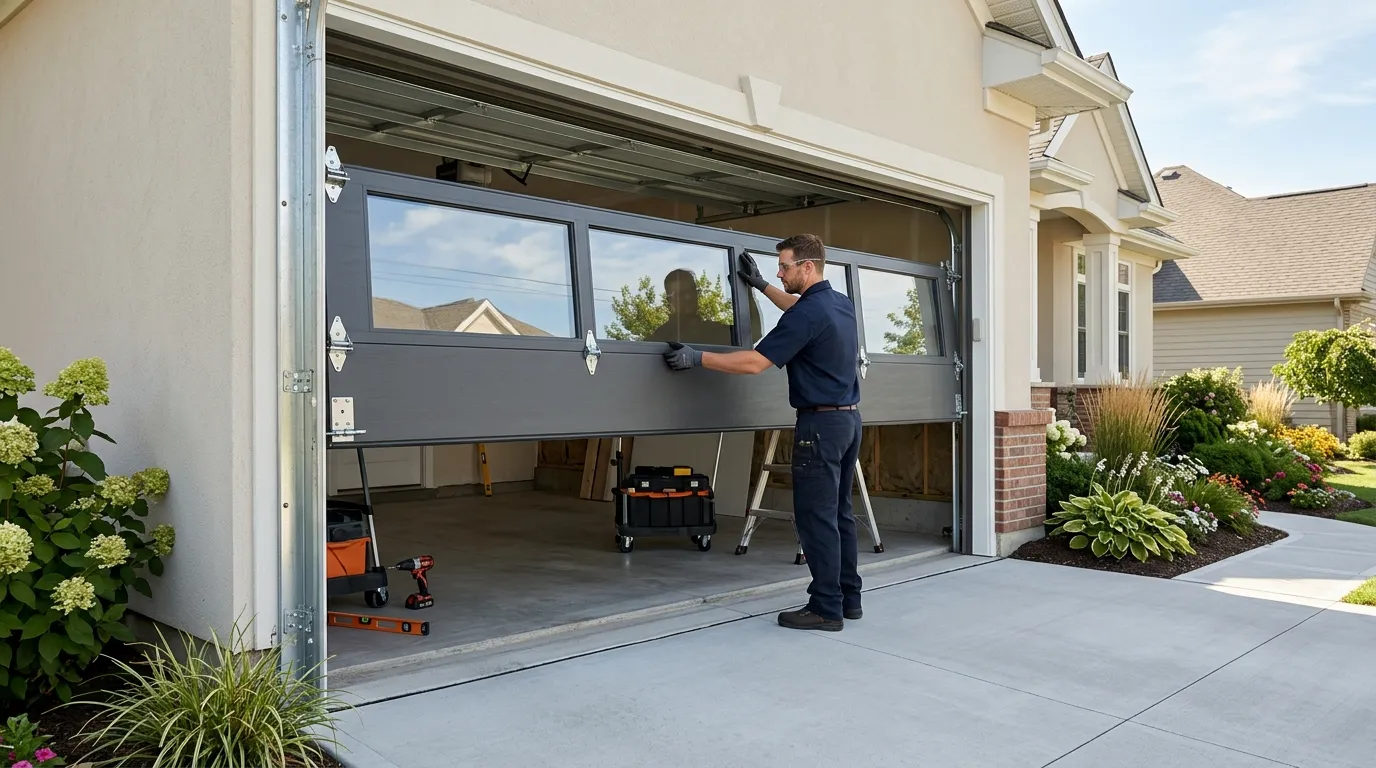
Windsor's housing sits at a median build year of 2007, newer than much of the wider service area, which runs from 1975 through 2012. That means most doors here are steel sectional units on nylon rollers, with torsion springs sized for the original panel weight - not the older extension-spring setups you'd find in a house built in the 1970s or 80s. The failure pattern that shows up first in a 2007-era door is roller wear: nylon rollers are quieter than the old steel ones but they crack and flat-spot with age, and once they do, the track takes the abuse instead of the roller. Second most common is the opener's safety sensor alignment drifting after years of small bumps and vibration. Third, and less obvious, is spring fatigue - a torsion spring rated for a specific door weight loses tension gradually, and by the time it snaps, it's usually been struggling for a year or more, not days.
Doing It Yourself
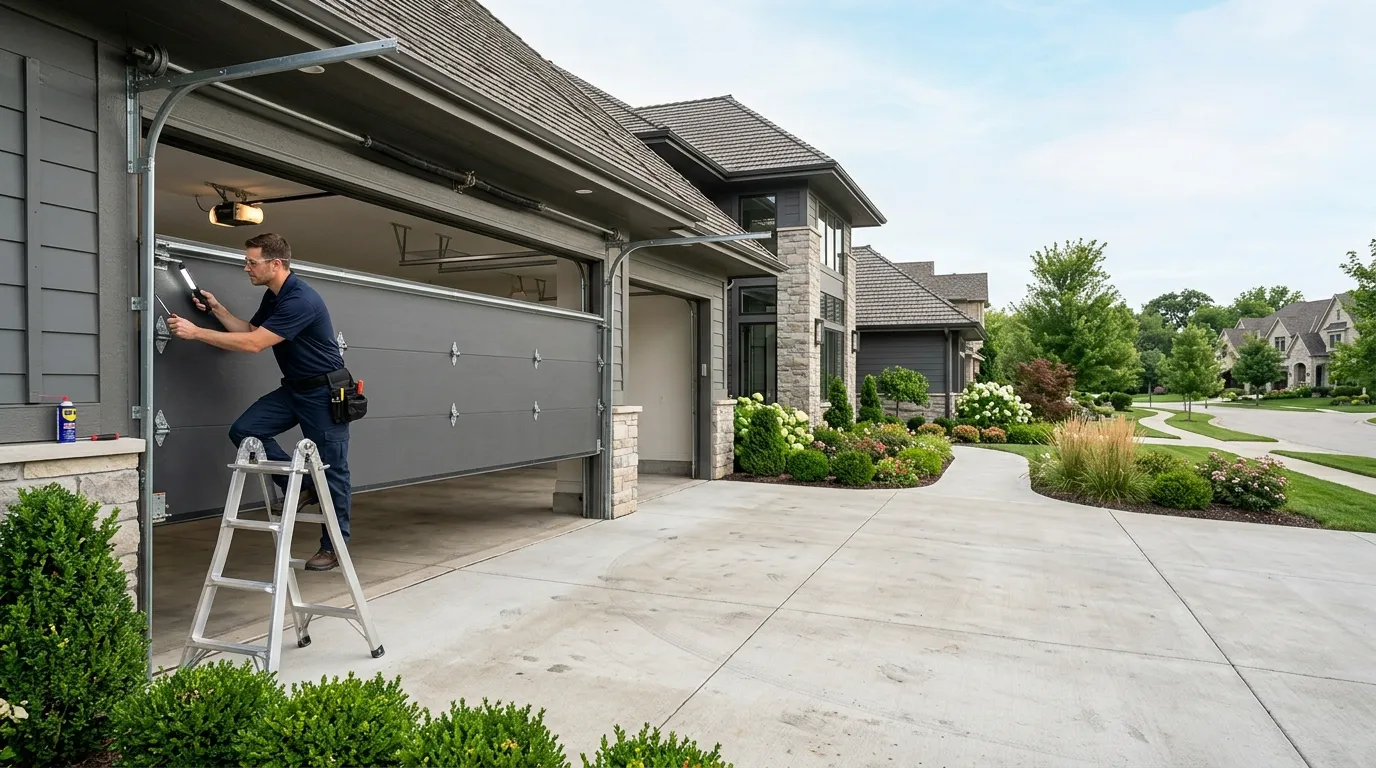
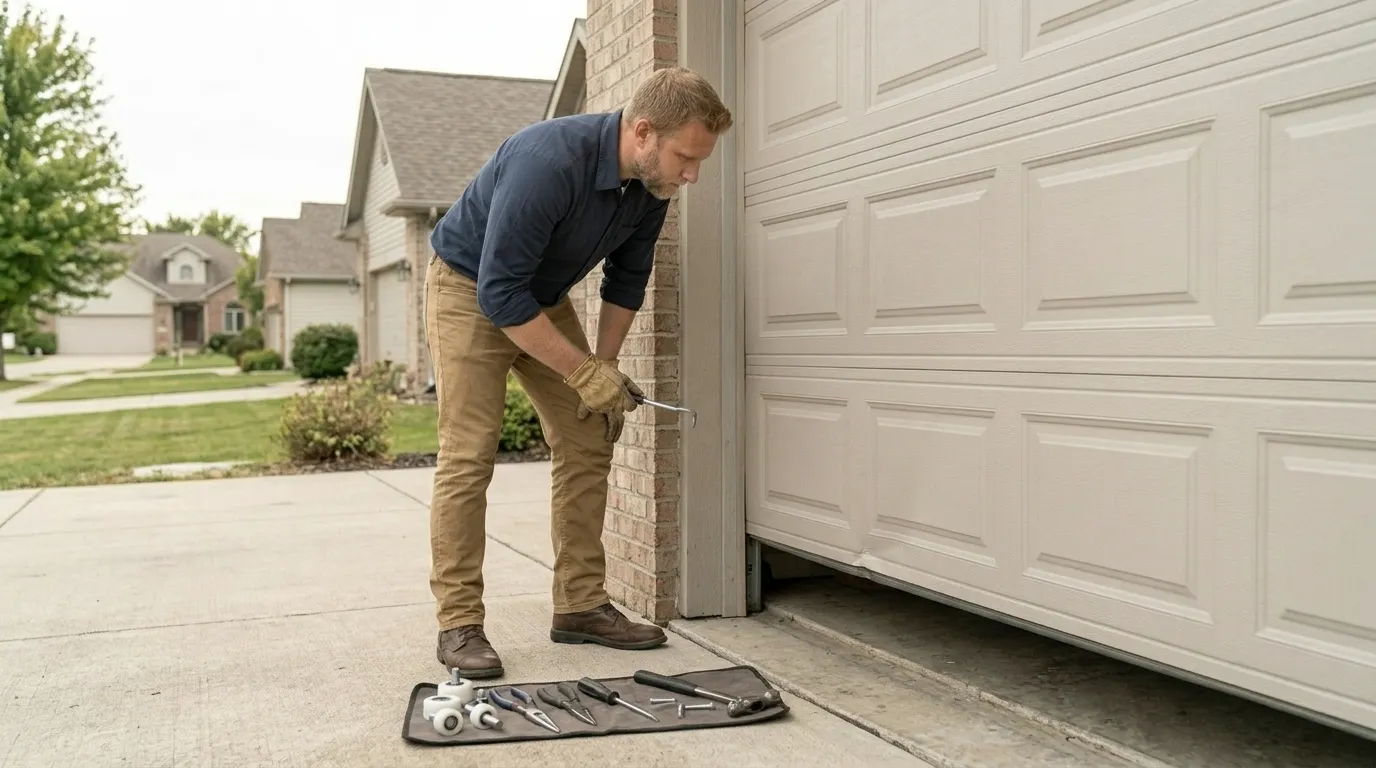
You can do some of this yourself. Vacuum the tracks, check that the rollers spin freely instead of dragging, and test the auto-reverse safety feature by laying a 2x4 flat under the door and closing it - it should reverse on contact. What you shouldn't do yourself is touch the torsion spring. On a 2007-built door in this town, the spring is still doing real work holding up a panel that weighs more than most people expect, and the tools to wind or unwind it safely aren't something most garages have lying around. We also wouldn't recommend re-lubricating with whatever's in the shed - the wrong lubricant gums up in cold weather, and this area sits in a severe cold climate band where that matters more than it would somewhere milder.
How We Fix It
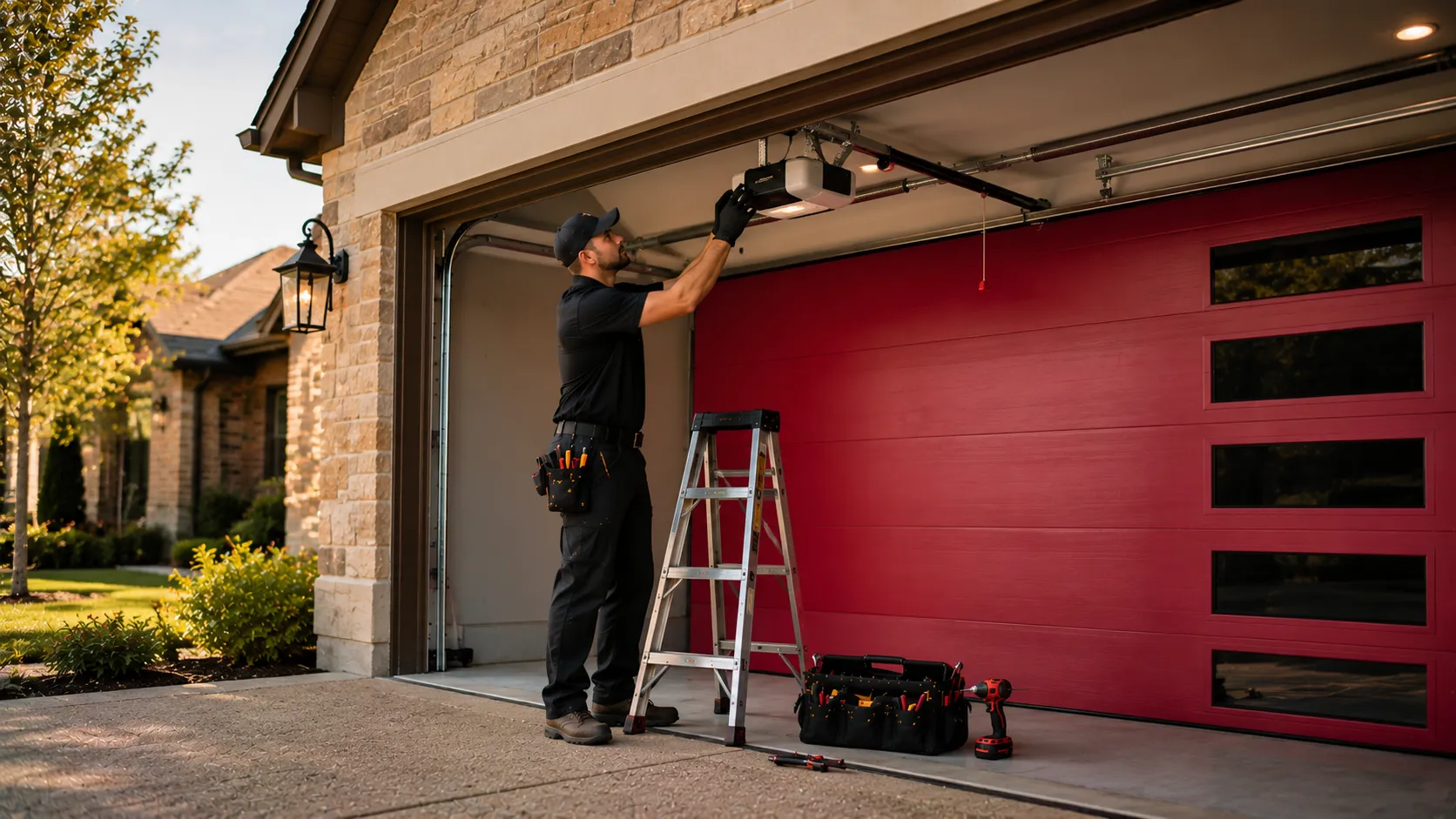
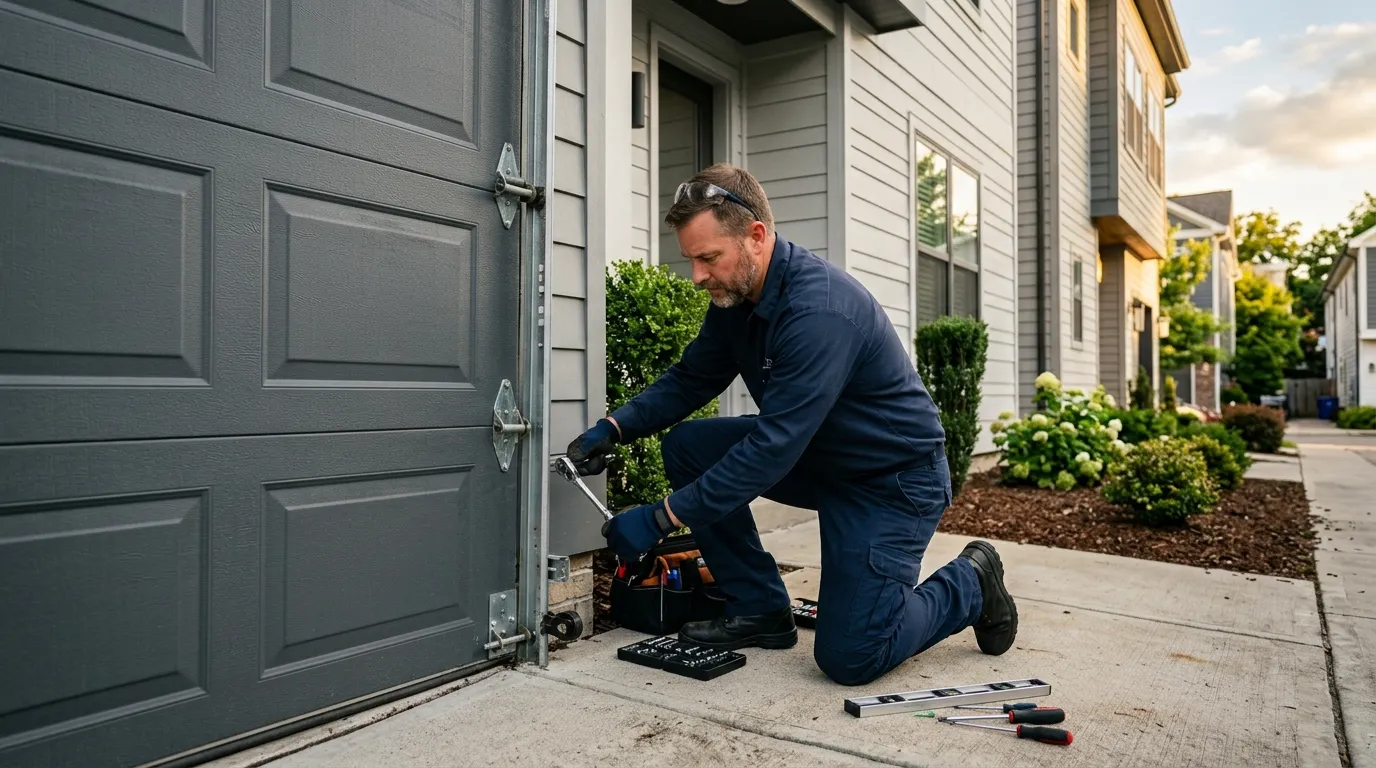
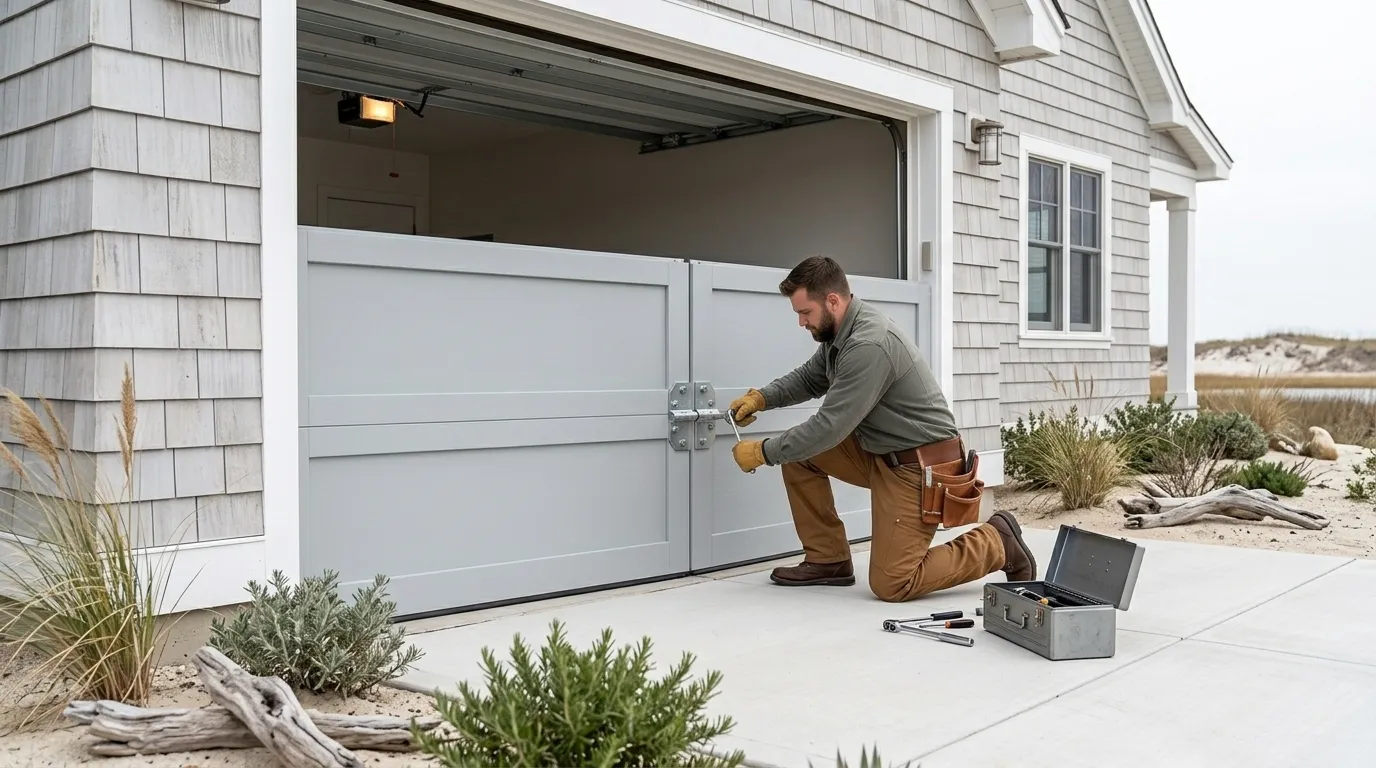
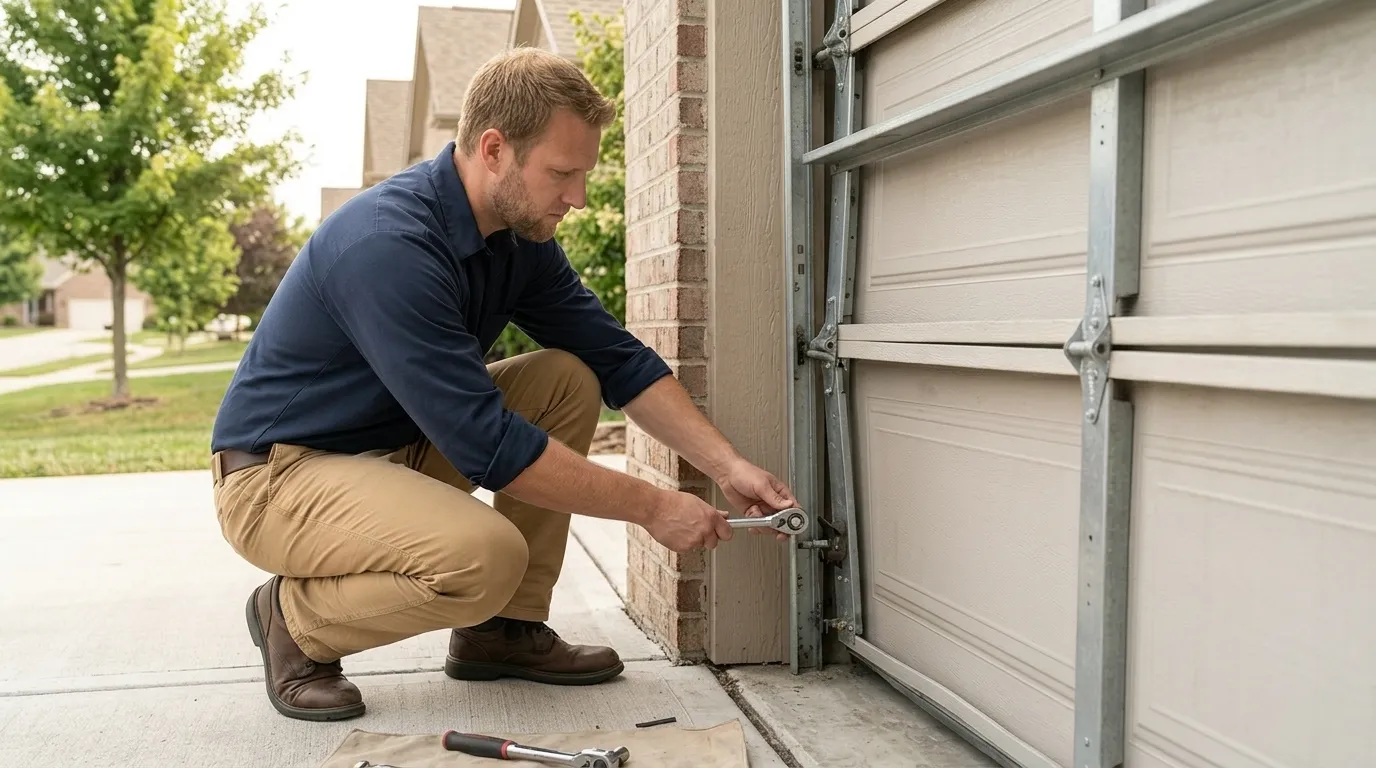
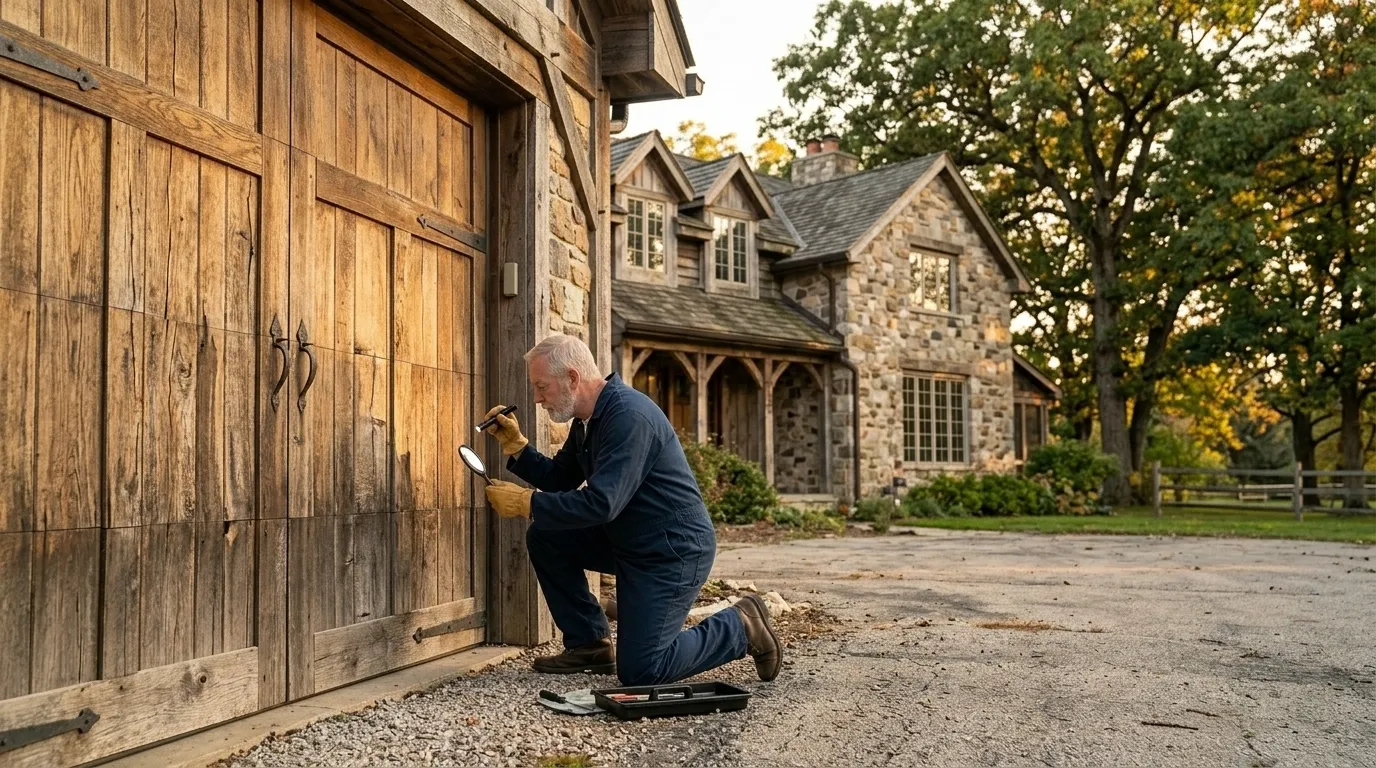
We come out from Loveland - Windsor is about nine miles from our shop - and start with the same check regardless of what you called about: rollers, track alignment, spring tension, opener sensor alignment, and hardware torque on the hinges and brackets. On a house built around 2007, we're usually replacing rollers before we're replacing springs, since the rollers take the daily wear and the spring was sized generously for the panel weight at install. We lubricate with a silicone-based product suited to this area's cold band rather than a general-purpose oil, since the wrong lubricant can gum up and slow the door in low temperatures. If the opener board is original and showing age, we'll say so plainly rather than patch around it - a straight answer costs you less over three years than a repeated service call.
Why It Happens Here
Windsor's housing centers on a 2007 median build year, which puts most doors here on steel sectional panels, torsion spring setups, and factory nylon rollers rather than the extension-spring hardware common on houses built decades earlier elsewhere in the area. That hardware was solid when installed, but nylon rollers and torsion springs both have service lives measured in years of cycles, not decades, and a door installed in 2007 is now old enough that the first wave of that hardware is wearing out across town at roughly the same time. Add this area's severe cold climate band, where temperature swings stiffen grease and shrink metal tolerances slightly, and you get a predictable pattern: rollers and sensor alignment first, springs a few years behind. With around 14,004 households in Windsor and a median income of $121,758, most of these are owner-occupied homes where a small maintenance visit now is cheaper than an emergency call once the spring actually lets go.