How Long It Takes
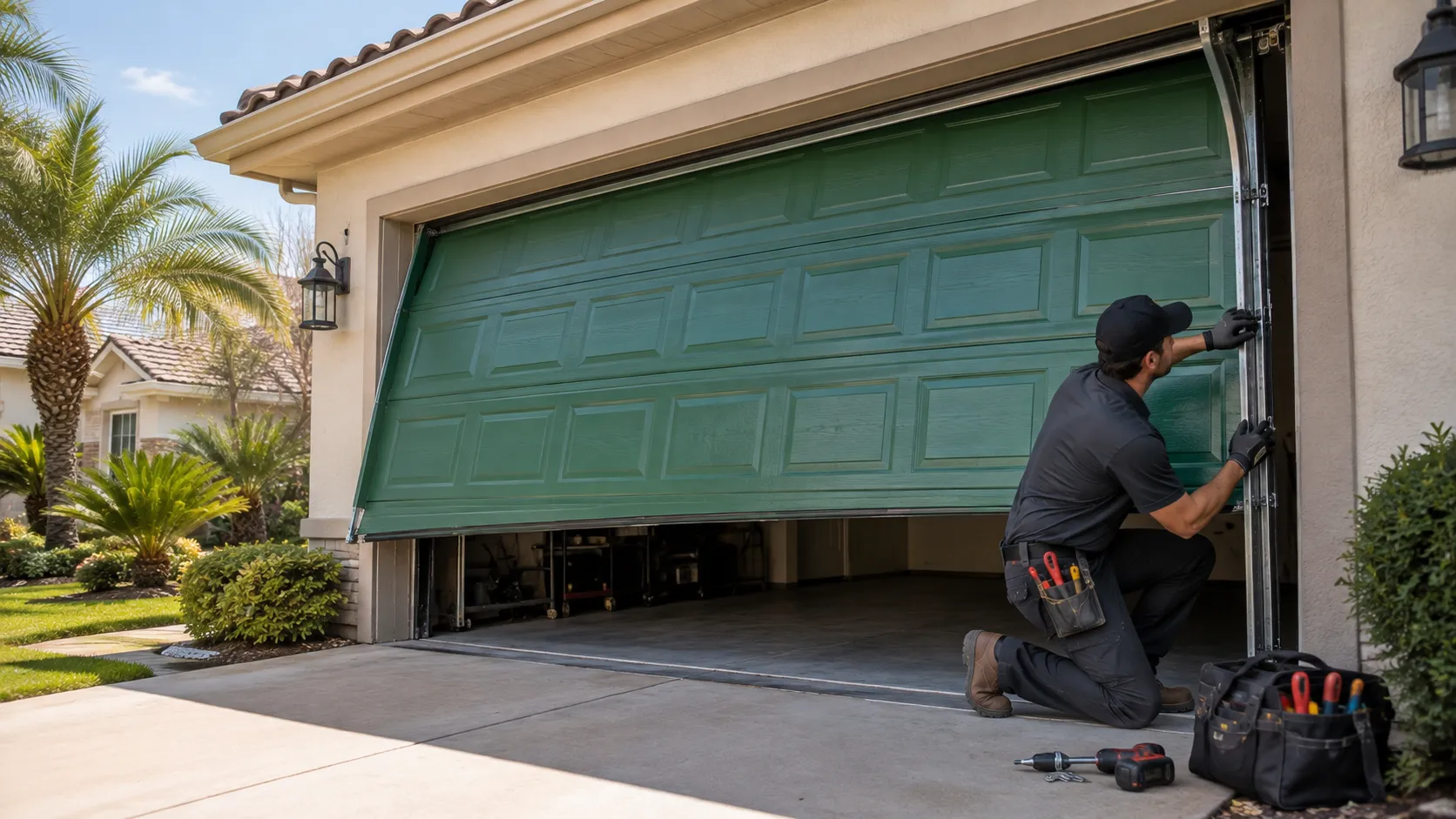
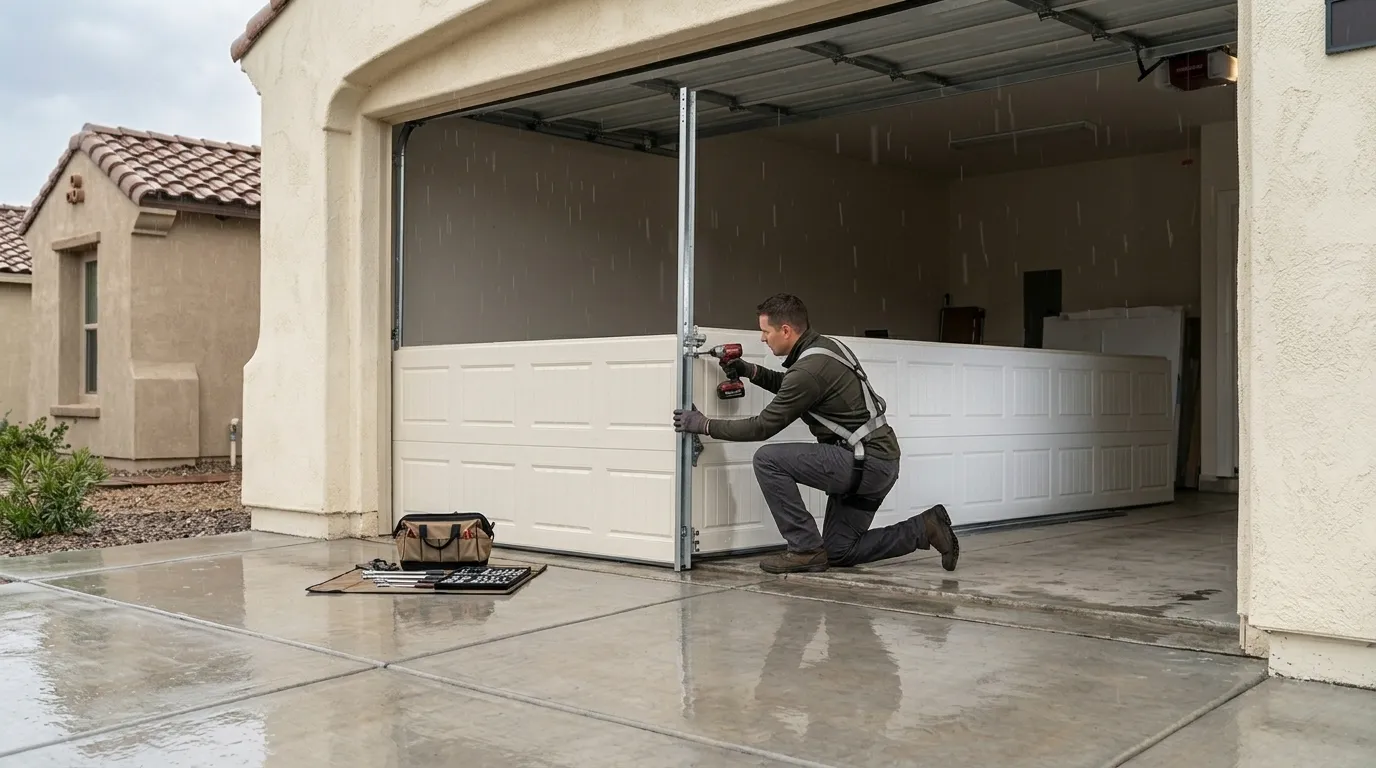
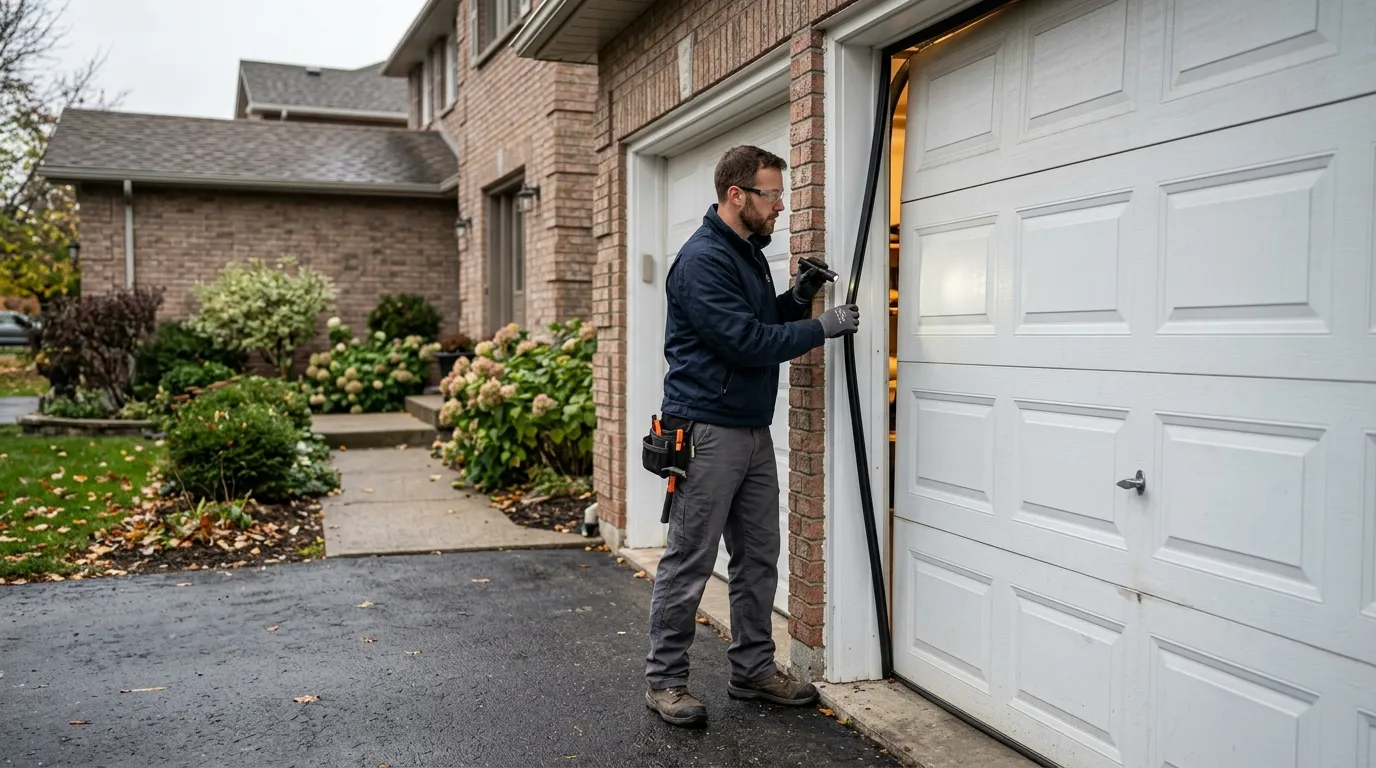
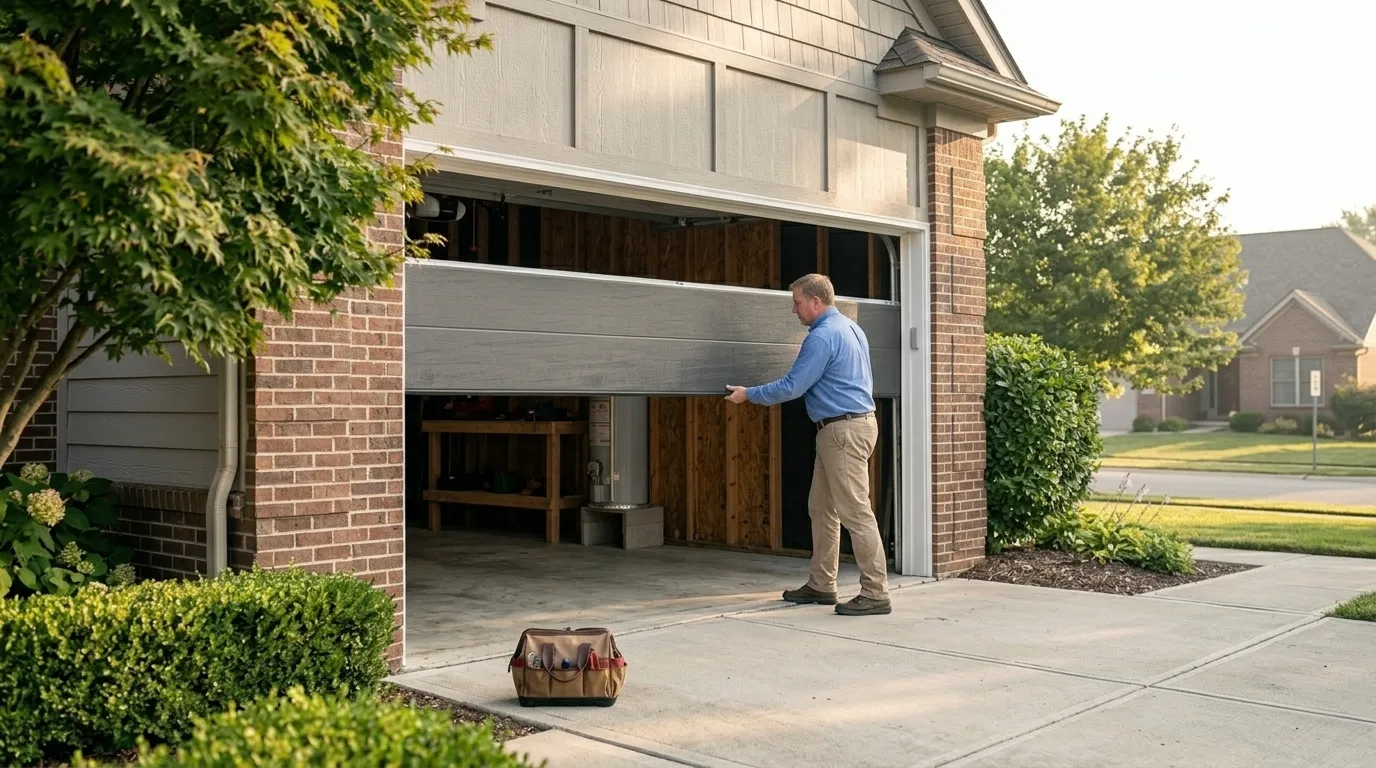
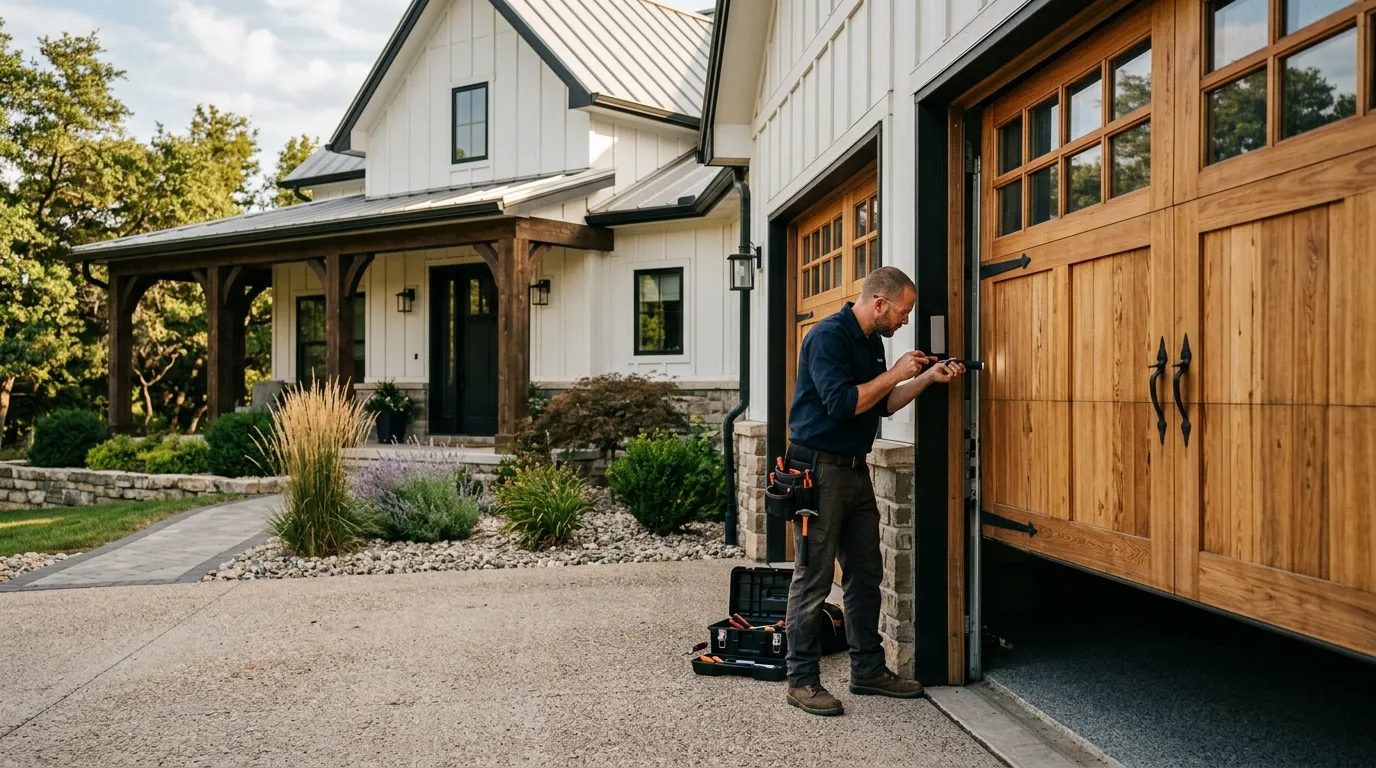
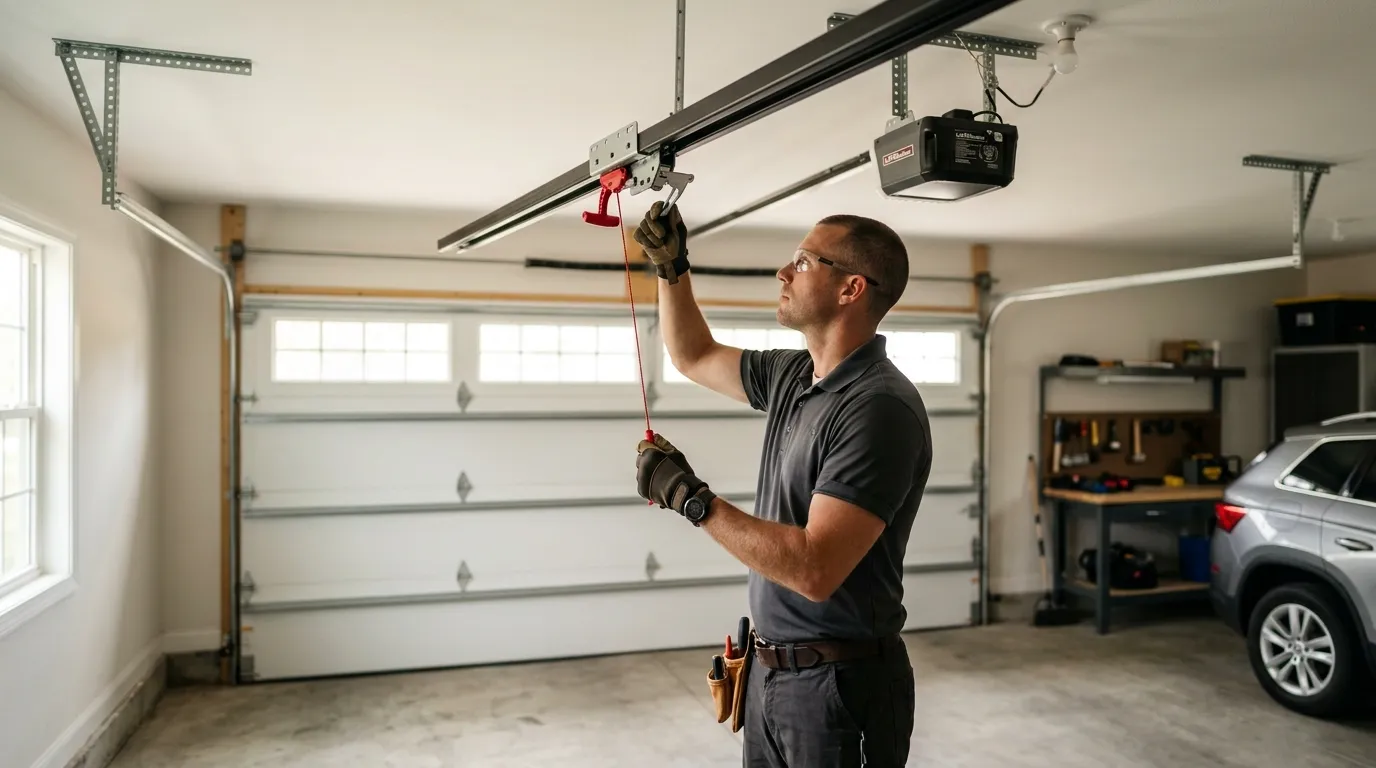
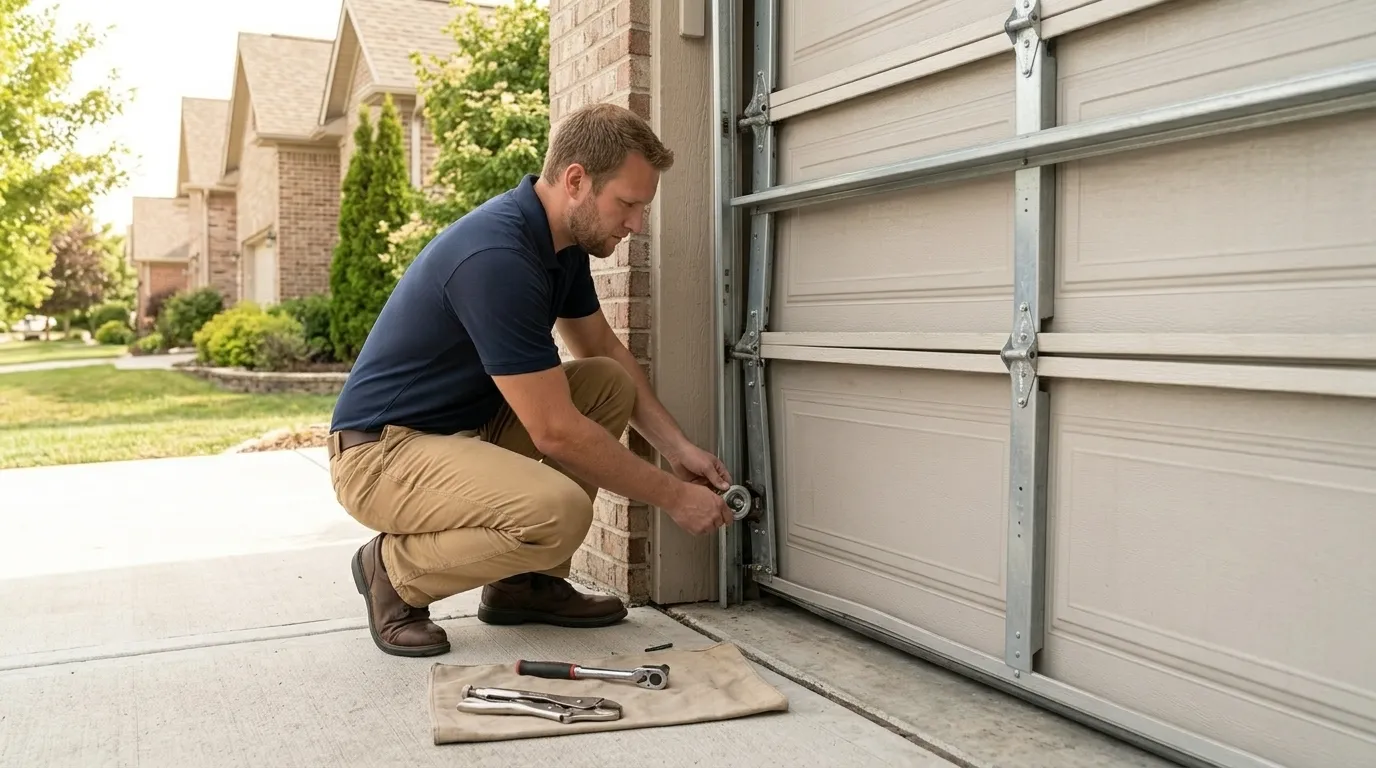
A door that's simply slipped a roller out of the track, with the rail itself still straight, is usually the fastest kind of call - the roller gets reseated, the bracket gets tightened, and the door is tested through a full open-close cycle before the truck leaves. That's a job measured in a short visit, not a half day.
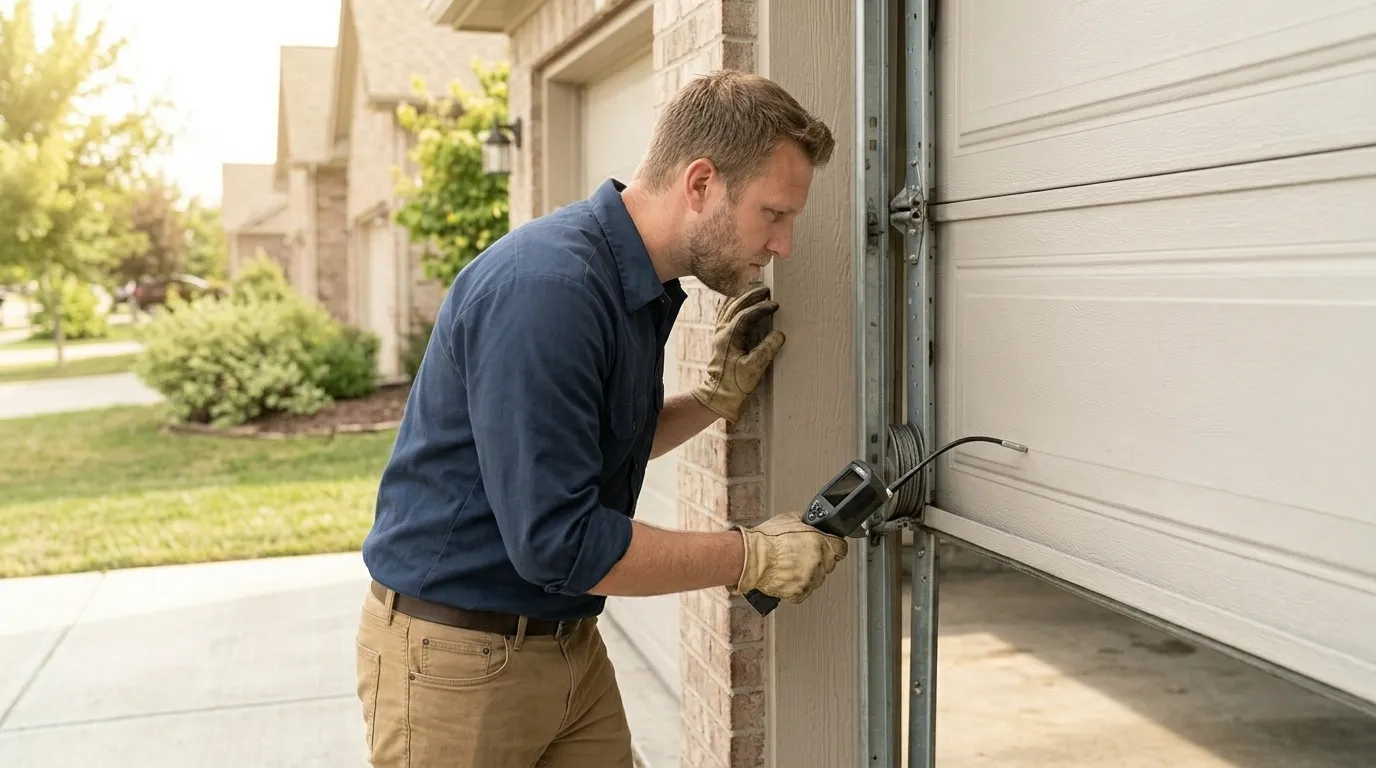
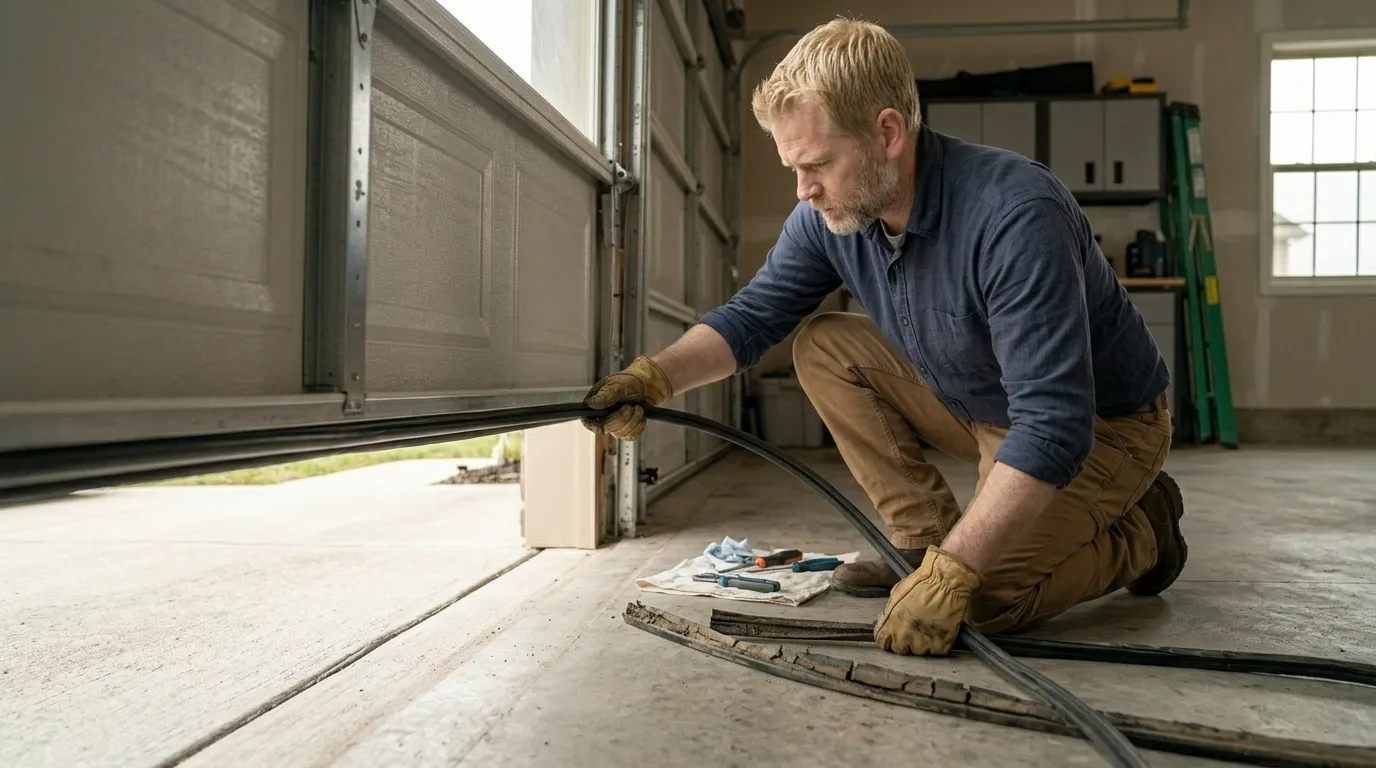
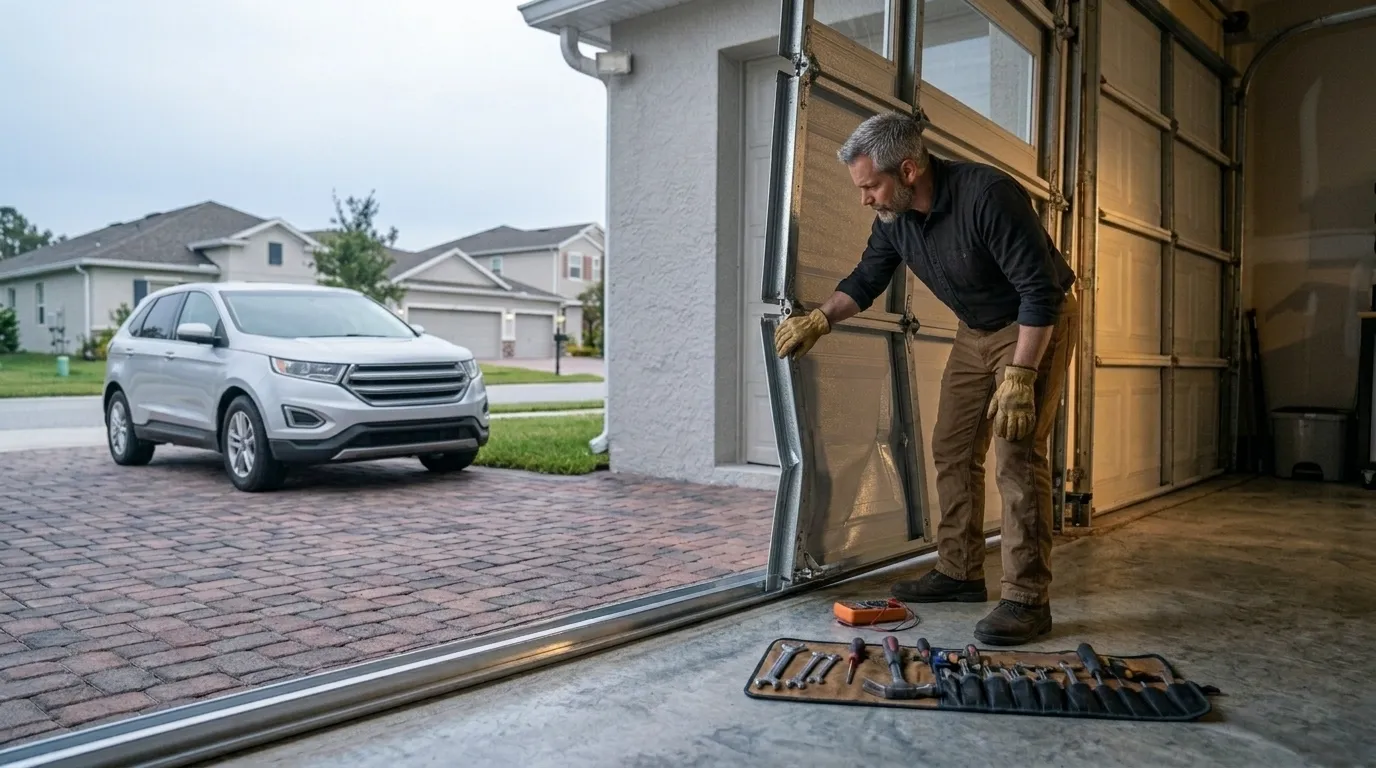
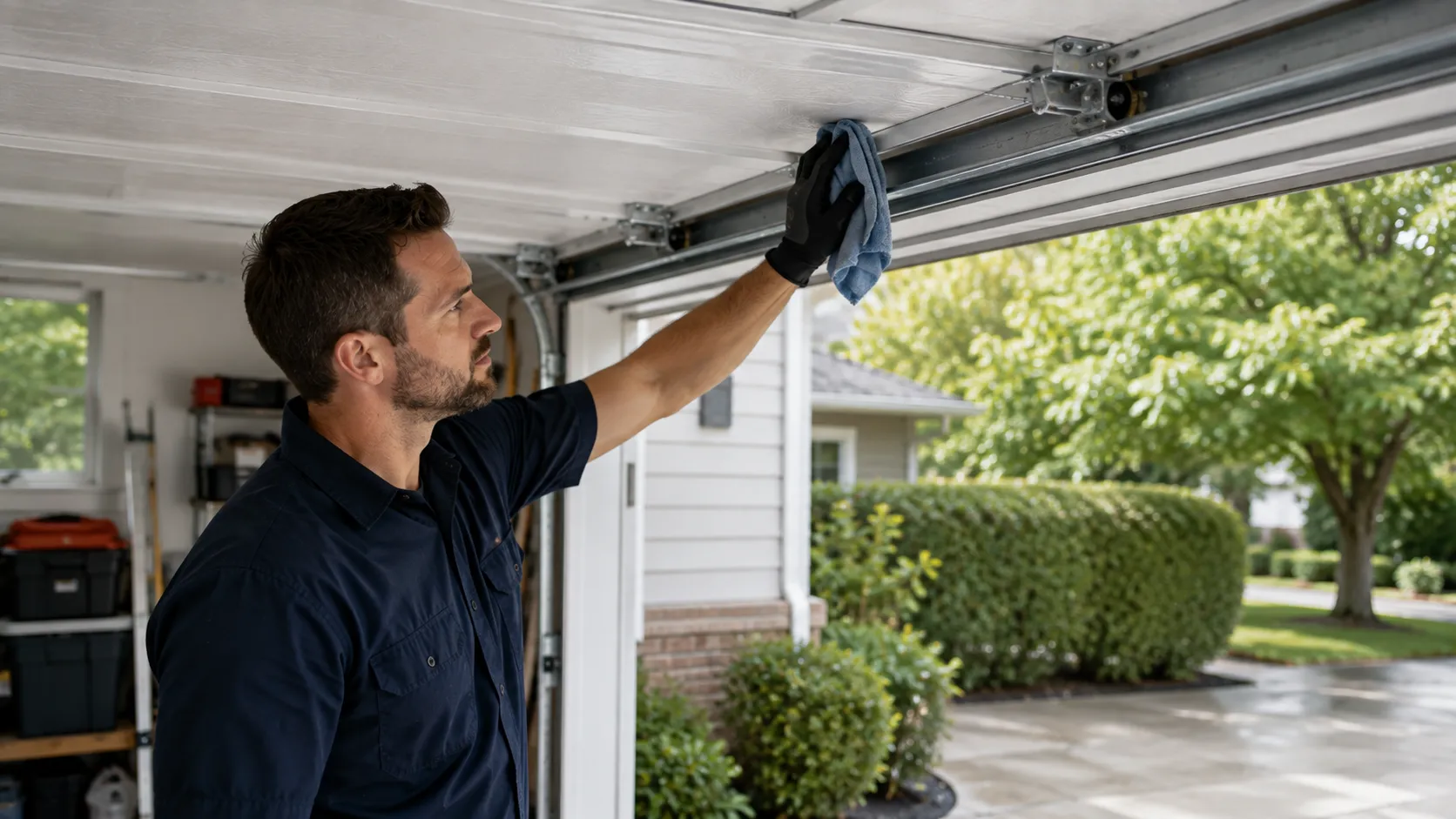
It runs longer when the track itself is bent, which happens more often than people expect once a door has been forced even a few inches while off track. A bent track section usually needs to come off and get replaced rather than bent back into shape, since a rail that's been reshaped once tends to fail again at the same spot.
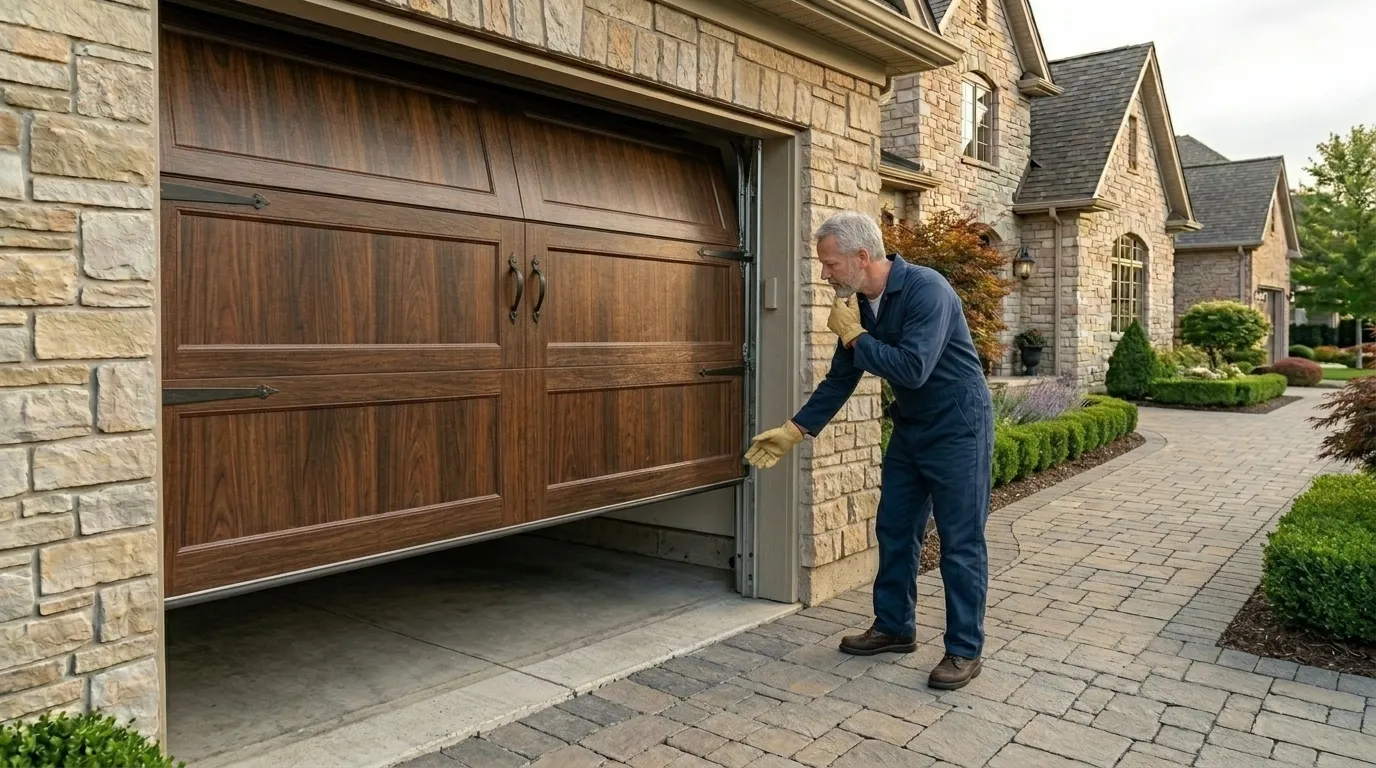
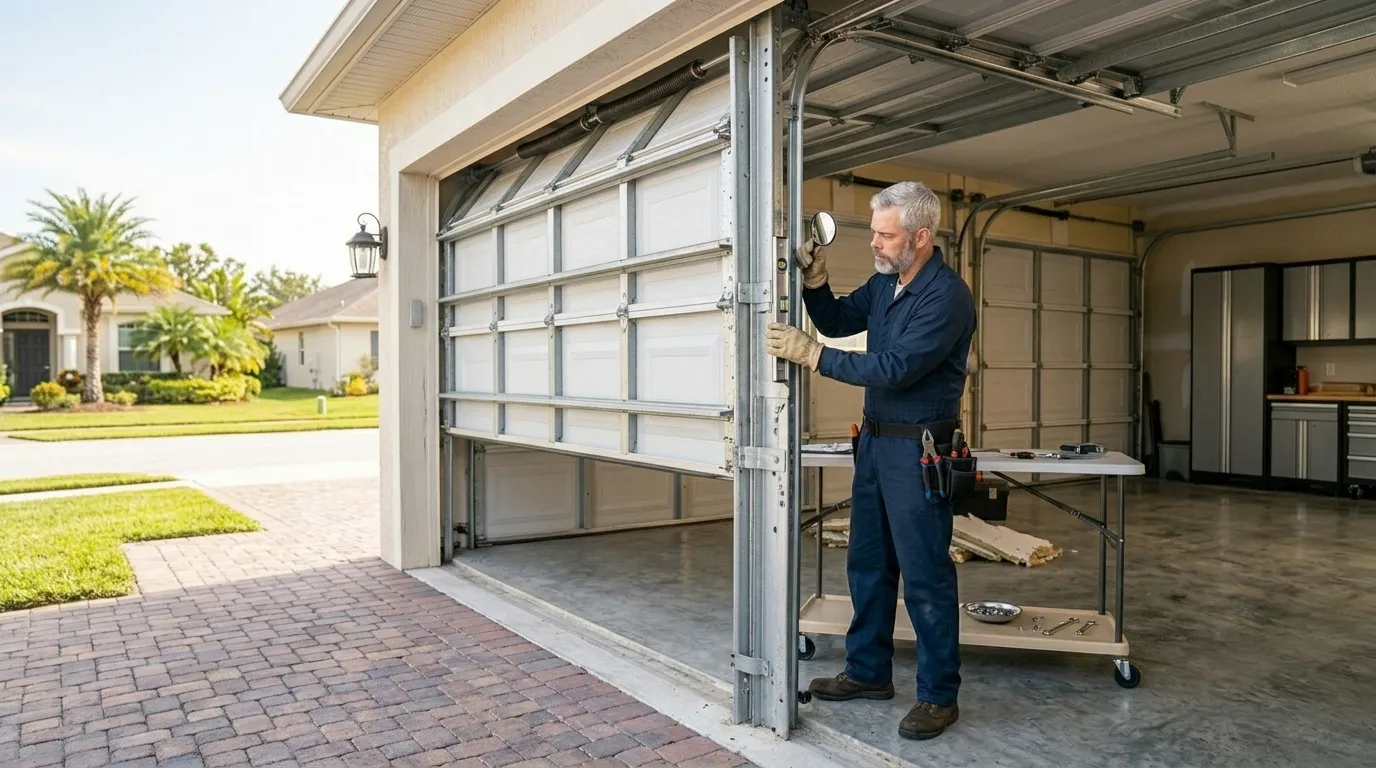
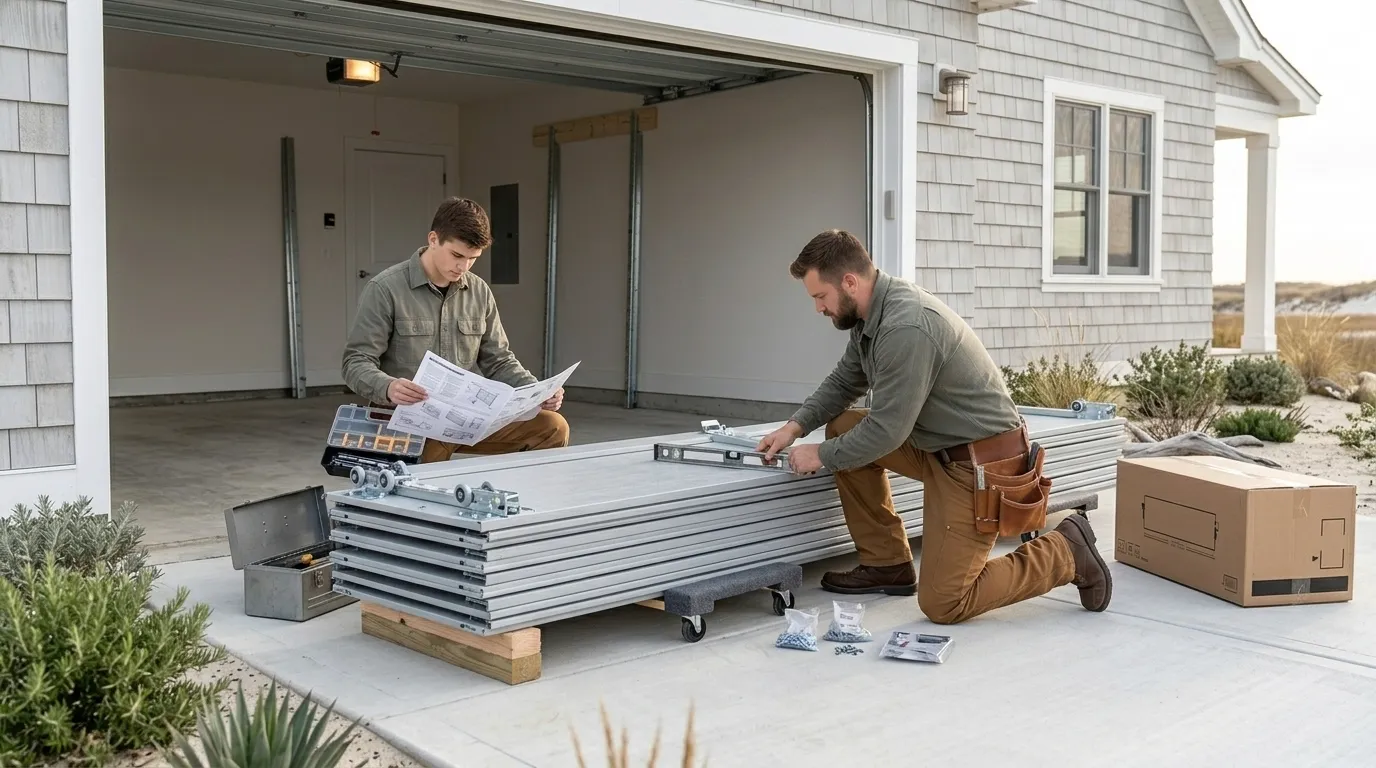
The other variable is the door itself. A single door on a light aluminum panel goes back into alignment faster than a double door on a heavier insulated panel, simply because there's more weight fighting the track and the springs while the adjustment gets made. If a panel took damage in the process - a dent at the hinge point, a cracked stile - that adds time on top of the track work itself.
Why It Happens Here
Most of the houses across this service area went up between 1975 and 2012, with the median build year landing around 2003, and the fourteen named areas we cover are mostly carrying that same 2000s-era garage hardware. That matters because it's the generation of steel track and roller assembly that's now old enough to have worn brackets and stretched mounting screws, but not so old that anyone's replaced it yet on a schedule - it just fails when it fails.
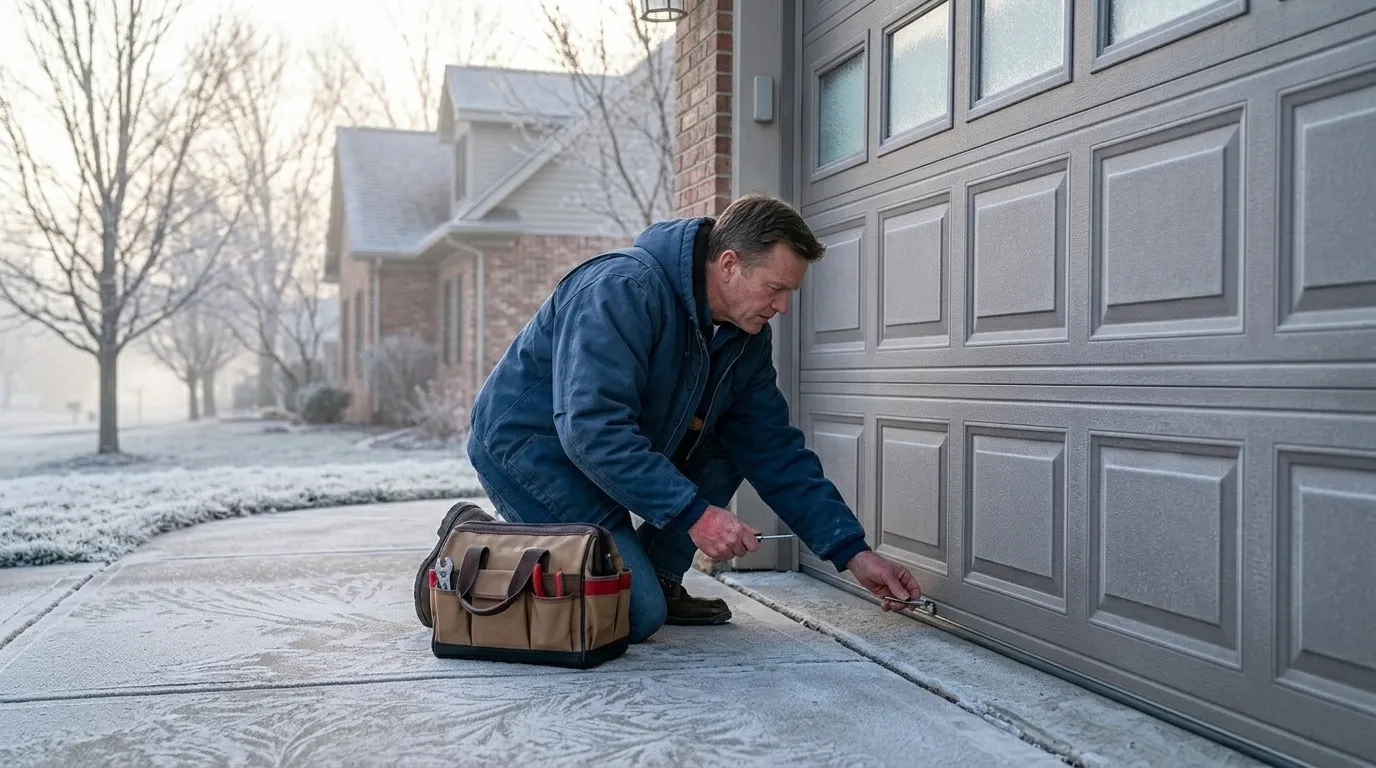
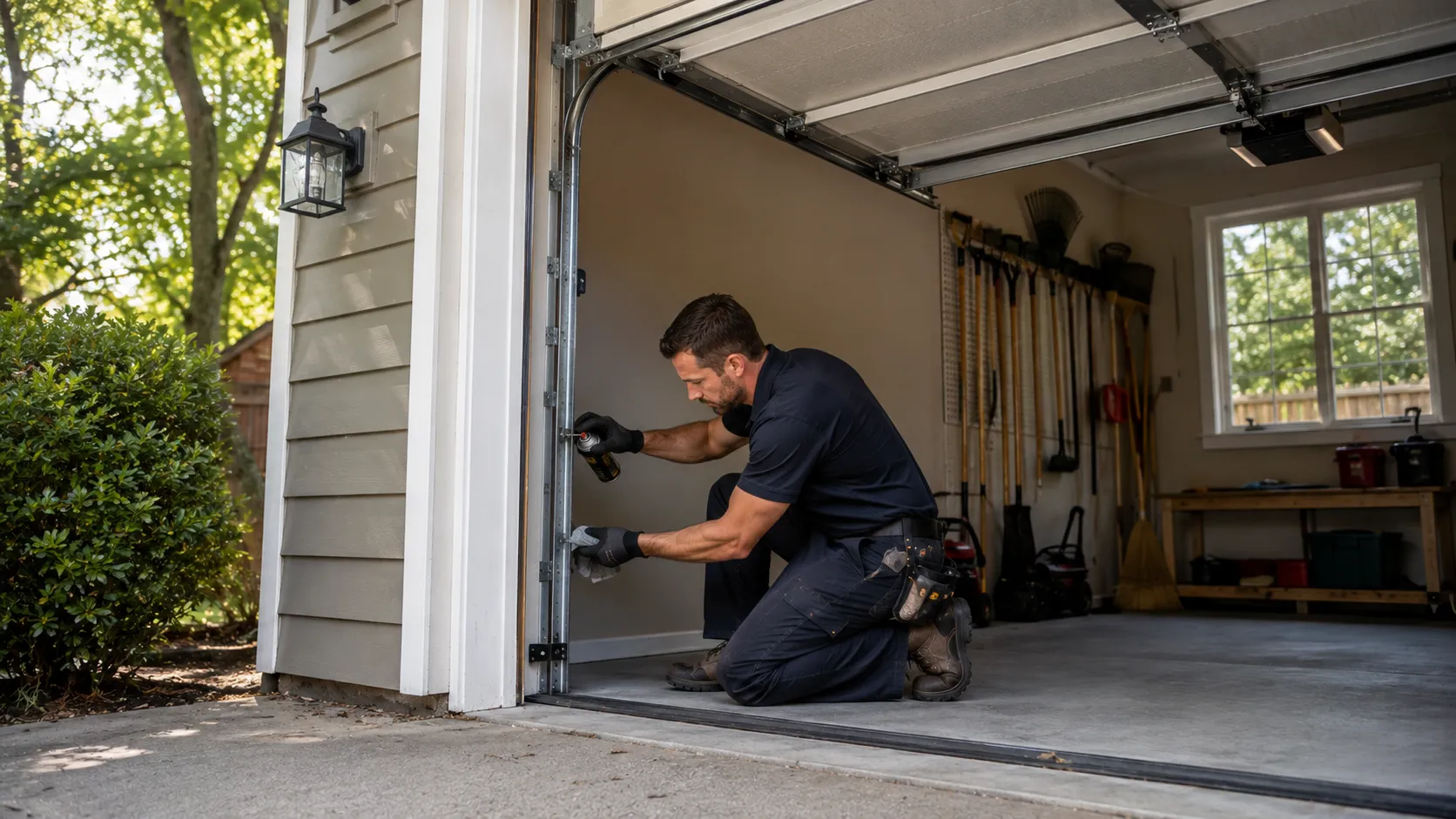
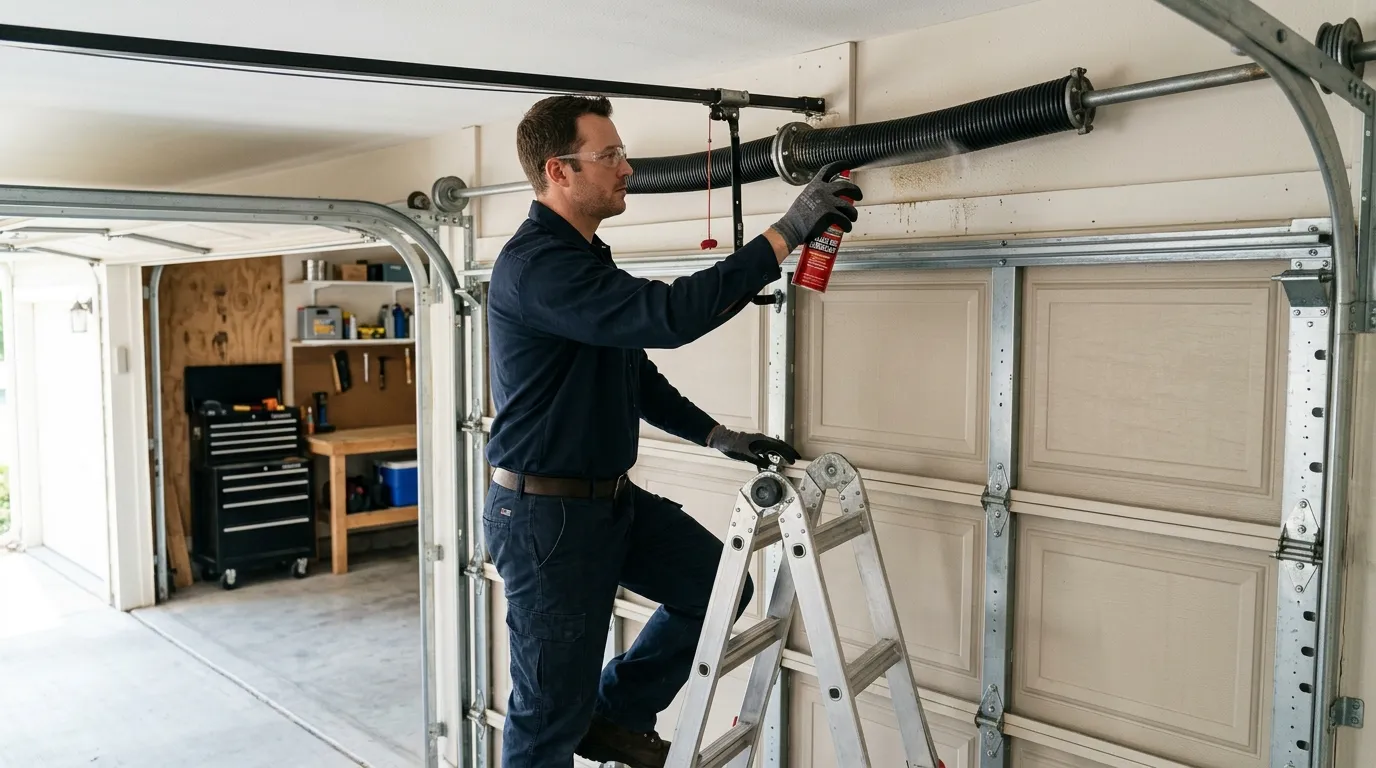
The bigger driver is the climate band this area sits in, which is classified cold and severe. A garage isn't heated space, so the track and its brackets go through the same freeze-thaw cycle the rest of the house's exterior does - metal contracts hard on a cold night and expands again the next afternoon. Do that enough winters in a row and the lag screws holding the track to the framing start to walk loose. Add a slick concrete floor from melted snow tracked in on tires, and the door's own weight does the rest, working the roller sideways out of a rail that's no longer pulled tight.
We see this pattern show up on the same generation of houses across the service area, which is part of why it's such a predictable call for us this time of year.