Broken torsion spring on a home built in the 2000s? We explain why Loveland's housing stock and cold winters wear springs fast, and what the repair actually involves.
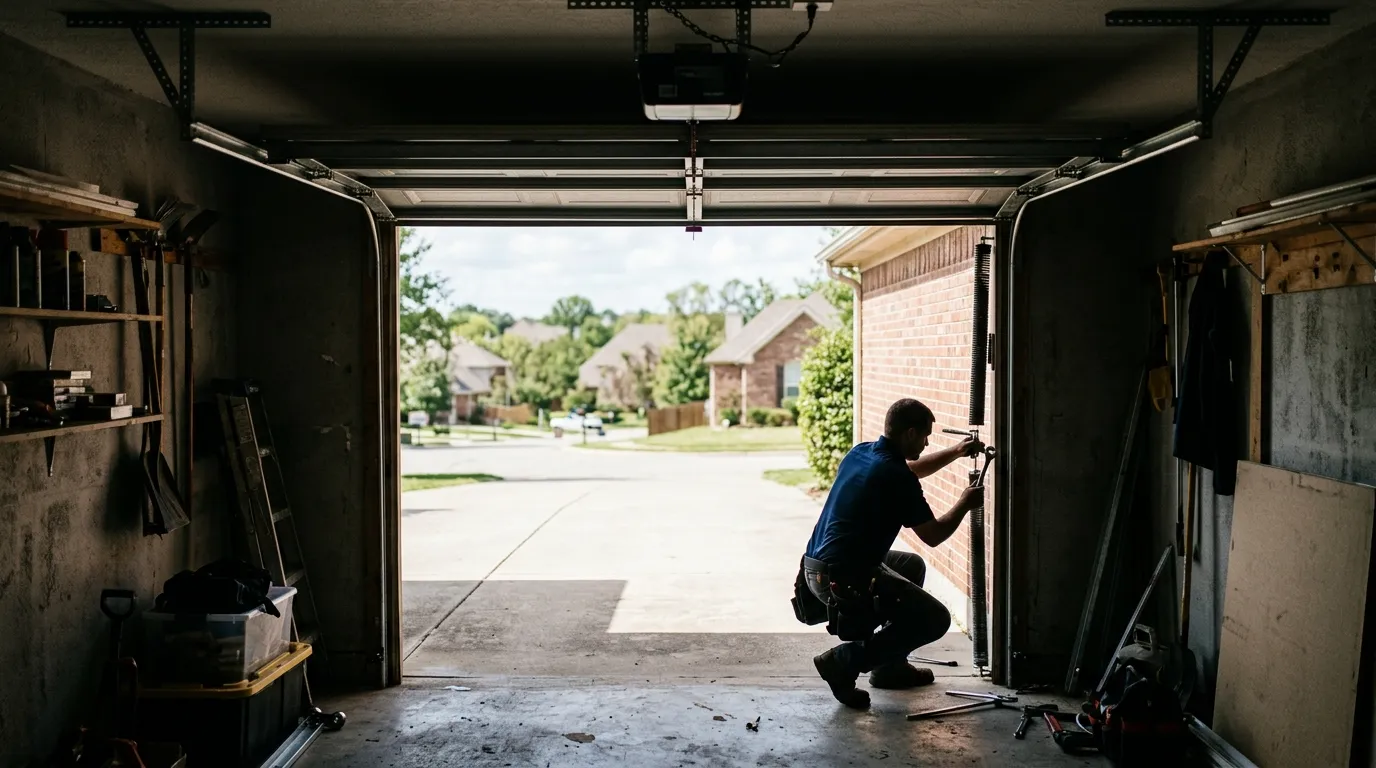
If your door won't budge, or it opens a few inches and stops, or you heard a bang from the garage before any of this started, you're almost certainly looking at a broken torsion spring. That bang is the spring letting go under tension - it's loud, and it's often the first sign anyone in the house notices anything is wrong.
A broken spring means the opener has nothing to help lift the weight of the door. Openers aren't built to lift a full garage door on their own; the spring does that work, and the opener just guides it. Try to force it with the opener and you can strip the gears or burn out the motor, turning a spring job into an opener replacement.
Most homes in this area were built between 1975 and 2012, with the bulk of that stock going up in the 2000s across the fourteen named subdivisions and areas we work in. That era of construction leaned heavily on standard torsion spring setups mounted above the door - reliable systems, but ones with a known service life measured in cycles, not years. When a spring in a house from that build window fails, it's usually just doing what torsion springs do after enough open-and-close cycles: reaching the end of its rated life.
How Long It Takes
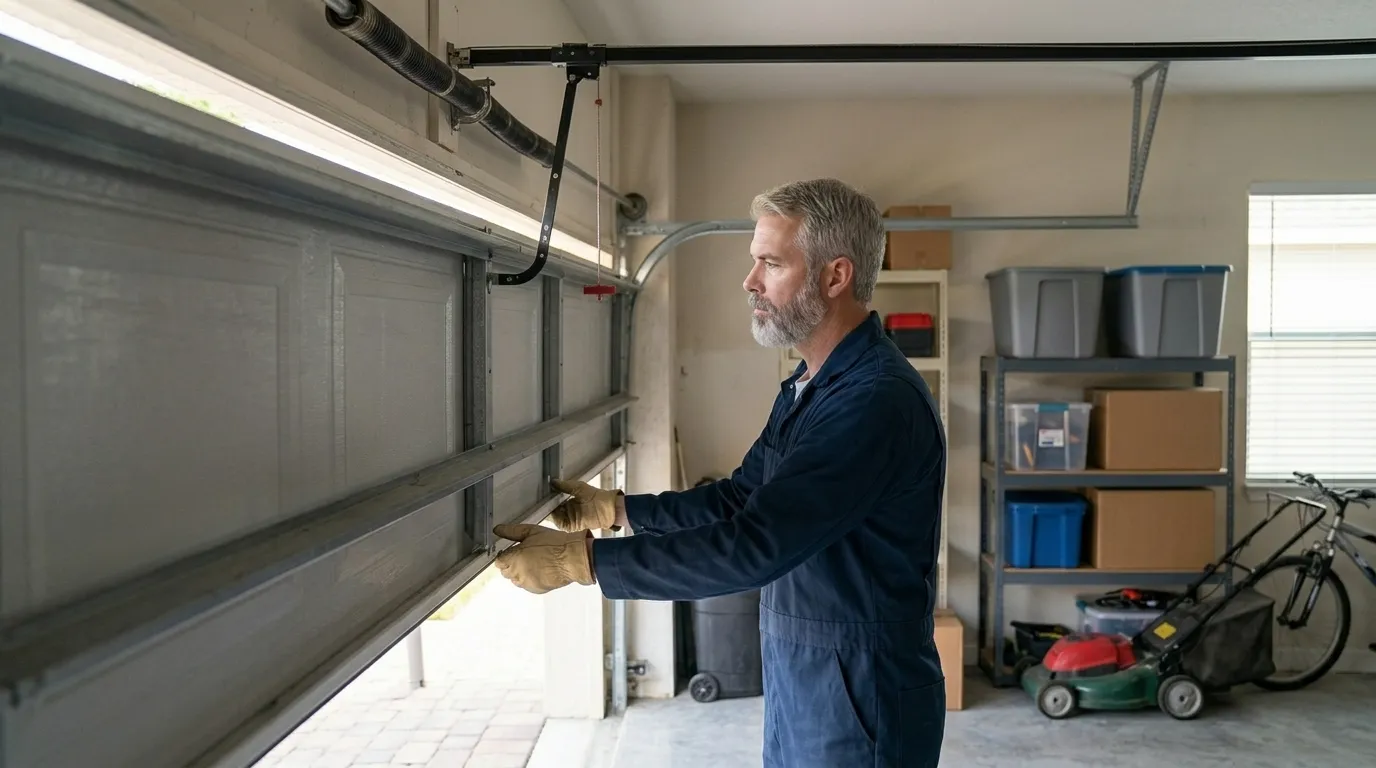
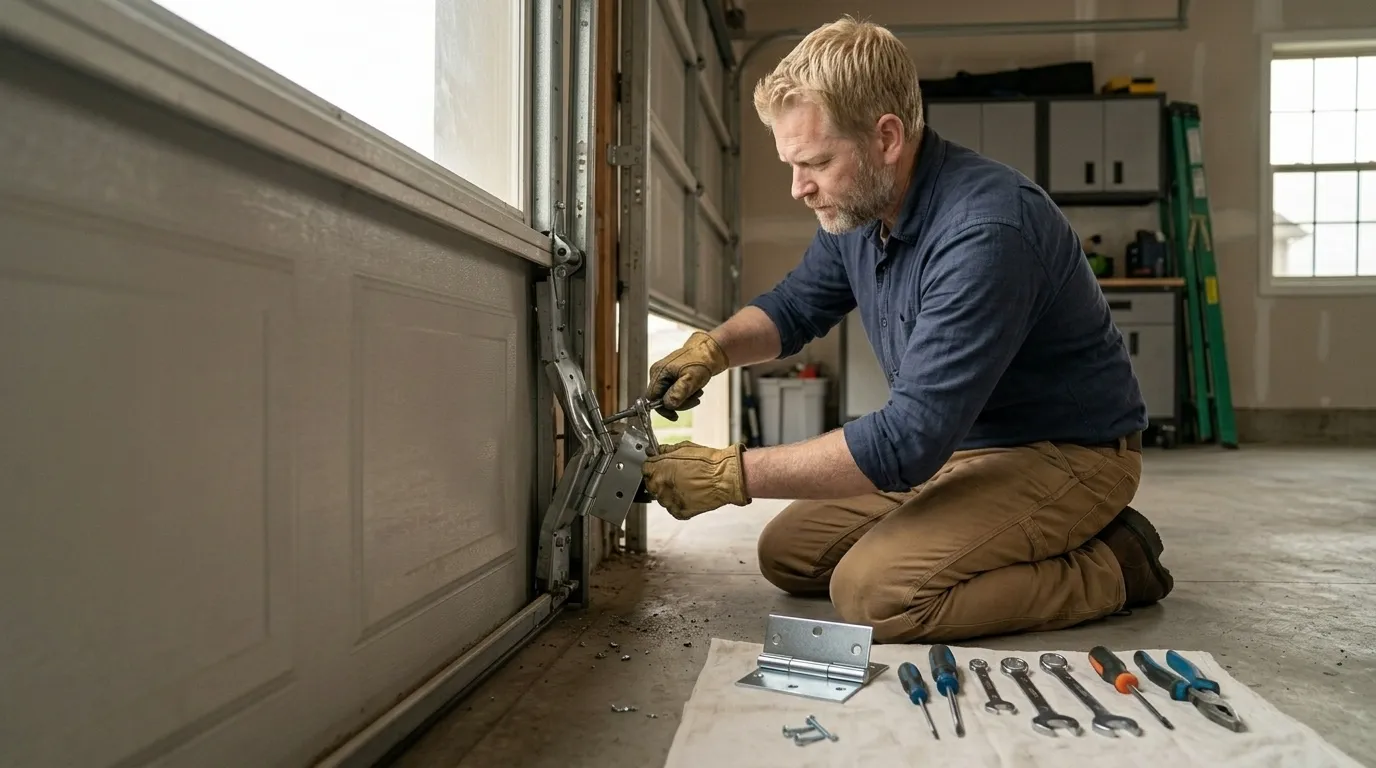
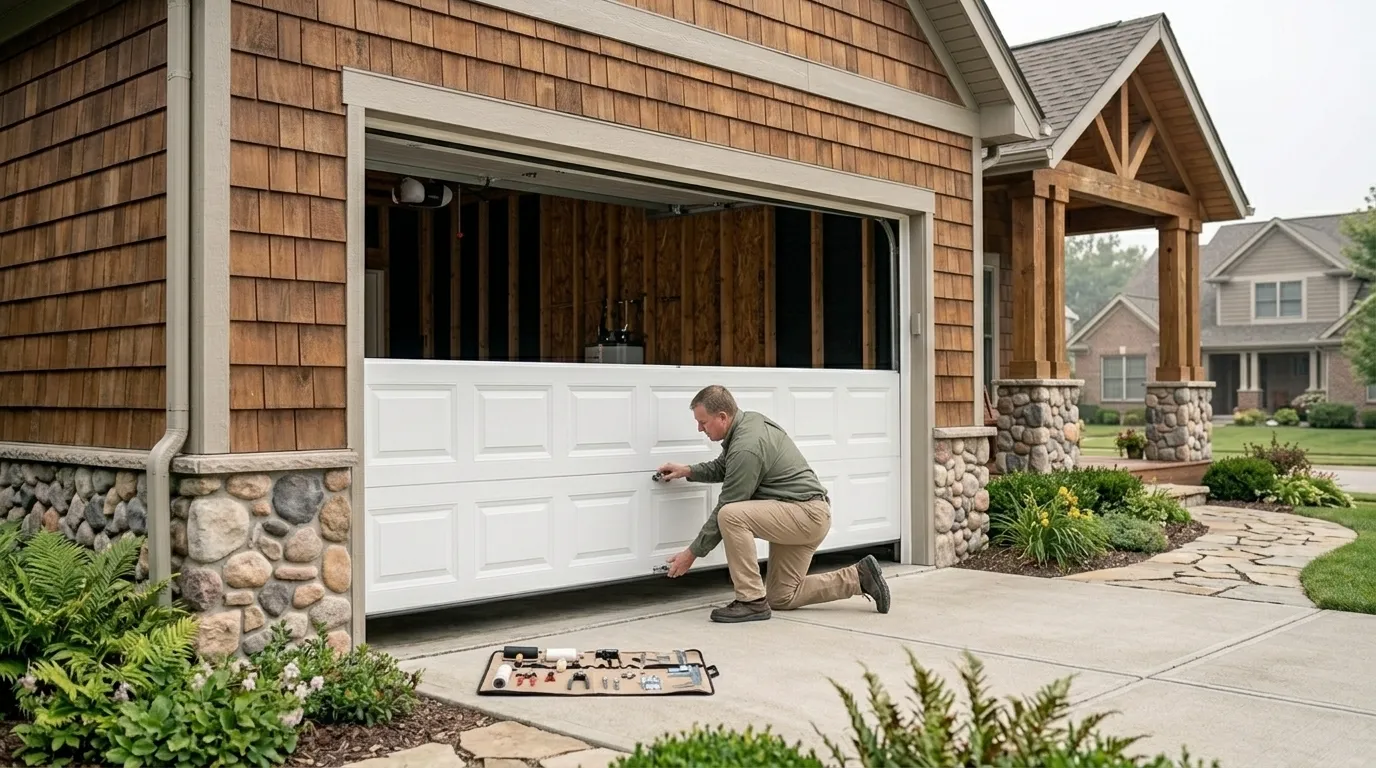
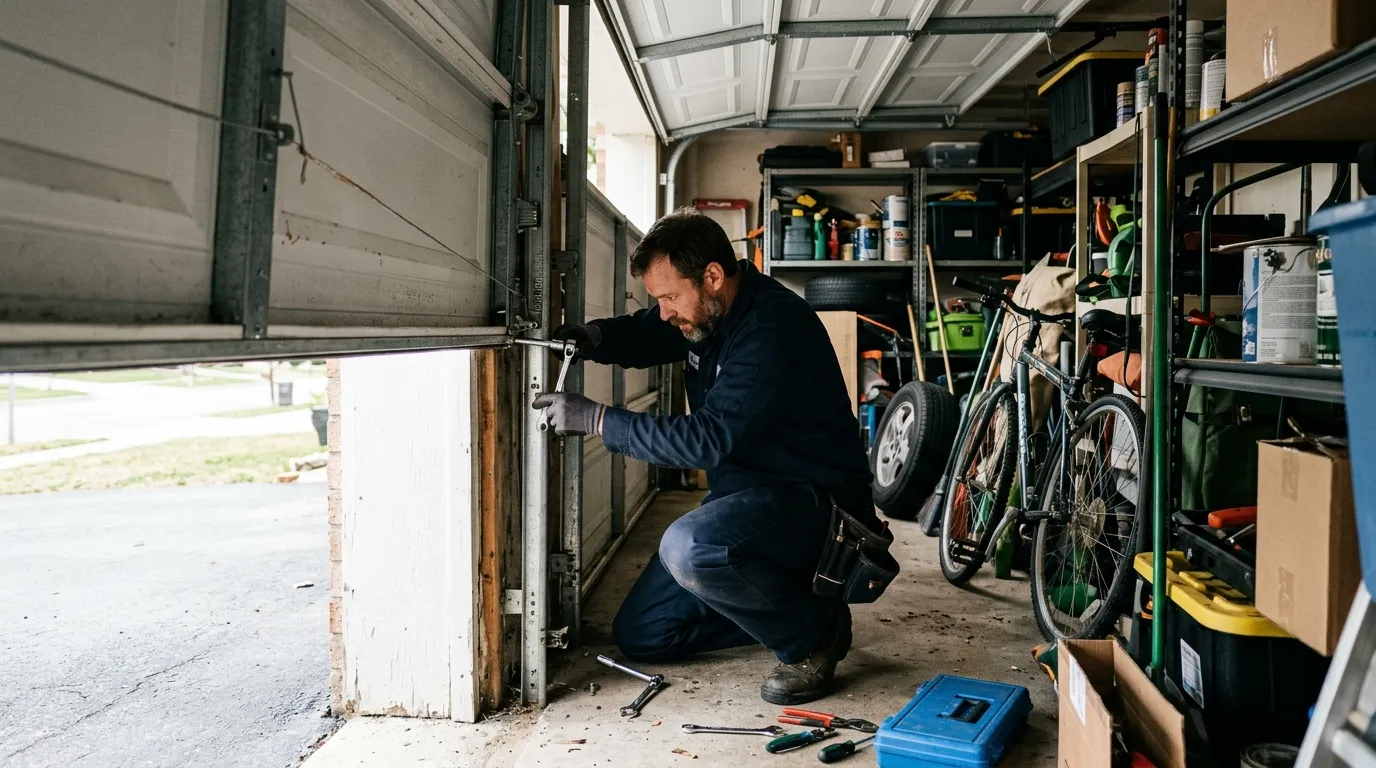
A straightforward torsion spring replacement on a residential door is a same-visit job once a tech is on site with the right spring size and wire gauge. Measuring, pulling the old spring, winding in the replacement, and balancing the door is mechanical work with a known sequence - it isn't a multi-day project.
What can add time is matching the spring to the door. Doors from the 2003-era median build in this area sometimes carry non-standard spring sizing depending on the manufacturer used at the time, so a tech may need to confirm the exact spec before cutting a new spring rather than grabbing an off-the-shelf size. That's a short delay, not a long one, but it's honest to say it happens.
We don't stock every spring size on every truck. If your door needs an uncommon spec, that can mean a short wait for the right part rather than a same-hour fix. It's the one limitation worth naming up front, because promising an instant fix on every door and then not delivering is worse than saying so.
Why It Happens Here
This is a cold-climate service area, and that matters more for springs than most people expect. Steel contracts in cold temperatures, which changes the tension a torsion spring is under through the winter months. A spring that's been cycling for years is more likely to fail on a cold morning than a mild afternoon, simply because the metal is under more stress when it's cold.
Combine that with the age of the housing stock - most of it dating to the 1975-2012 window, with the heaviest concentration built in the 2000s - and you get a lot of springs that were installed new during that build boom and are now well into their expected cycle count. A spring rated for a certain number of open-close cycles doesn't care how old the house is; it cares how many times it's been used, and a spring installed when a house was built in the early 2000s has had two decades of daily use to get there.
Houses in this area also see real seasonal swings, and repeated freeze-thaw stress on hardware compounds normal wear. None of that is unique to any one street - it's a pattern across the service area's housing, not a single house's bad luck.
The Cost of This Job
We're not going to hand you a number here that we can't stand behind, because spring cost depends on spring size, wire gauge, and whether you've got one spring or two - most double doors built in this area run on two torsion springs, and if one has failed the other is usually close behind on the same cycle count. Replacing both at once is often the more sensible call rather than paying for a second visit in a few months.
What we can tell you is that this is a parts-and-labor job priced by the spring, not a flat number that applies to every door. A door on standard hardware from the common 2000s-era builds in this area is a more predictable job to price than an older or nonstandard setup. We'll give you the actual number for your door before we touch it - not after.
Given the median household income in this service area, most homeowners treat a spring repair as a normal maintenance cost rather than a financial event, but we still don't believe in surprising anyone with the bill. If your opener also needs work because of strain from the broken spring, we'll tell you that separately rather than folding it into the spring price.
How it works
From “it’s stuck” to “it’s fixed”
1
Tell us what’s wrong
Describe the symptom - won’t open, loud bang, opener runs but the door won’t move.
2
On-site diagnosis
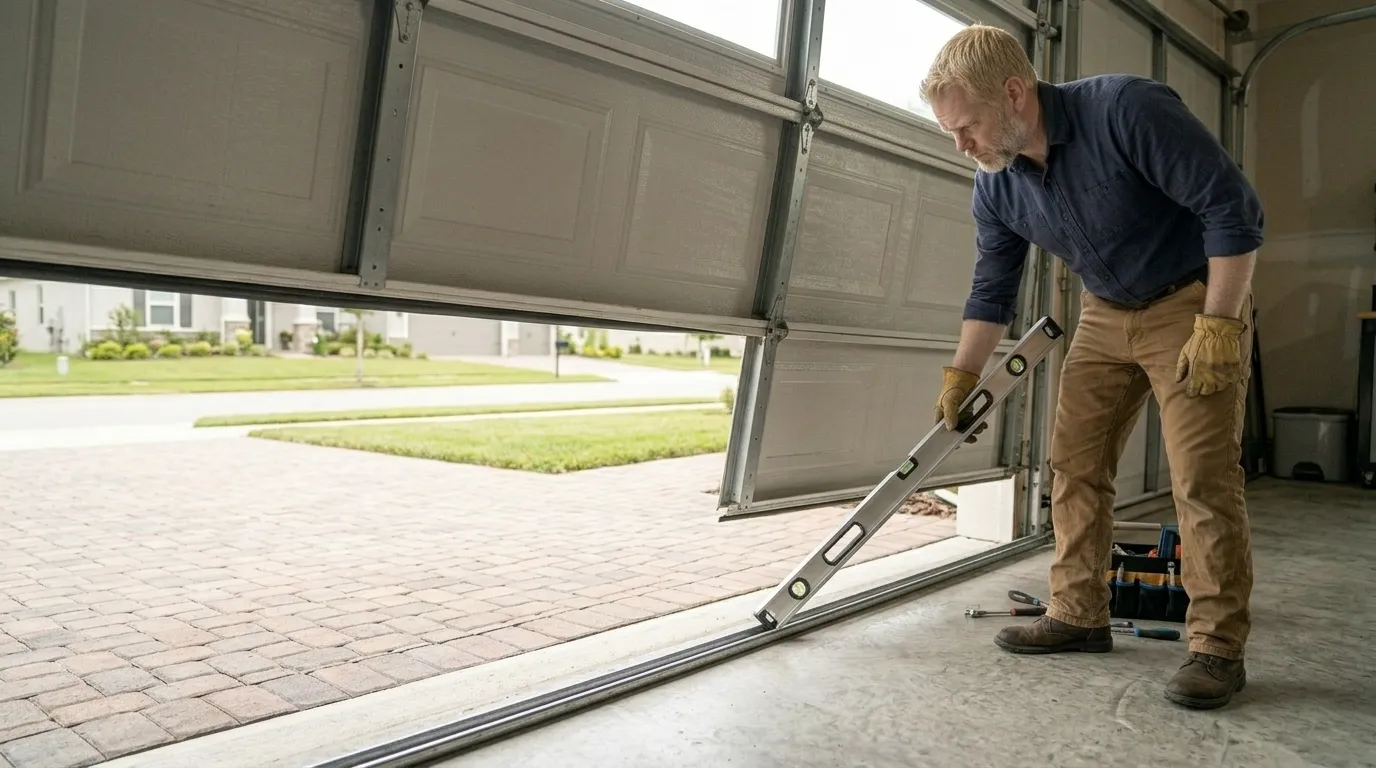
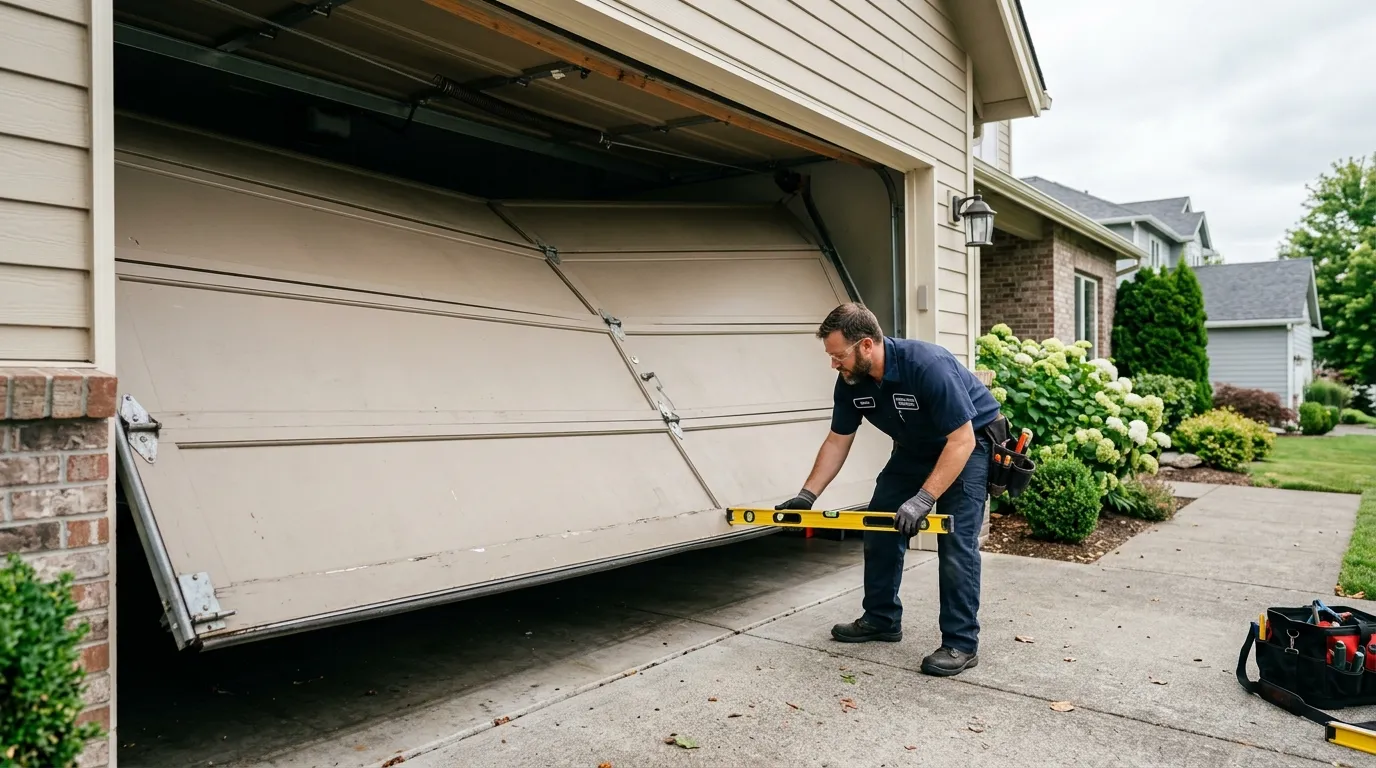
A technician tests the door under power and by hand and finds what actually failed.
3
Clear, up-front plan
You get the fix that’s needed and what drives the cost - before any work starts.
4
Repaired & tested
The repair is done, the door is set true and tested, and the work area left clean.
Serving Loveland, CO - tell us what your door’s doing and we’ll take it from there.
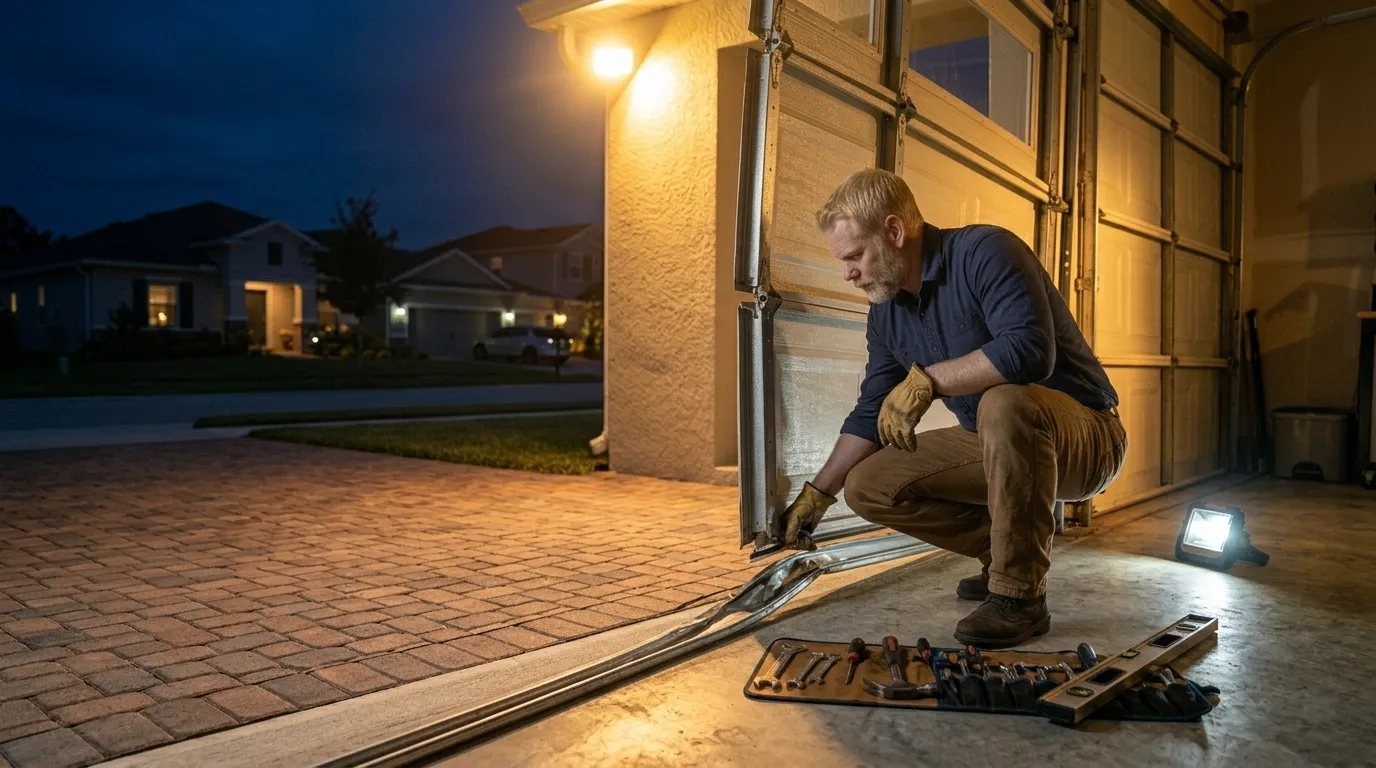
Not safely, and not for long even if you manage it once. Without spring tension, the door is dead weight - if it's up when the spring breaks, it can come down fast and uncontrolled. If it's down, you likely won't get it open at all. Treat a broken spring as a park-it-and-call situation.
Why did my spring break with no warning?
Torsion springs fail from metal fatigue after a set number of open-close cycles, not from a single event. In a service area where a lot of homes were built in the 2000s, plenty of original springs are now old enough in cycle count to be at or past that point, and cold weather adds extra stress that can push a tired spring over the edge.
Do you replace one spring or both?
On a double-spring setup, if one has failed from age and cycles, the other is usually close behind, since they're installed at the same time and see the same use. We'll look at both and tell you honestly whether replacing just one makes sense for your door or not.
Is this a job I can do myself?
Torsion springs are under heavy tension and the wrong tool or technique can cause serious injury. This is one job we'd tell anyone to leave to someone with the right winding bars and experience, regardless of how handy they are with the rest of the house.
Ready to get your garage door sorted?
Tell us what it’s doing and where you are in Loveland - we’ll take it from there.