What Can Go Wrong
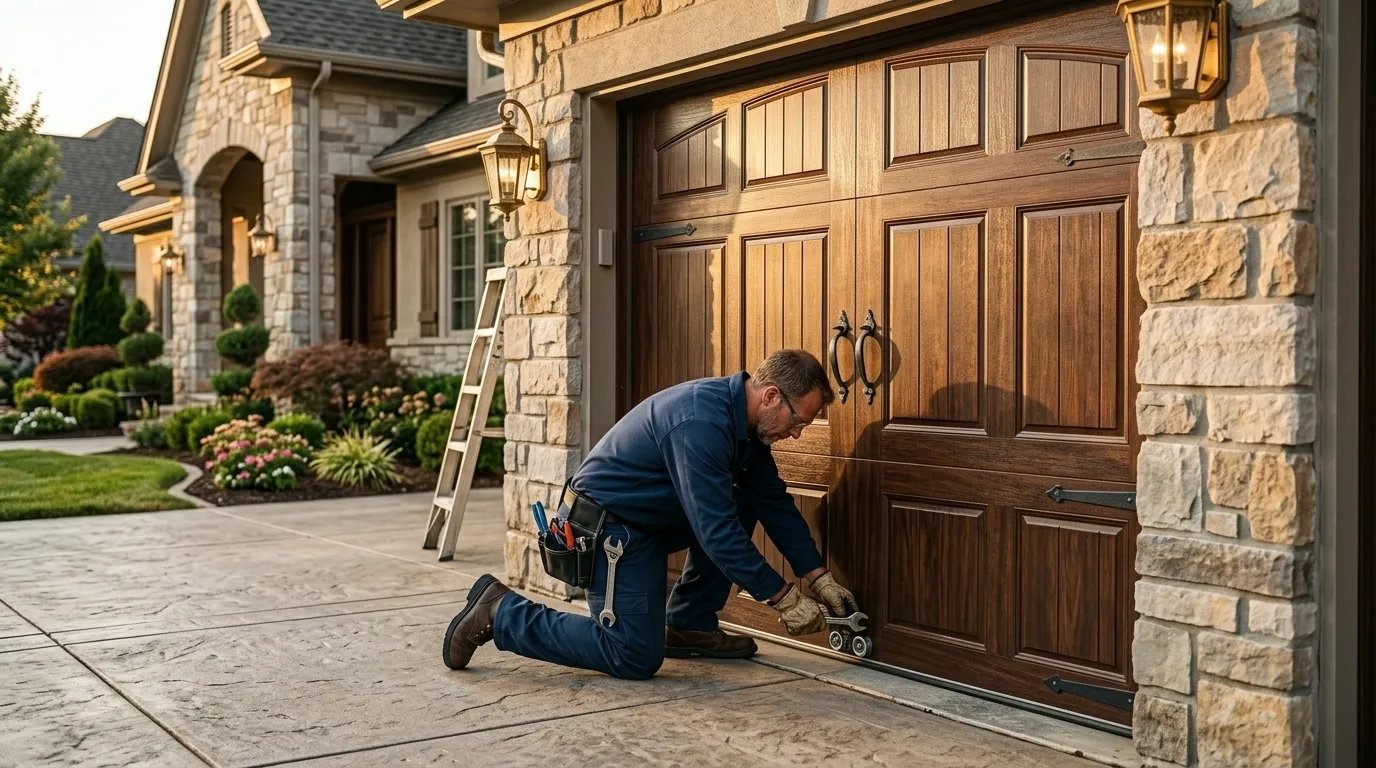
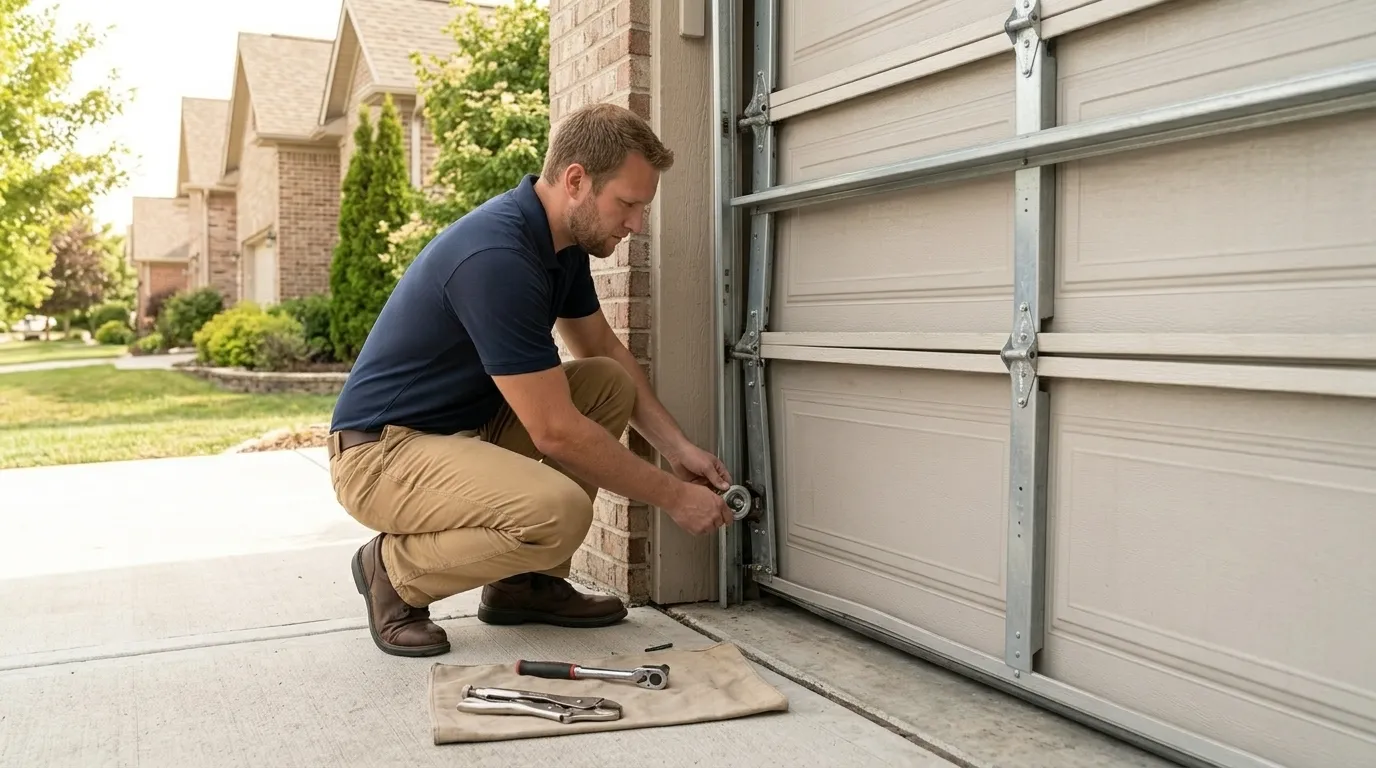
The failure we see most in this part of the service area is a bottom roller working loose from a bracket that was never quite seated right, then popping the door sideways when it hits the bottom of its travel. On a door built to 2000s-era spec, that bracket is thinner-gauge steel than what you'd find on an older build, and it flexes more than it should over years of daily cycling.
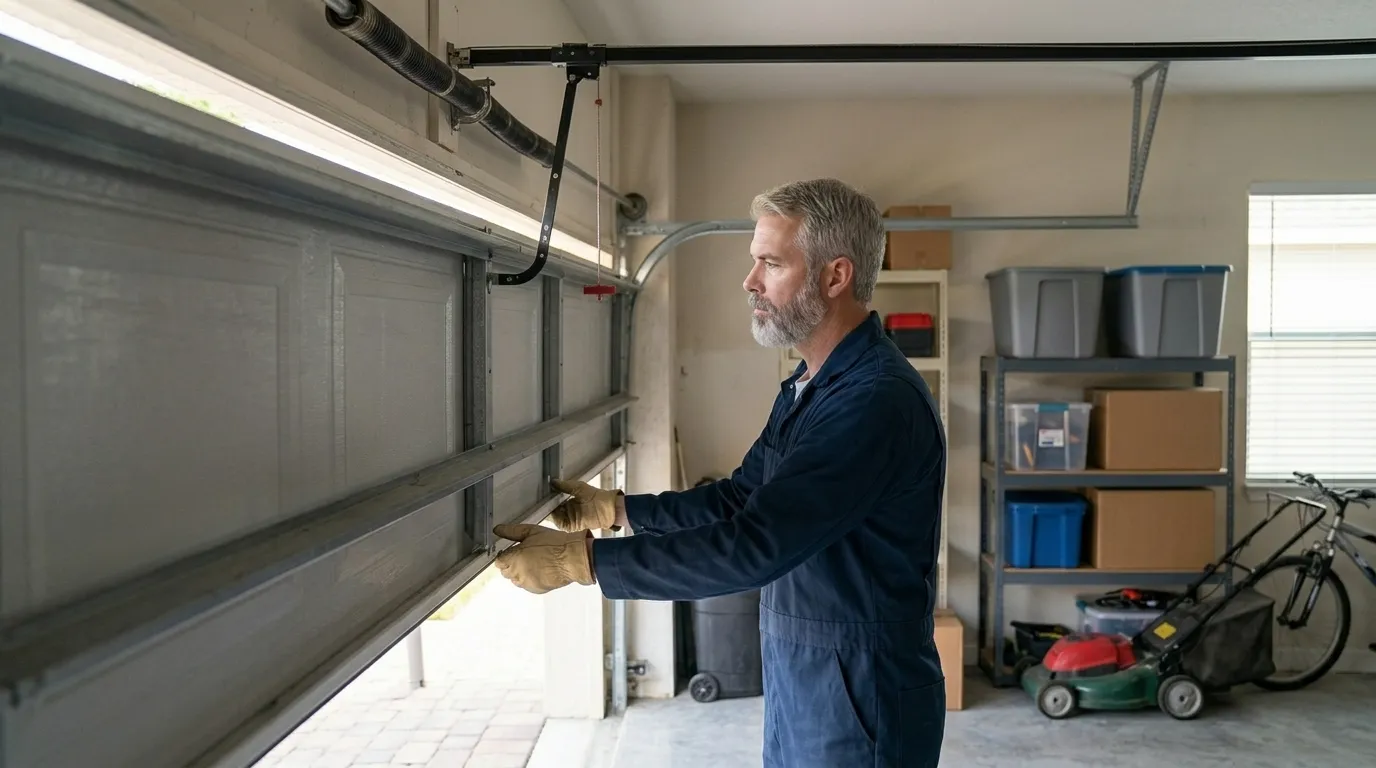
A second pattern: torsion spring failure on one side of a double door pulls the panel crooked as it's going up, and the leading edge climbs out of the track before the opener senses the resistance and stops. If your door came off track right after a loud bang, that's very likely what happened - the spring, not the track, is the root cause.
We won't guess which one you have over the phone. Track damage and roller damage look similar from the driveway and need different fixes, and the honest answer is we tell you which one it is once we're standing in front of it.
Doing It Yourself
We'll say this plainly: don't try to force a door back onto its track yourself, especially if a spring is involved. A torsion spring under tension that's already caused the failure can do real damage to a hand or a face, and a 150-plus pound door hanging half off its rollers is not a two-person weekend job the way a wobbly gate hinge is.
What you can safely do before we get there: disconnect the opener by pulling the release cord so it isn't fighting a jammed door, and don't run the opener again once you notice the door isn't tracking straight - running it can bend the track further or snap a cable. Beyond that, wait for a tech. This is one of the jobs where the DIY route usually turns a same-day fix into a longer one, because a homeowner attempt often bends the track worse before we ever see it.
How We Fix It
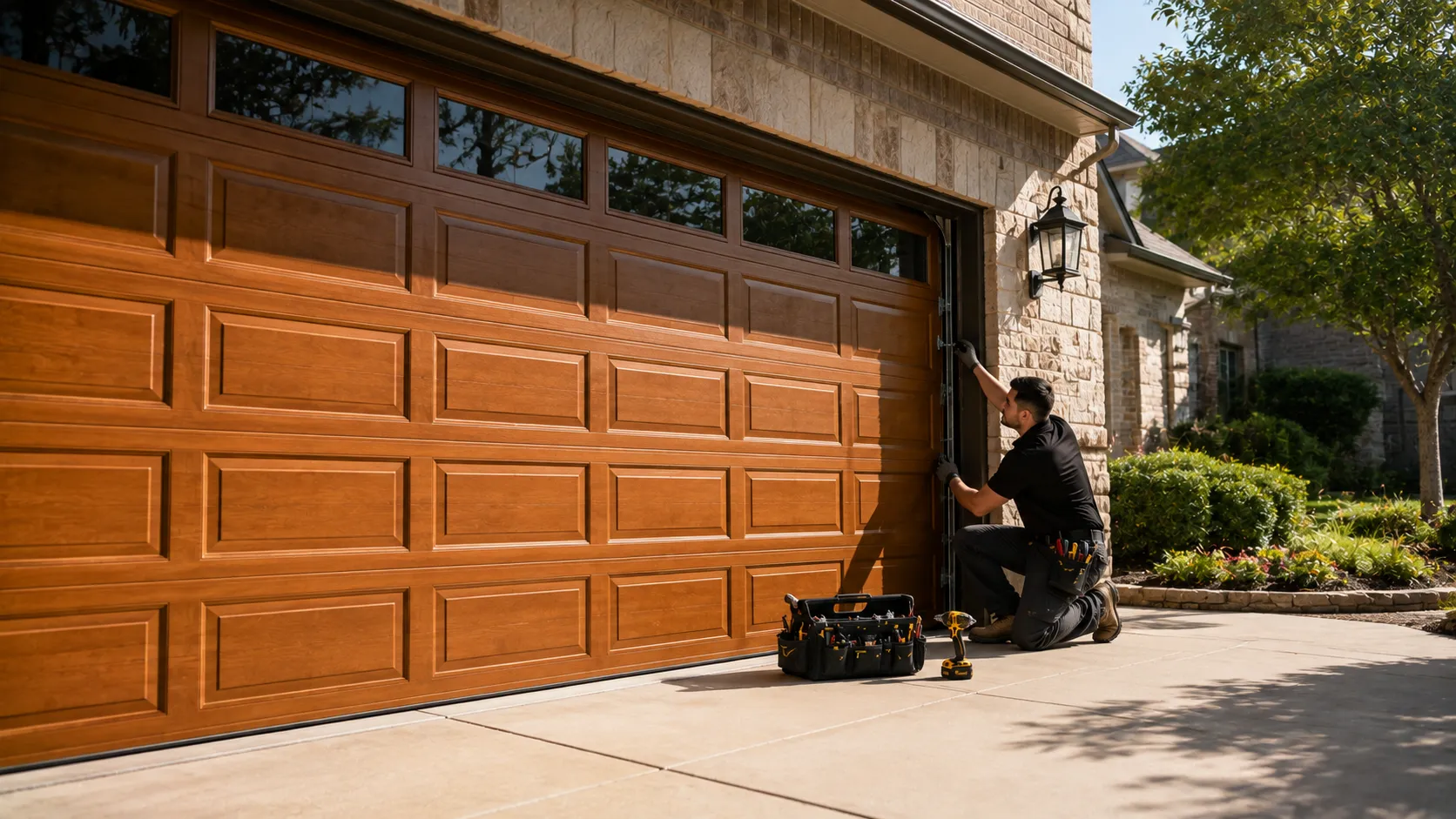
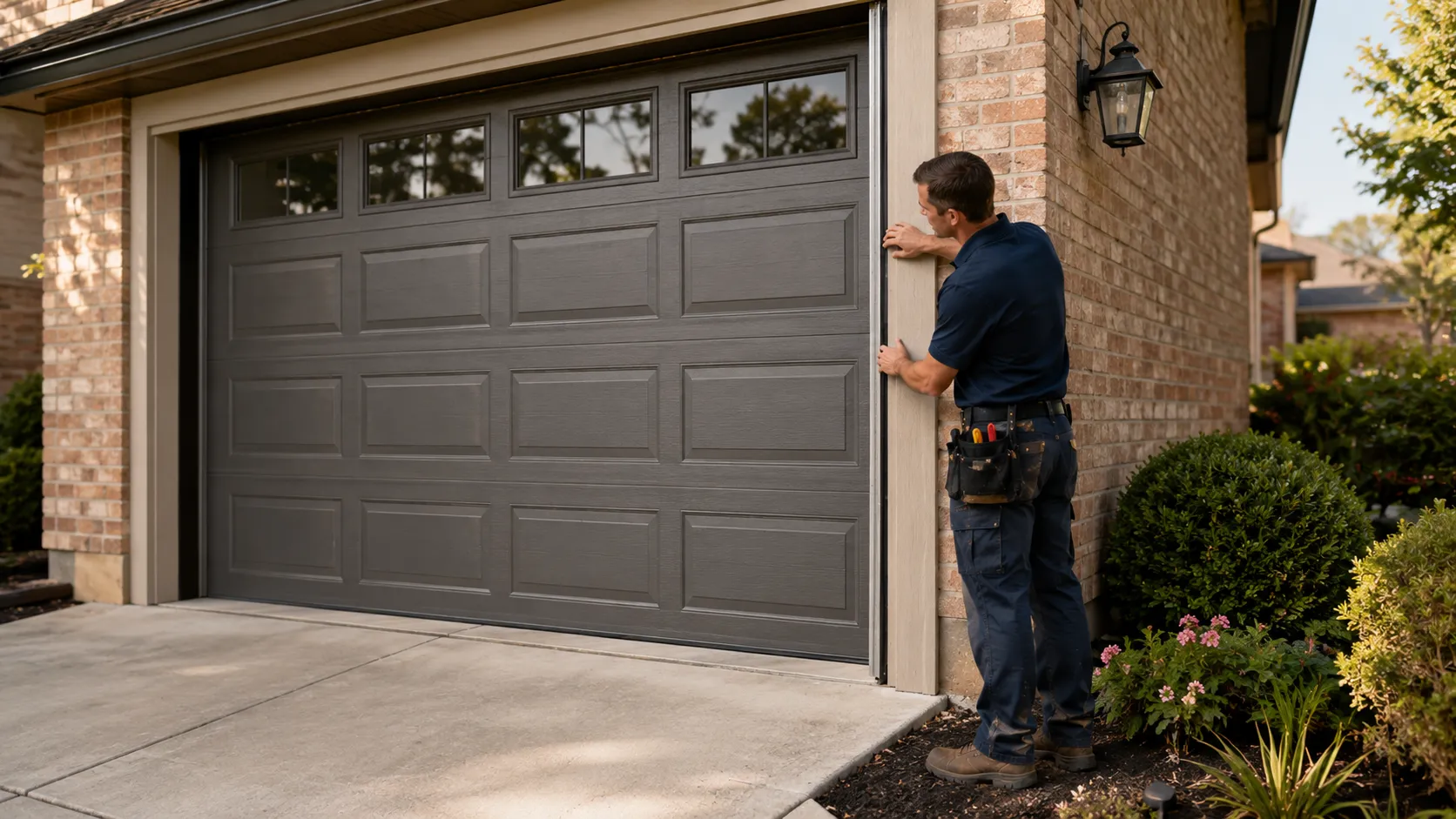
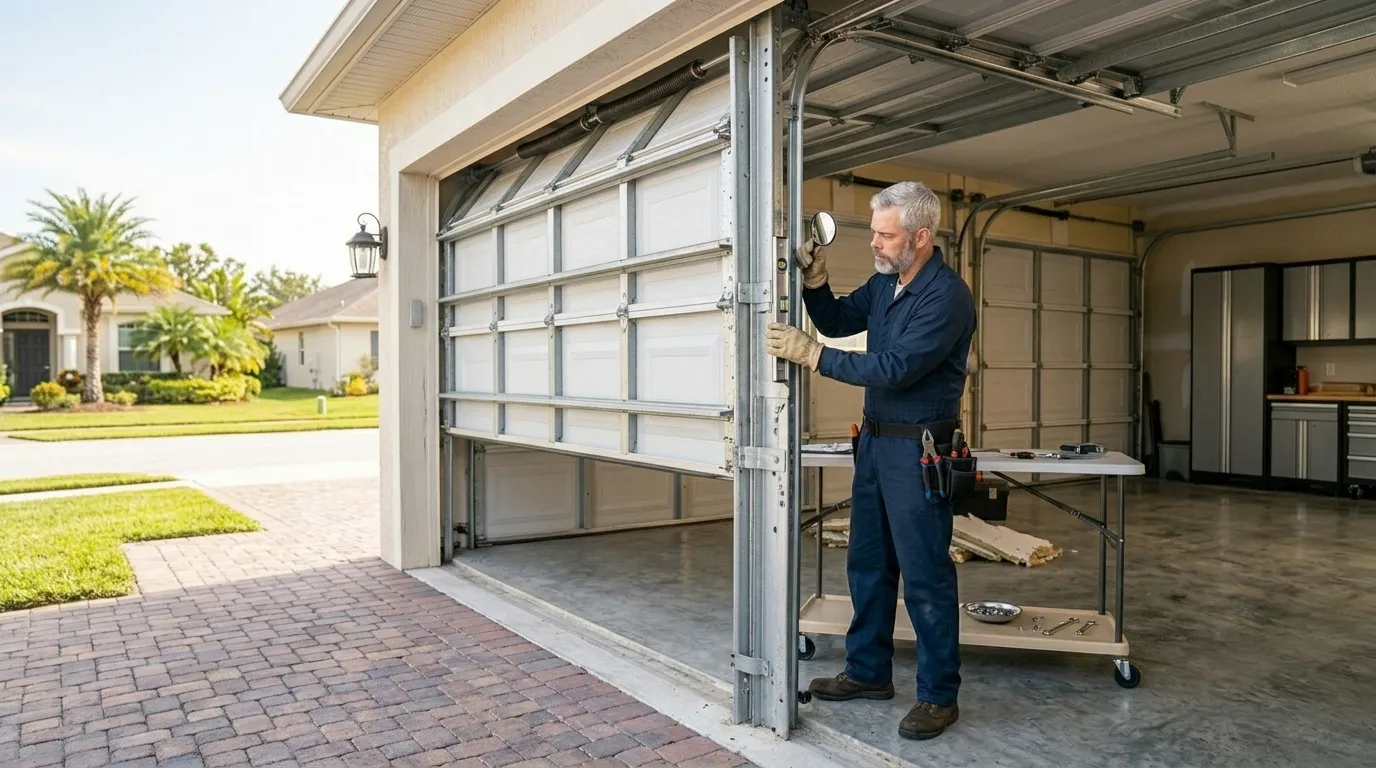
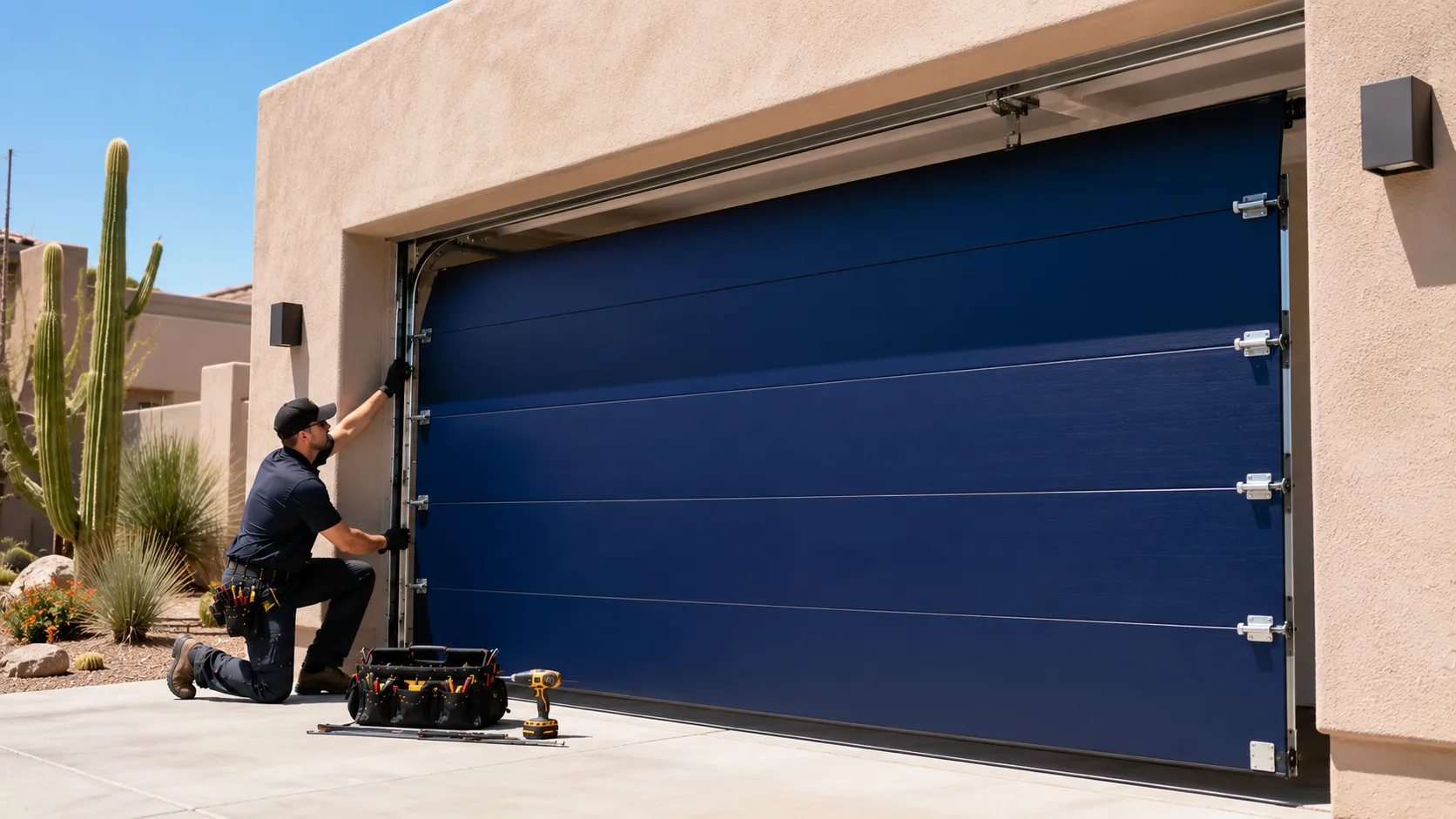
First we check whether the track itself is bent or just the rollers have come out of a straight track - that decides everything else. A straight track with popped rollers is a re-seat and a roller check, often finished in under an hour. Bent track is a track replacement, usually just the section that's damaged rather than the whole run, but if the bend happened near a bracket mount we'll check that bracket too rather than bolt new track to a compromised mount.
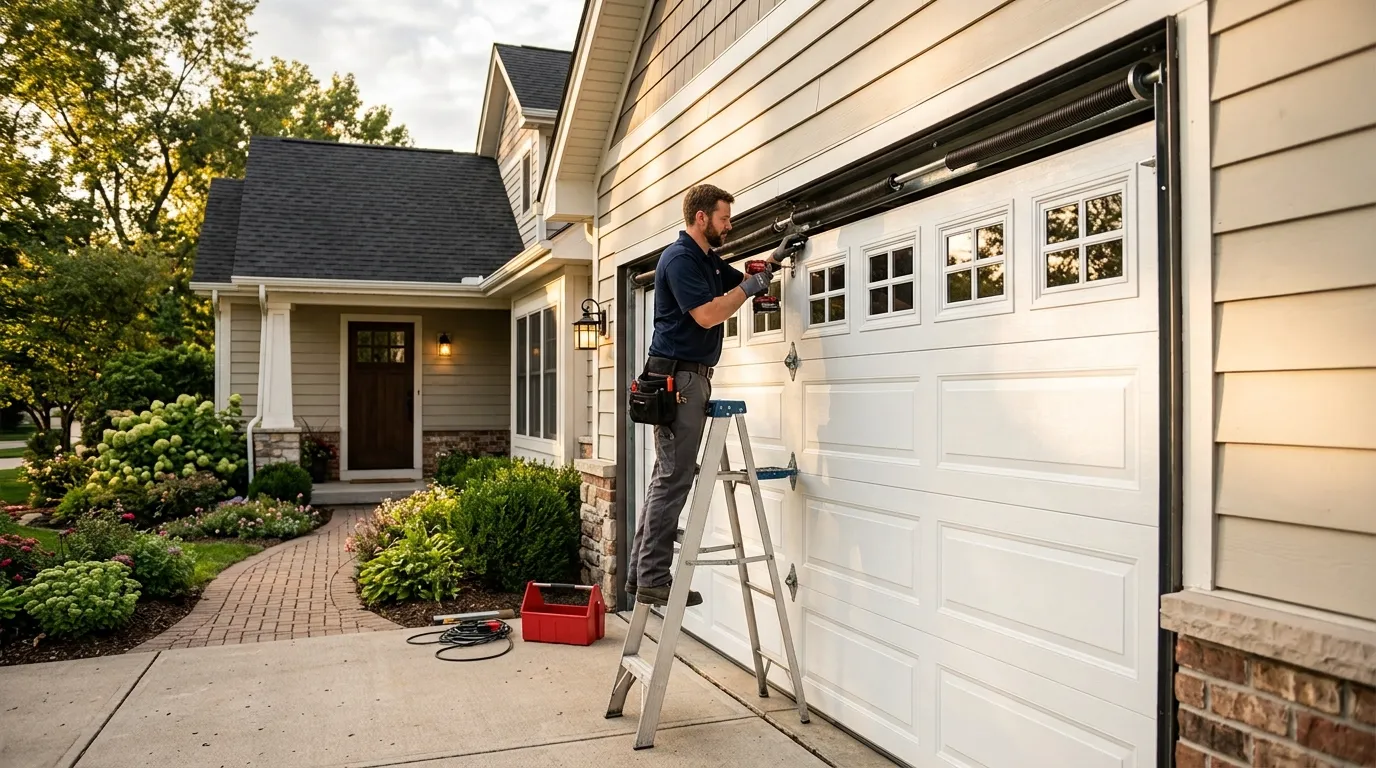
While we're in there we check the torsion spring balance on both sides, because an uneven spring is what caused a lot of these calls in the first place, and re-seating a roller without fixing the spring imbalance just sets up the next off-track call. We carry common roller and track stock sized for 2000s-era sectional doors on the truck, since that's what most of this area's housing stock uses. What we don't do on this visit is refinish or repaint a door that's been scraped up in the process - that's a separate job we'll flag but not push.
Why It Happens Here
This area's housing went up mostly in the 2000s, with a median build year around 2007 - newer stock than a lot of the towns we cover, and it means the doors are almost all original steel sectional doors on torsion hardware rather than a mix of eras. That uniformity actually helps diagnosis: we're not guessing at hardware generations.
What doesn't help is the climate. This region sits in a cold-and-severe winter band, and repeated freeze-thaw cycles are hard on the thin steel brackets that hold rollers in track - metal contracts in cold, brackets loosen a fraction of a millimeter at a time, and a roller that was fine in August starts riding loose by February. It's a slow failure, which is why off-track calls here cluster in the colder months rather than happening at random. We don't have a way to stop that cycling - it's the climate, not a defect - but we can catch a loosening bracket before it fails completely if you get a yearly look at the hardware.