What Can Go Wrong
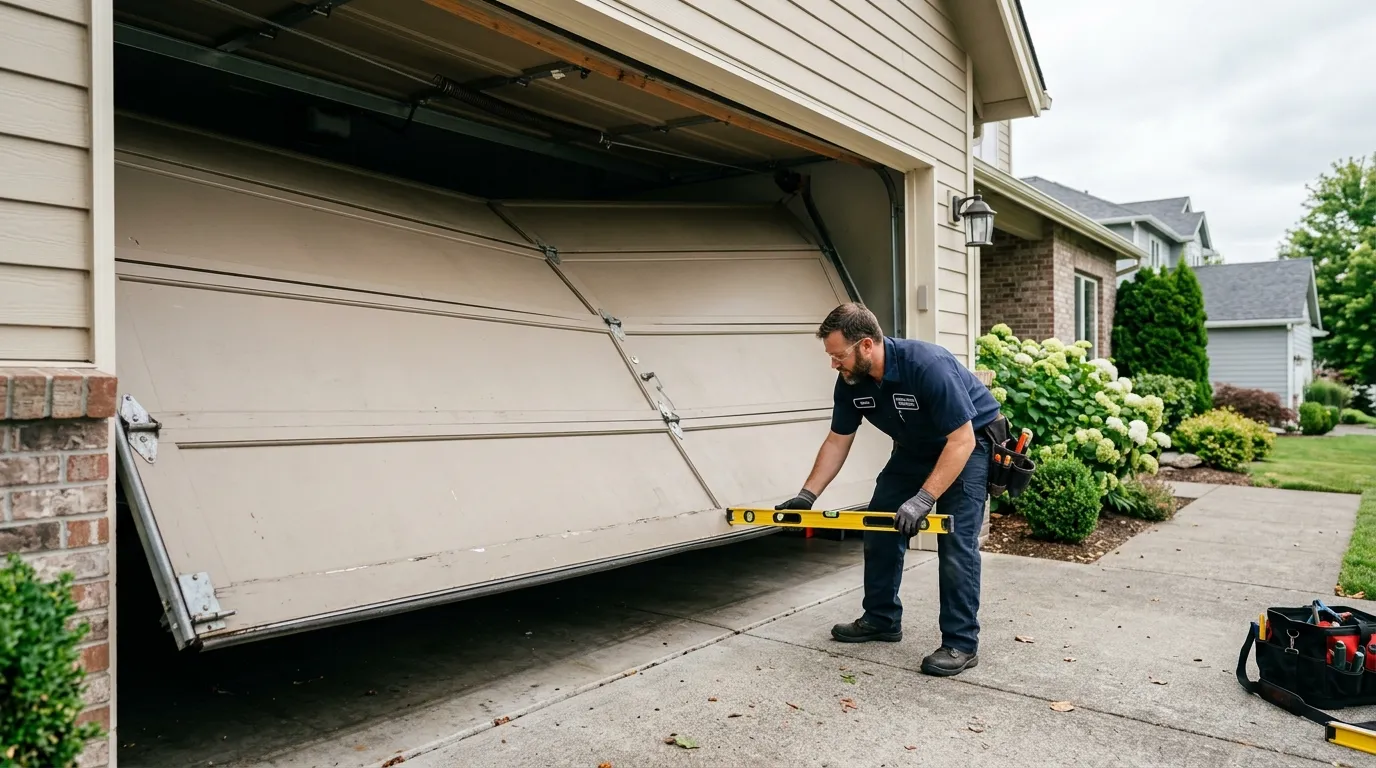
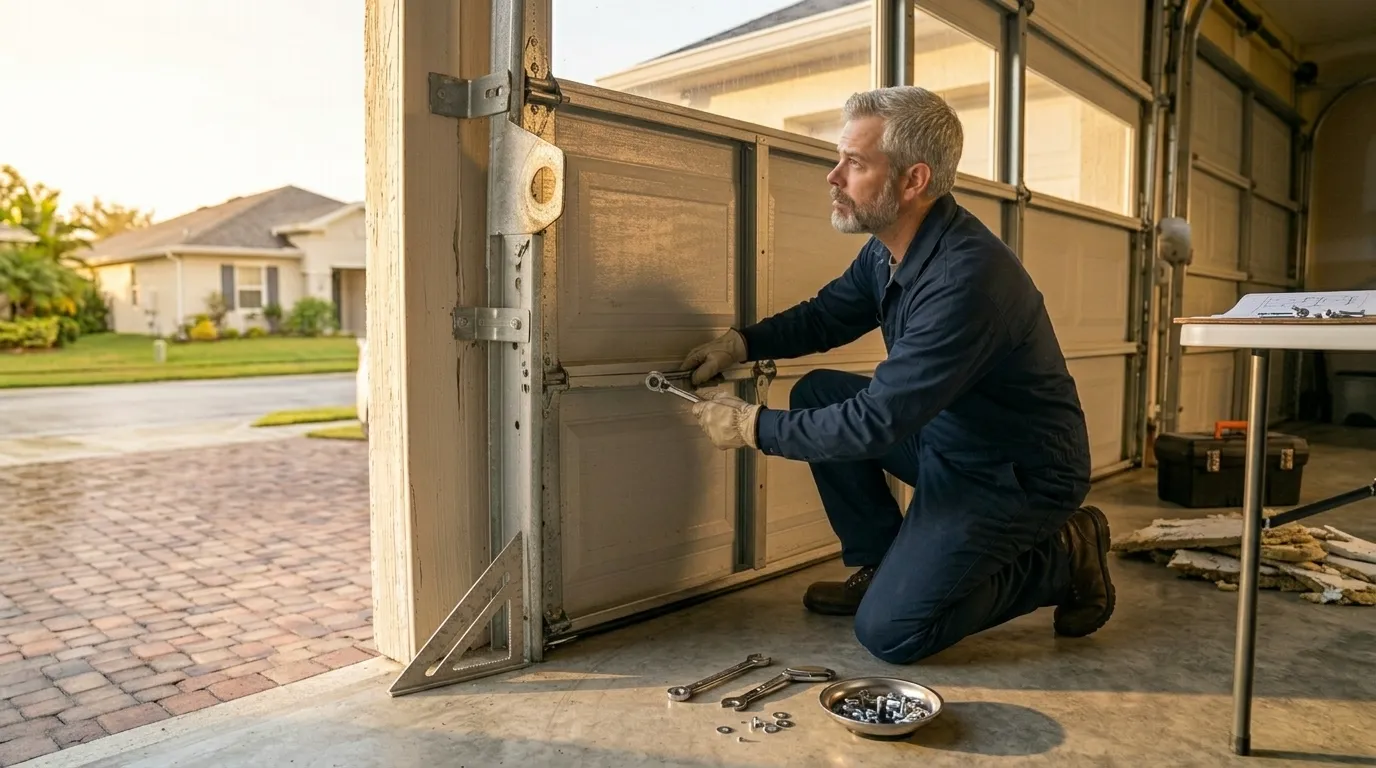
A door built to 2007-era spec was engineered for a mild-climate assumption that doesn't hold up in a severe-cold winter. The steel skins on these doors are thinner than what's standard now, and over close to two decades of freeze-thaw cycling, the polystyrene core inside a lot of these panels has started to separate from the steel - you'll hear it as a hollow rattle on the bottom two panels first. The torsion spring was sized for the original door weight, and if a panel's been swapped once already, the spring is often wrong for what's hanging on it now. Rollers on the original steel track, never upgraded to nylon, seize up hard in cold and shred themselves trying to turn.
Doing It Yourself
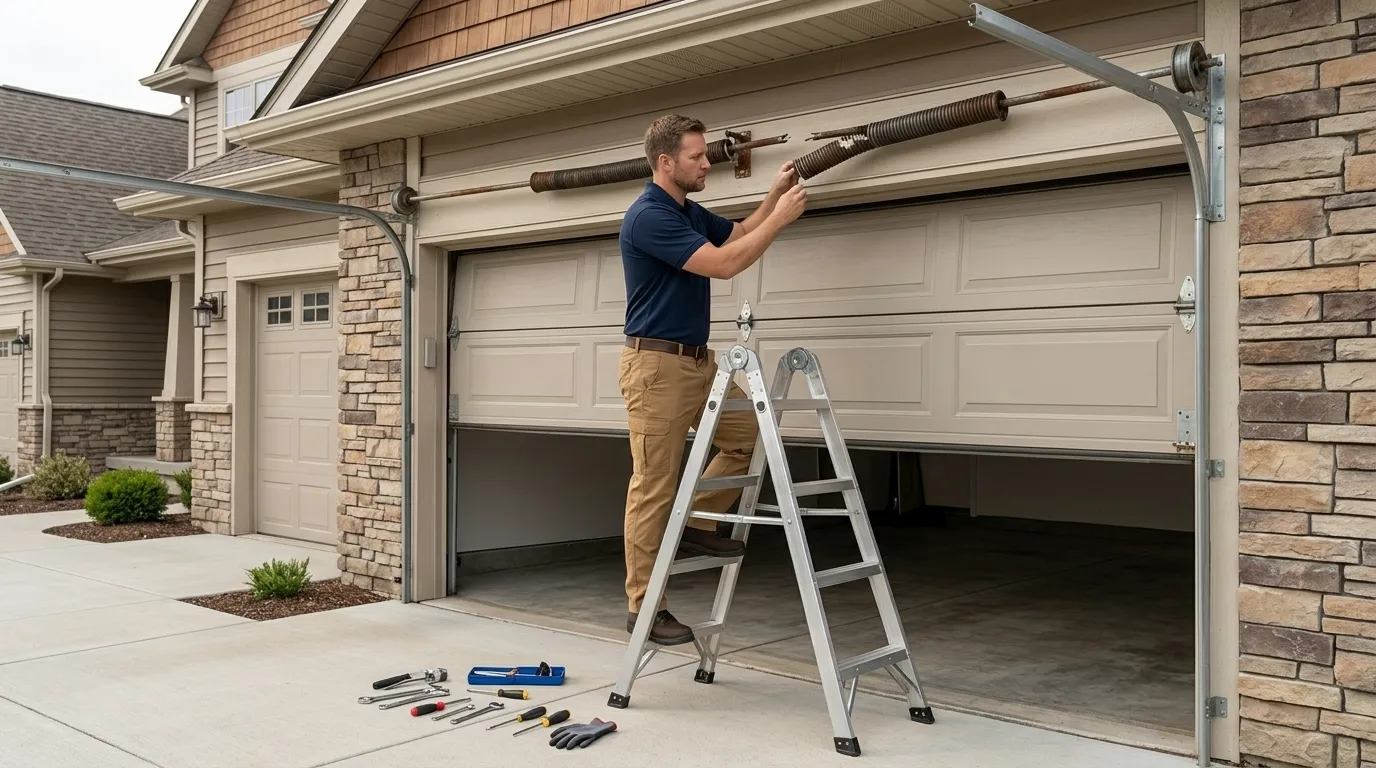
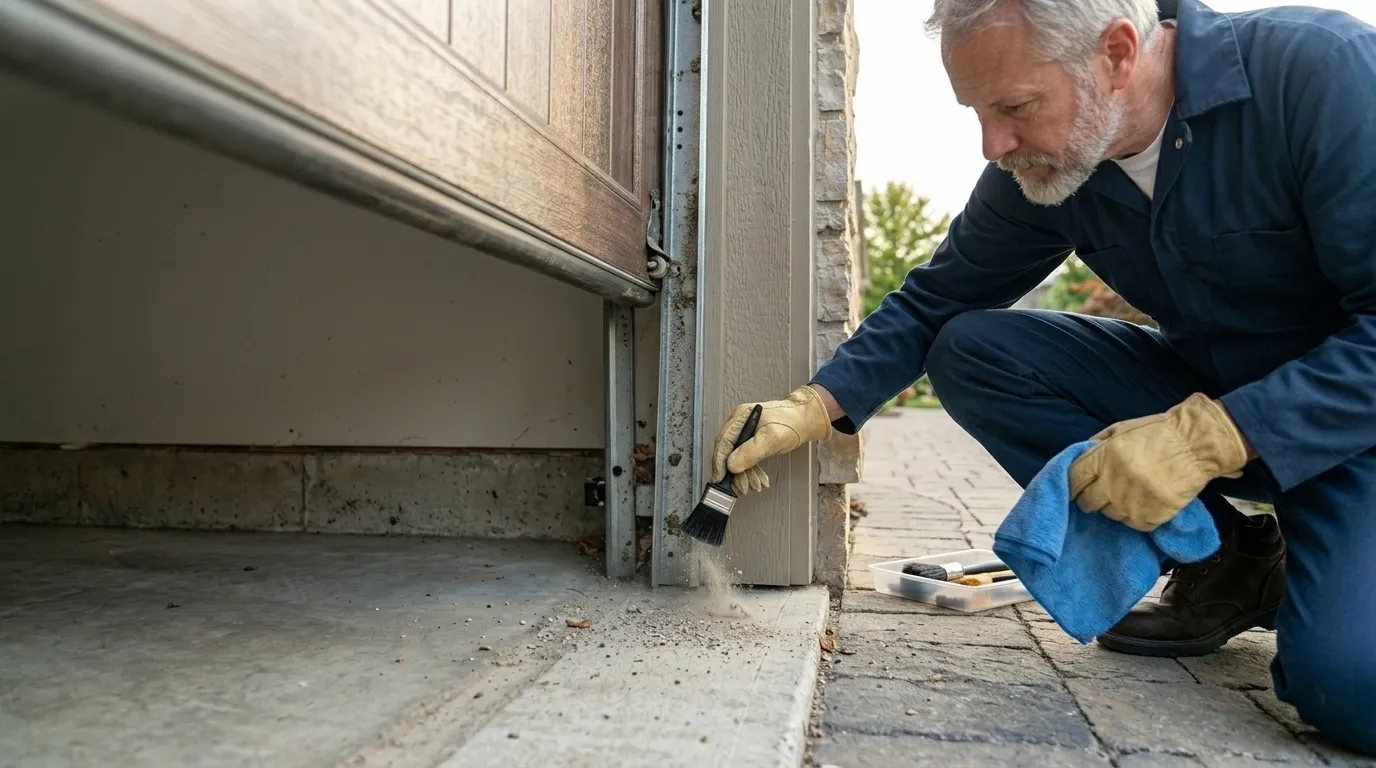
A torsion spring under tension can put you in the hospital, full stop - we won't talk anyone through pulling and resetting one over the phone, and we won't quote a job where a homeowner wants to do the spring themselves and have us finish the rest. Swapping weatherstripping or a bottom seal is reasonable DIY work. Setting a new insulated door plumb, square, and balanced against a torsion spring rated correctly for our winter loads is not - get that wrong and the opener burns out in a season, or the door comes down on something it shouldn't. If you want to save money, do the trim and paint yourself and let us handle the door and hardware.
How We Fix It
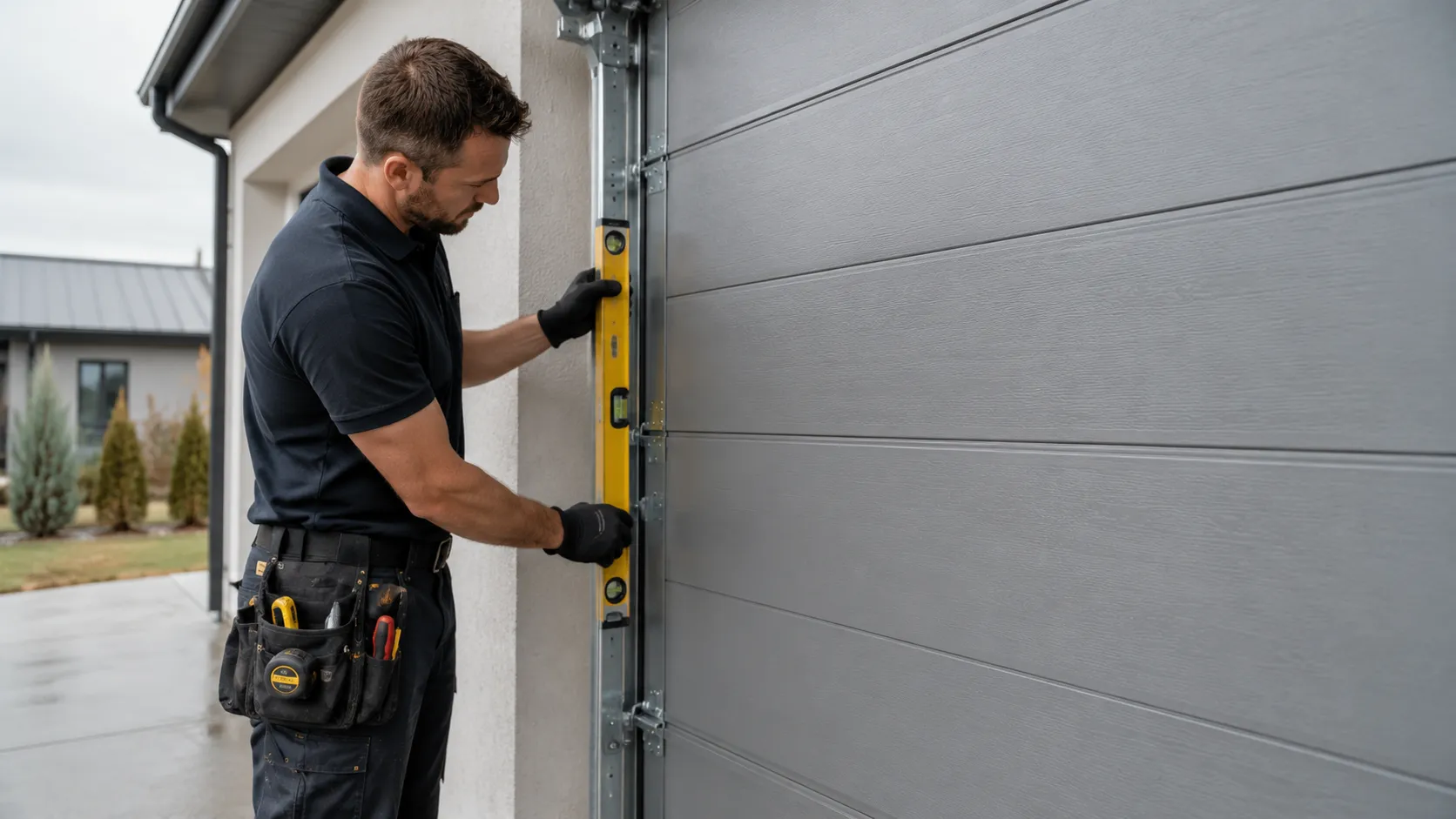
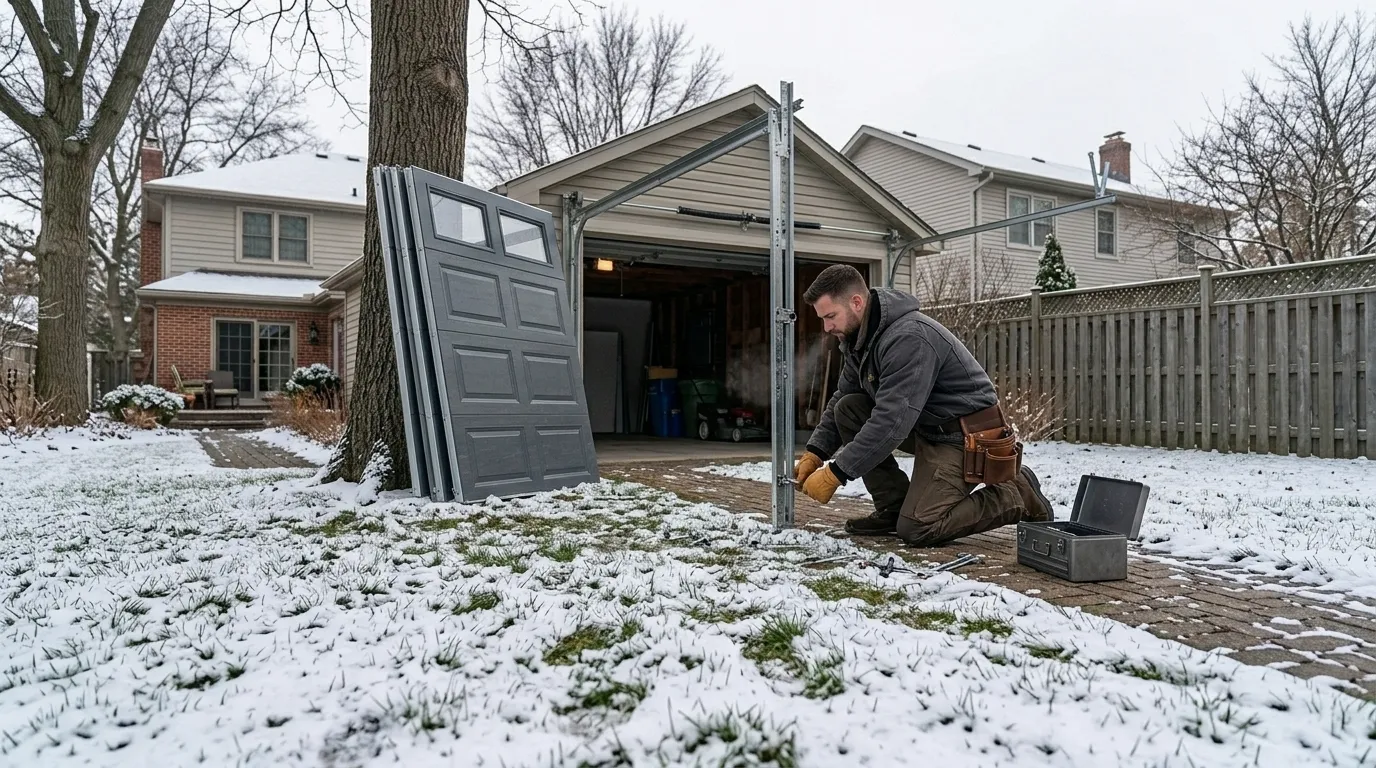
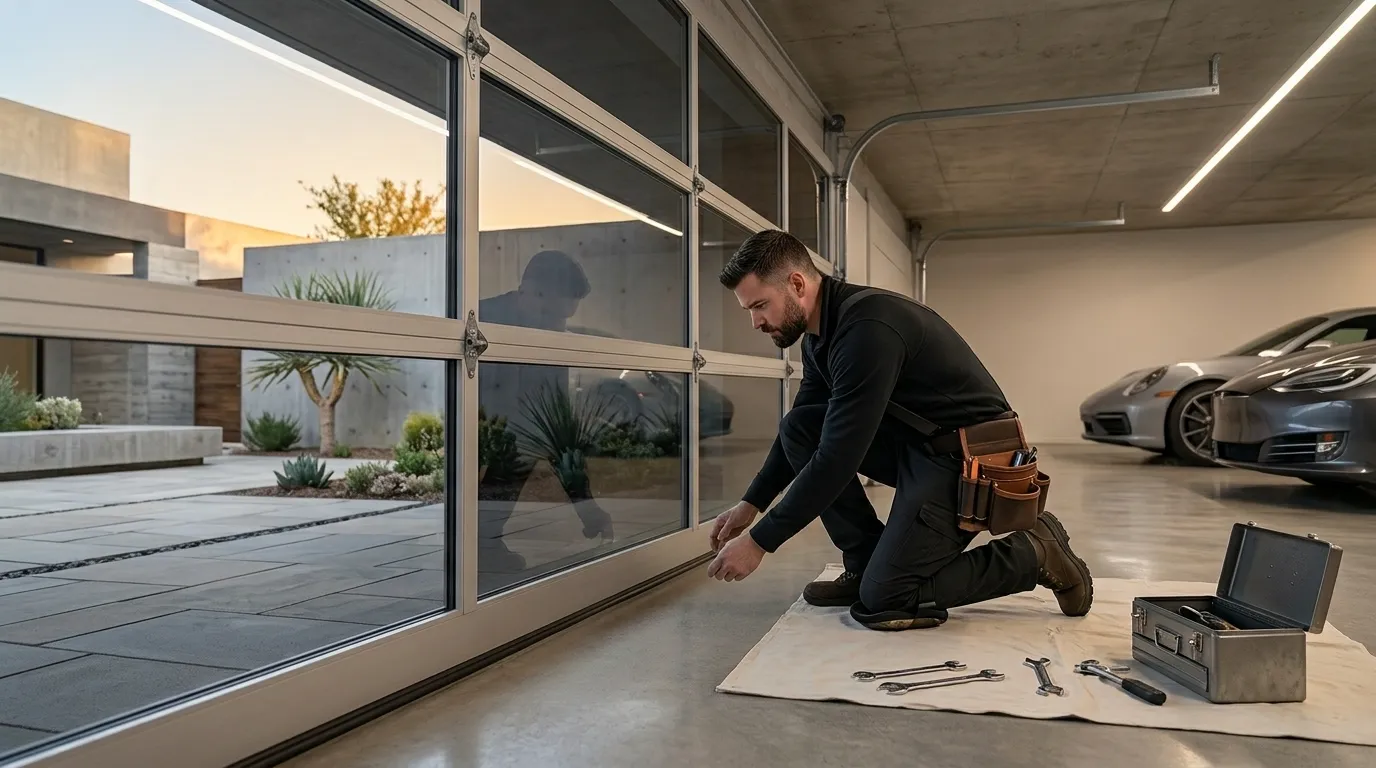
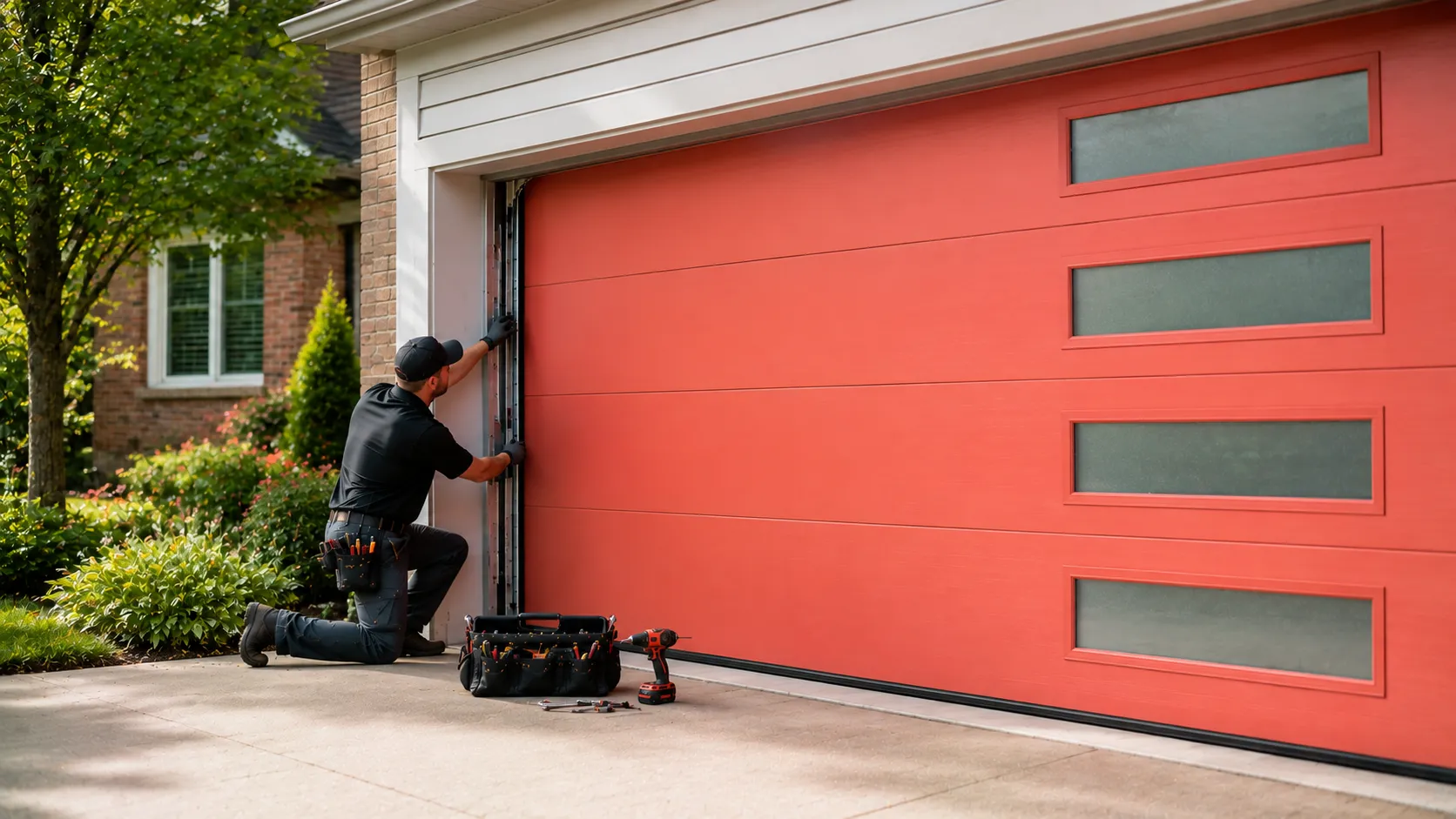
We come out from our Loveland shop, about nine miles down the road, to measure your opening and check headroom and backroom before we quote anything - a lot of 2007-era garages here have less clearance than current code calls for, which limits which door and opener combos fit. On install day we pull the old door and track completely rather than reuse hardware sized for the original panel weight, size the new torsion spring to the actual door going up, and set nylon rollers instead of steel. A double 16x7 insulated install is typically a half-day job once we're on site.
Why It Happens Here
Windsor sits in a cold-severe climate band, and that matters more for a garage door than people expect. Steel expands and contracts every day the temperature swings, and a door built during the mid-2000s production run - when a lot of subdivisions here were framed out - wasn't speced with today's insulation standards in mind. Add in roughly 14,000 households in this area built in a tight window, and you get a lot of doors aging out on the same schedule, hitting the same failure points within a year or two of each other. It's not bad luck; it's the housing stock doing what housing stock from one era does, all at once.