
What Can Go Wrong
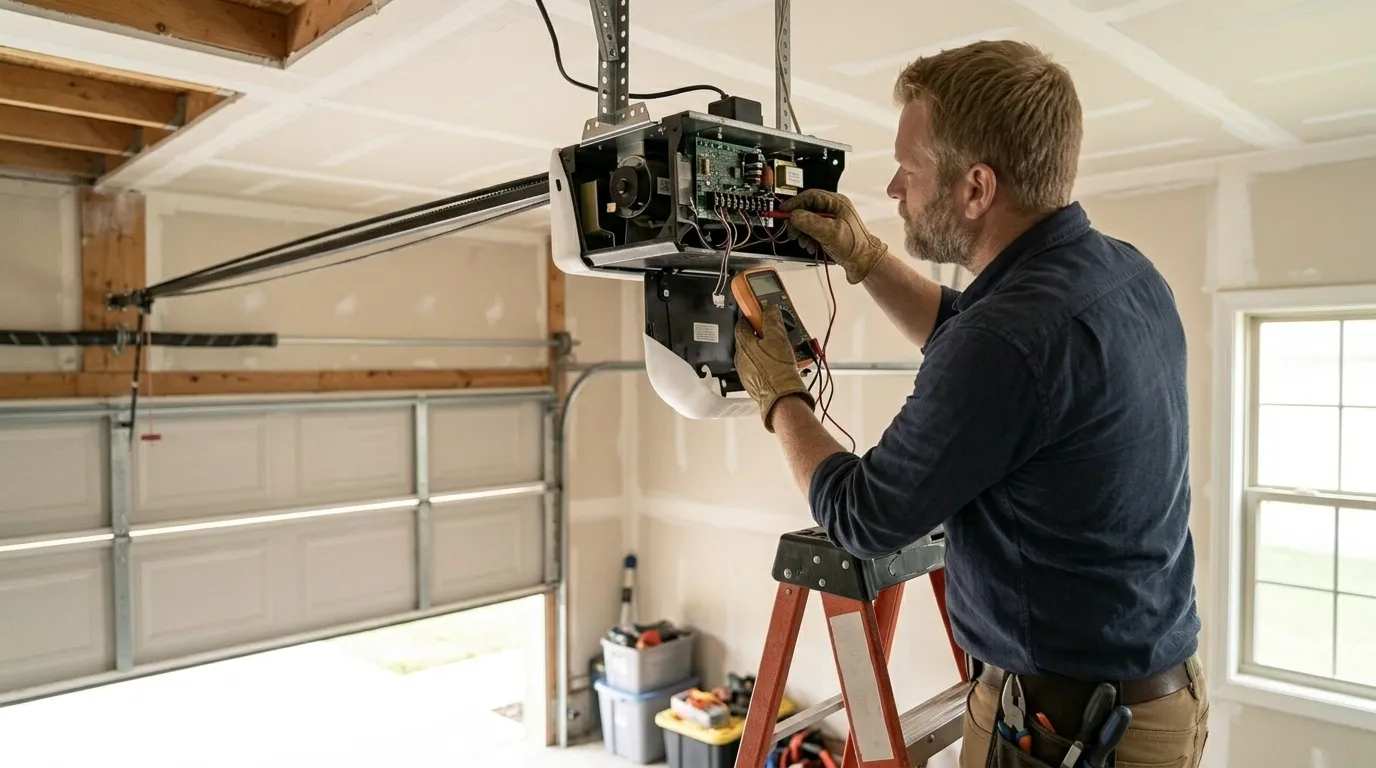
A worn roller doesn't fail quietly. First it's noise - a grinding or clacking on the way up that wasn't there a year ago. Left alone, the roller's bearing seizes or the wheel itself cracks, and the stem can bind or snap inside the track. Once that happens the door can bind mid-cycle or jump the track entirely, which puts real load on the cables and the opener's drive gear. On a double door, an uneven roller failure on one side twists the section and can crack a panel seam. None of this is dramatic the day it starts. It's dramatic three weeks later when the door won't move at all and the fix has grown from four rollers to a roller set, a track section, and a service call to true the door back up.
Doing It Yourself
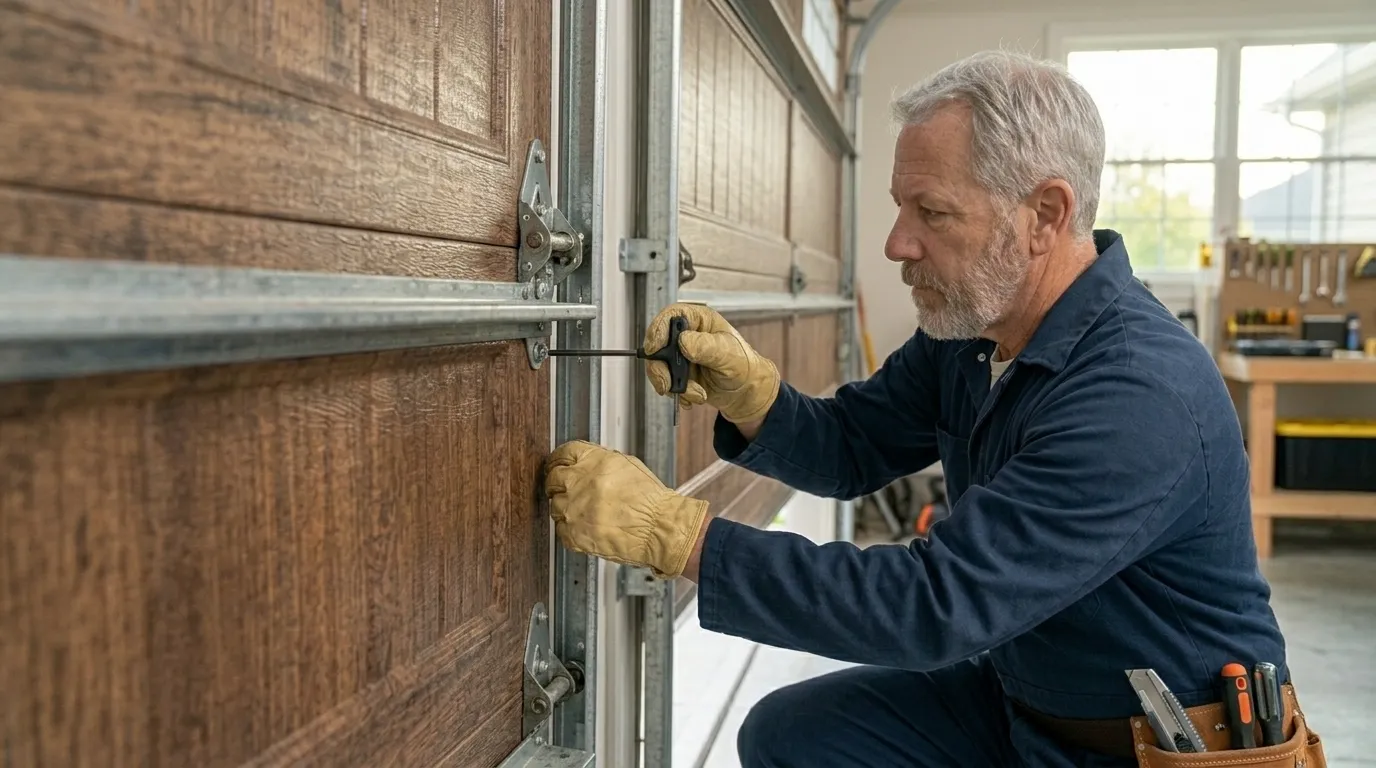
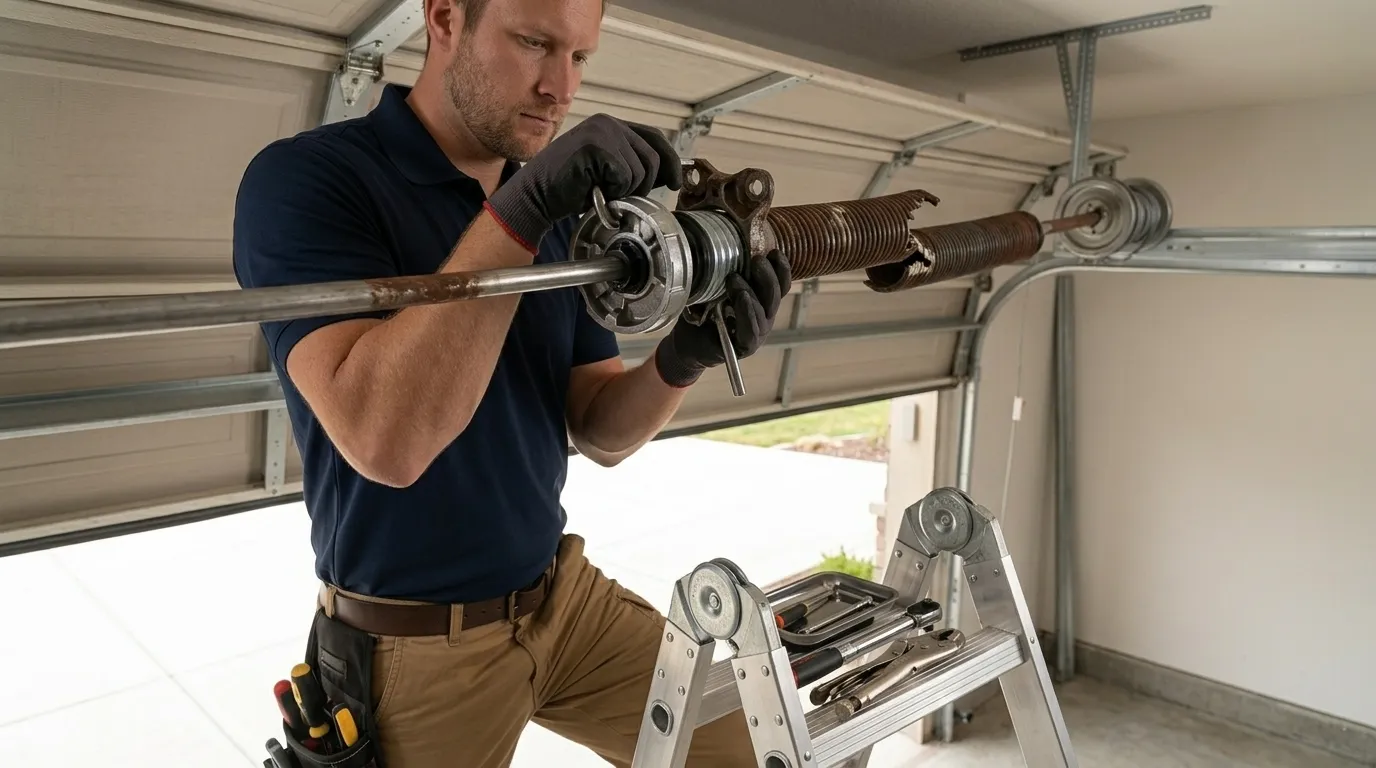
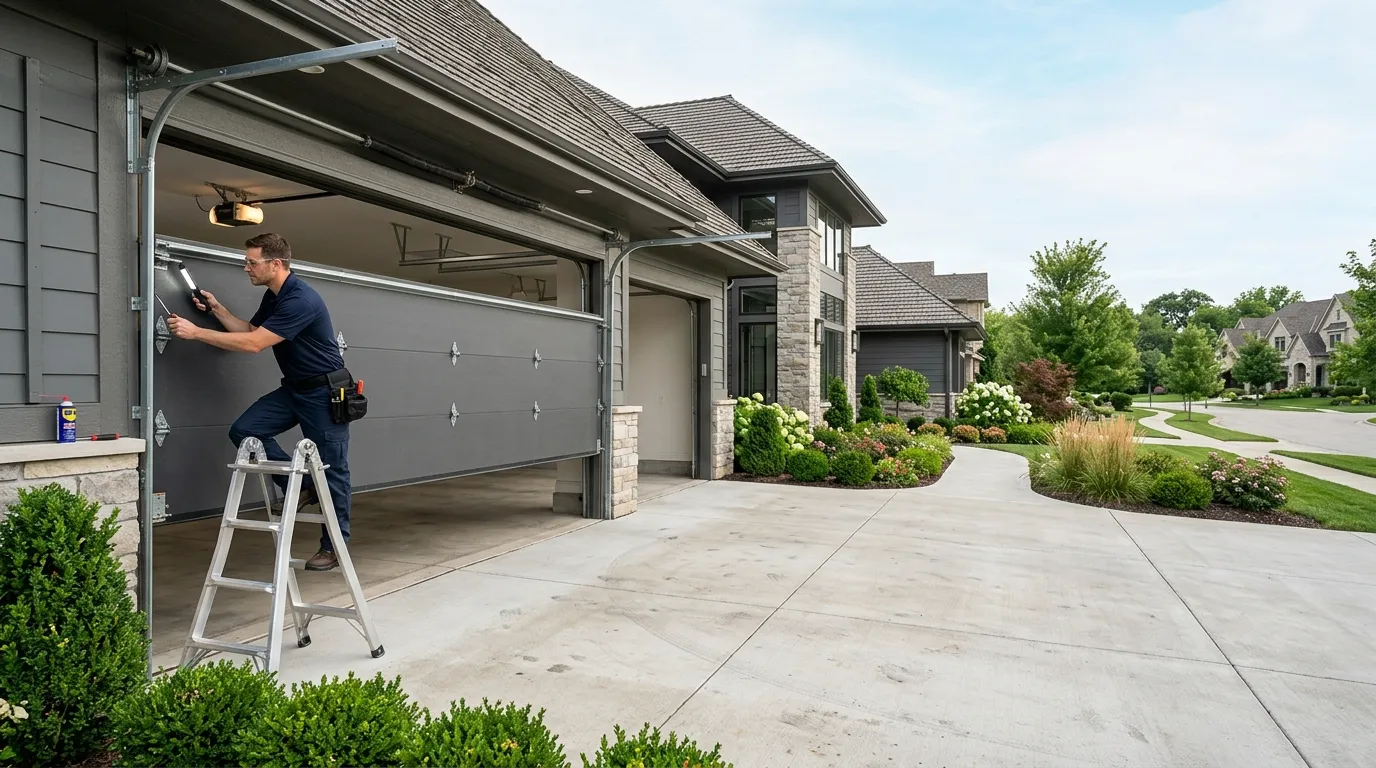
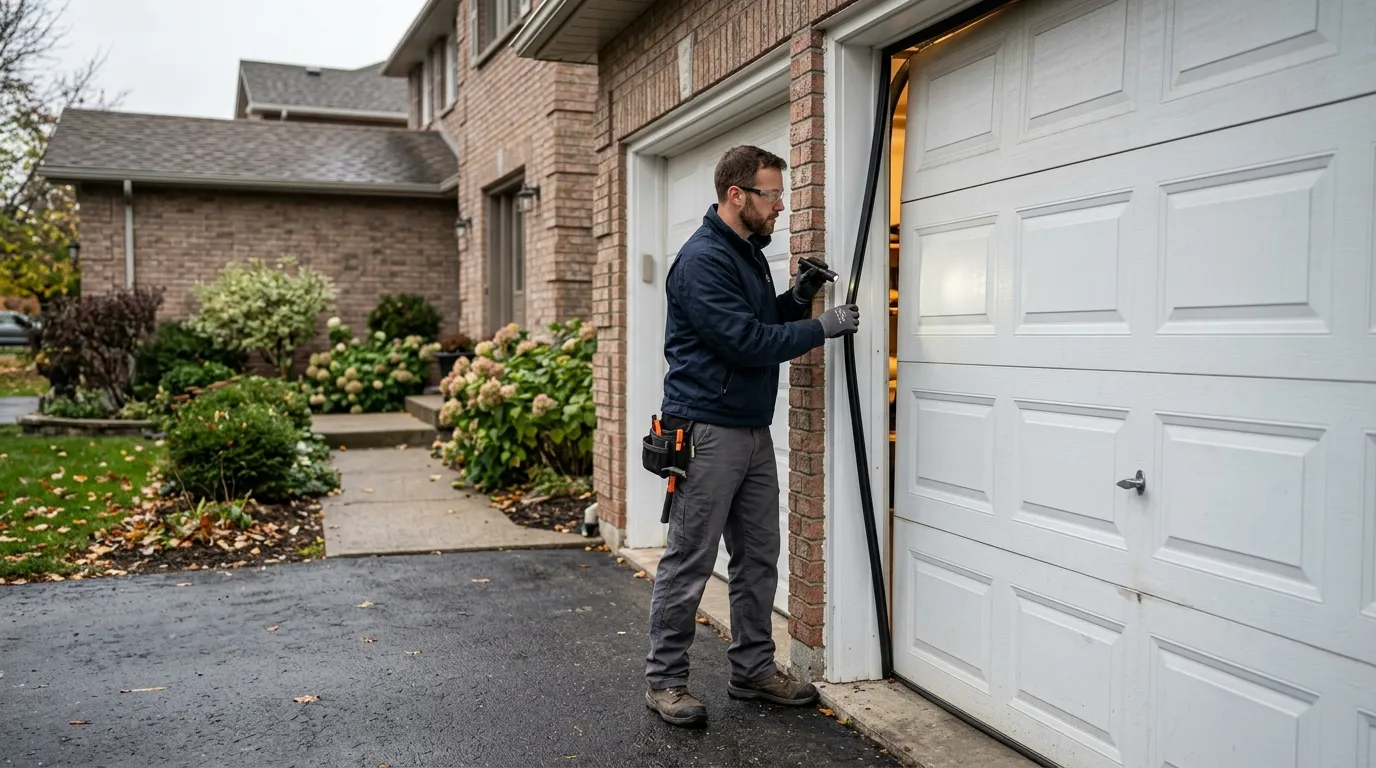
Swapping a roller is mechanically simple - pull the retaining bracket, slide the old roller out, slide the new one in. Where owners get hurt is the bottom bracket on a torsion-spring door, which is under tension and not something to loosen without knowing what you're doing. If it's the top rollers on a door with the opener disconnected and the door manually propped, a careful homeowner can do this safely with the right roller type for a 2000s-era track. Where we'd tell you to stop: any roller near a frayed cable, any door that's already off-track, or any spring you can see is stretched or gapped. That's not a roller job anymore, and it's not a DIY afternoon either.
How We Fix It
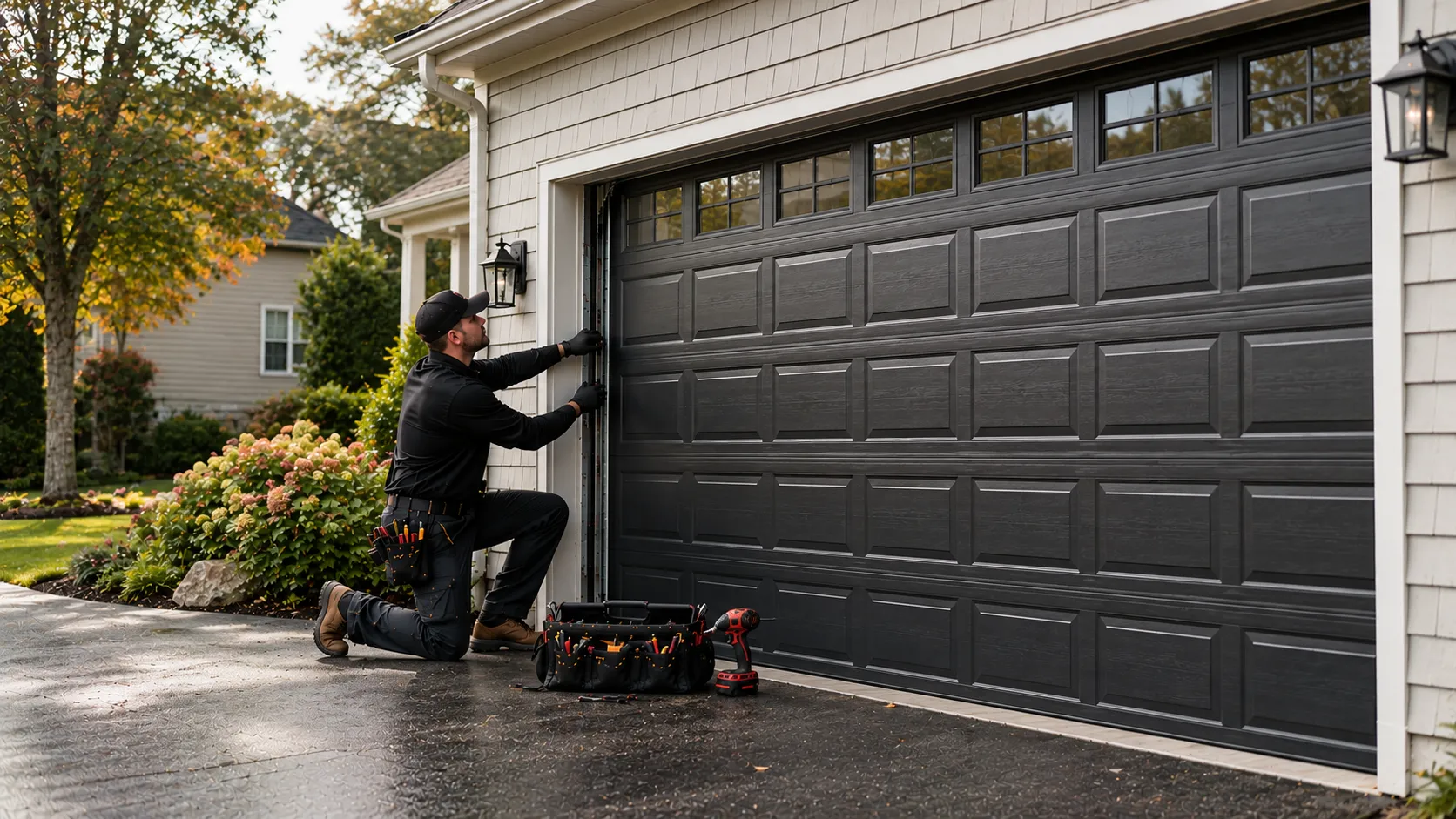
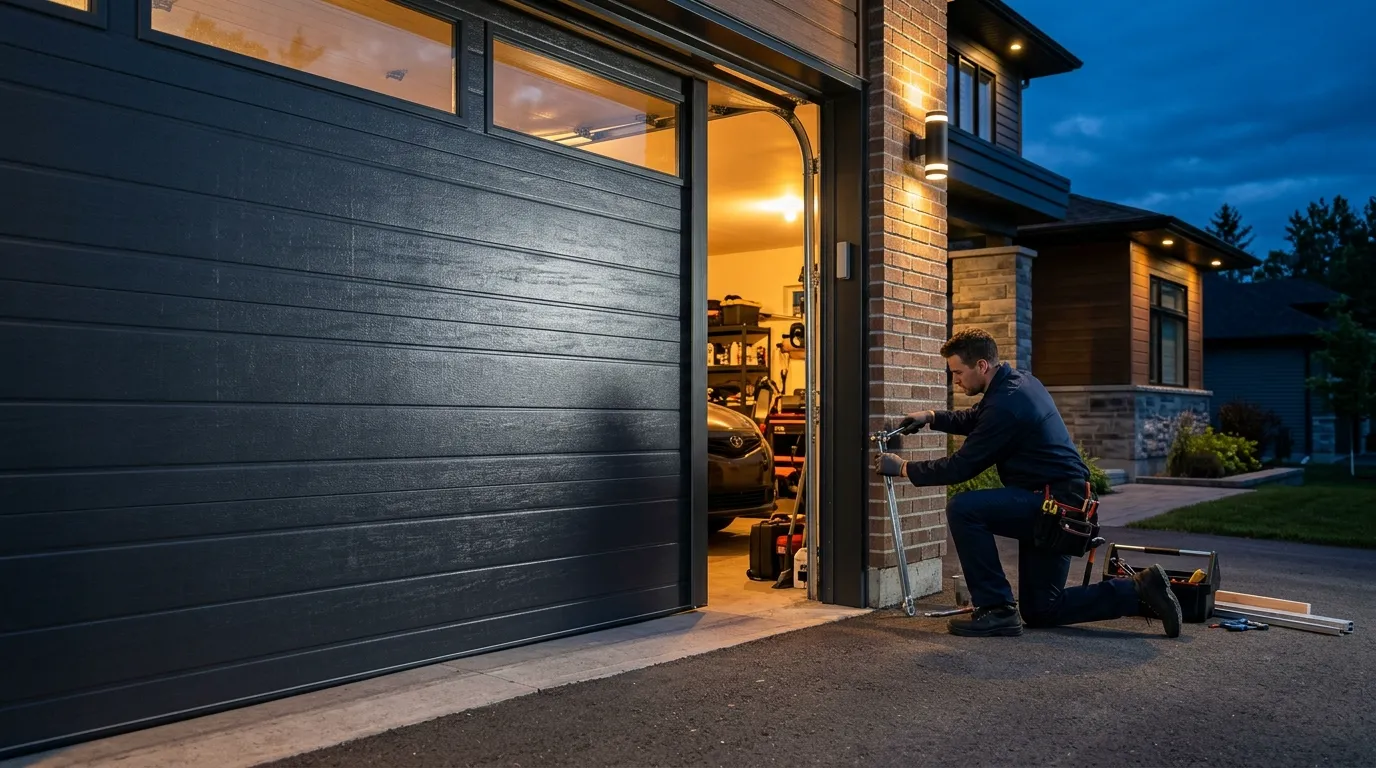
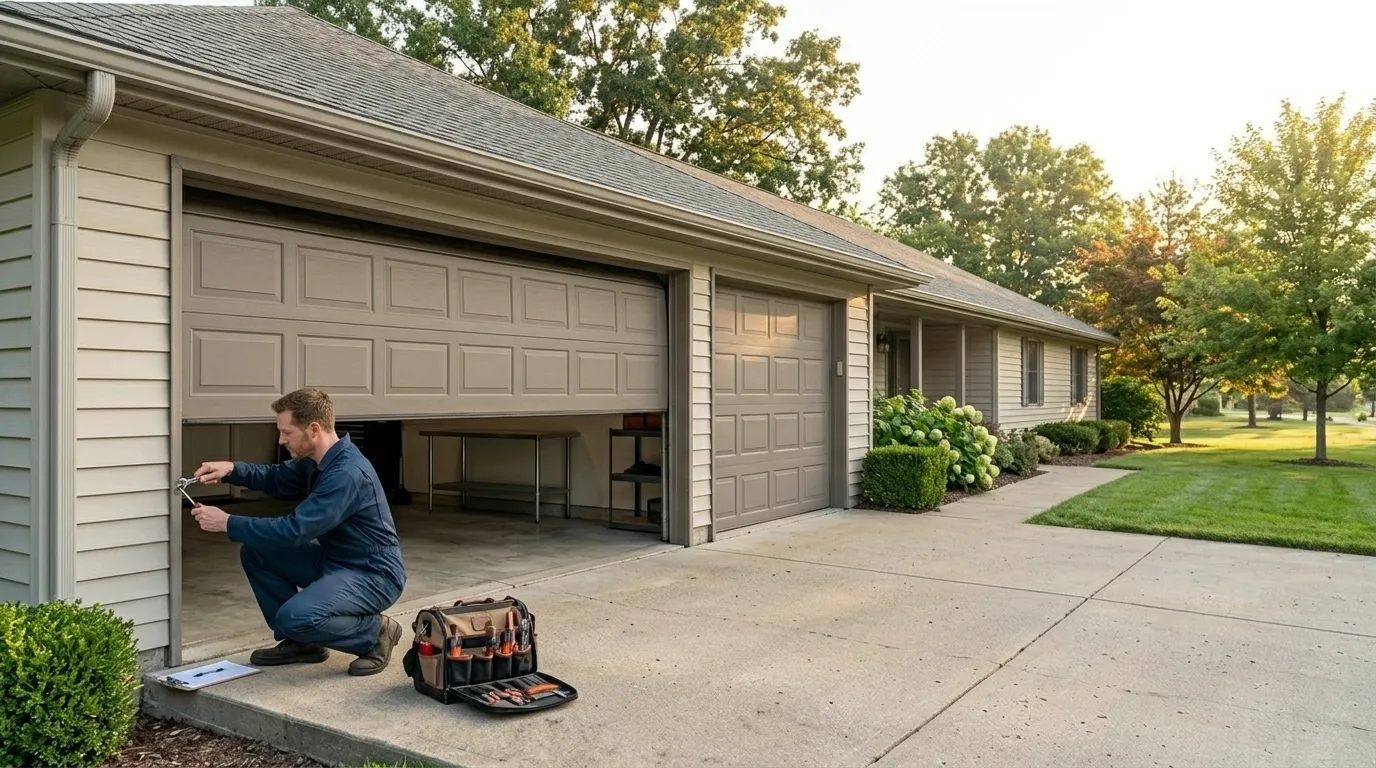
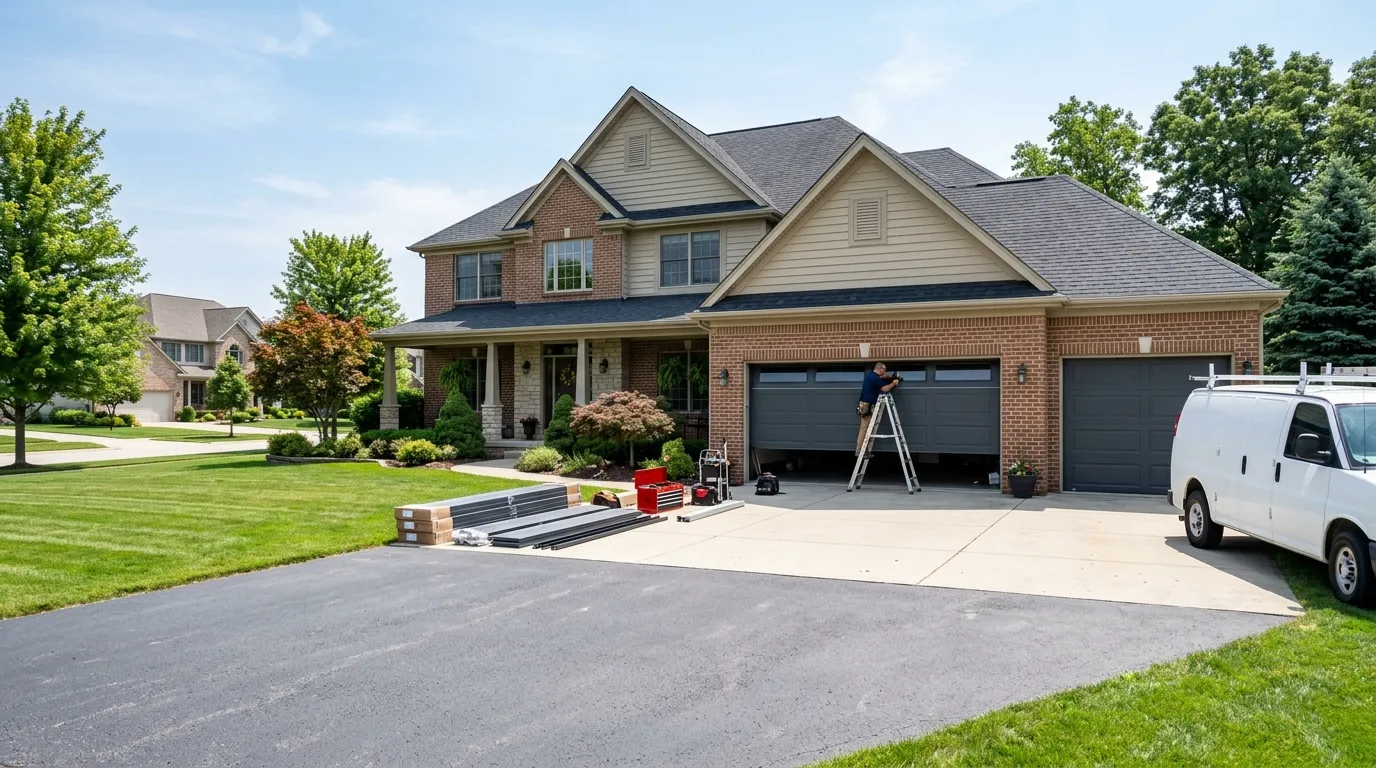
We pull the door panel by panel, check each roller and stem for wear, and replace the full set rather than mixing old and new - mismatched rollers wear at different rates and you're back to the same noise in a year. We check the track alignment at the same time, since a roller that's been grinding for months usually leaves score marks or a slight bow in the track it rode in. If the track's fine, it's a roller-only job. If it's not, we tell you before we touch anything else, and that becomes a separate conversation about track and hardware, not rollers.
Why It Happens Here
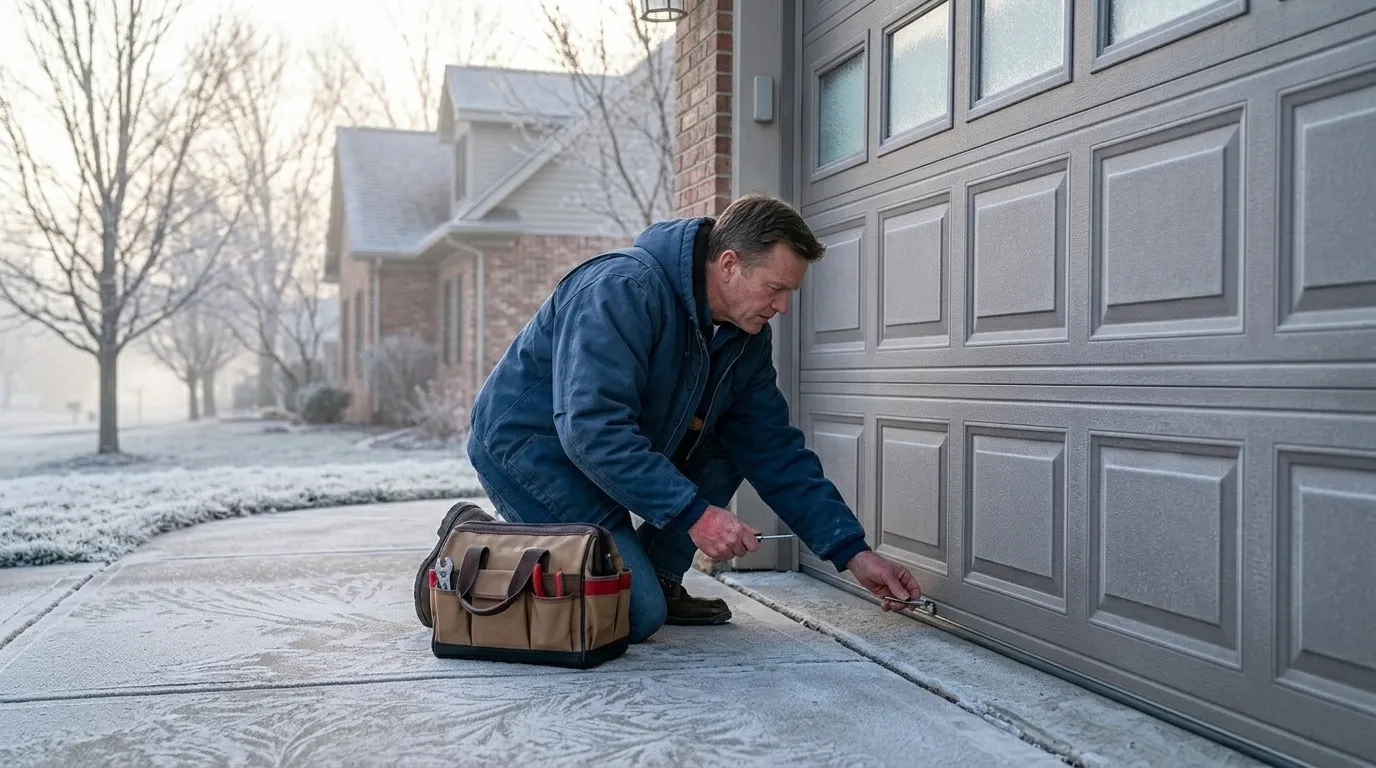
Windsor sits in a severe cold climate band, and cold is hard on nylon specifically. Plastic rollers that flex fine in July get stiff and brittle in a hard January, and stiff plastic under repeated load is what cracks instead of wearing evenly. Combine that with a housing stock centered on 2007 - old enough that original rollers are past due, young enough that most owners haven't had to think about it yet - and roller replacement is one of the most common calls we get from this town. We're covering Windsor from Loveland, about 9 miles out, so there's no local branch here, just a truck that comes when you call.