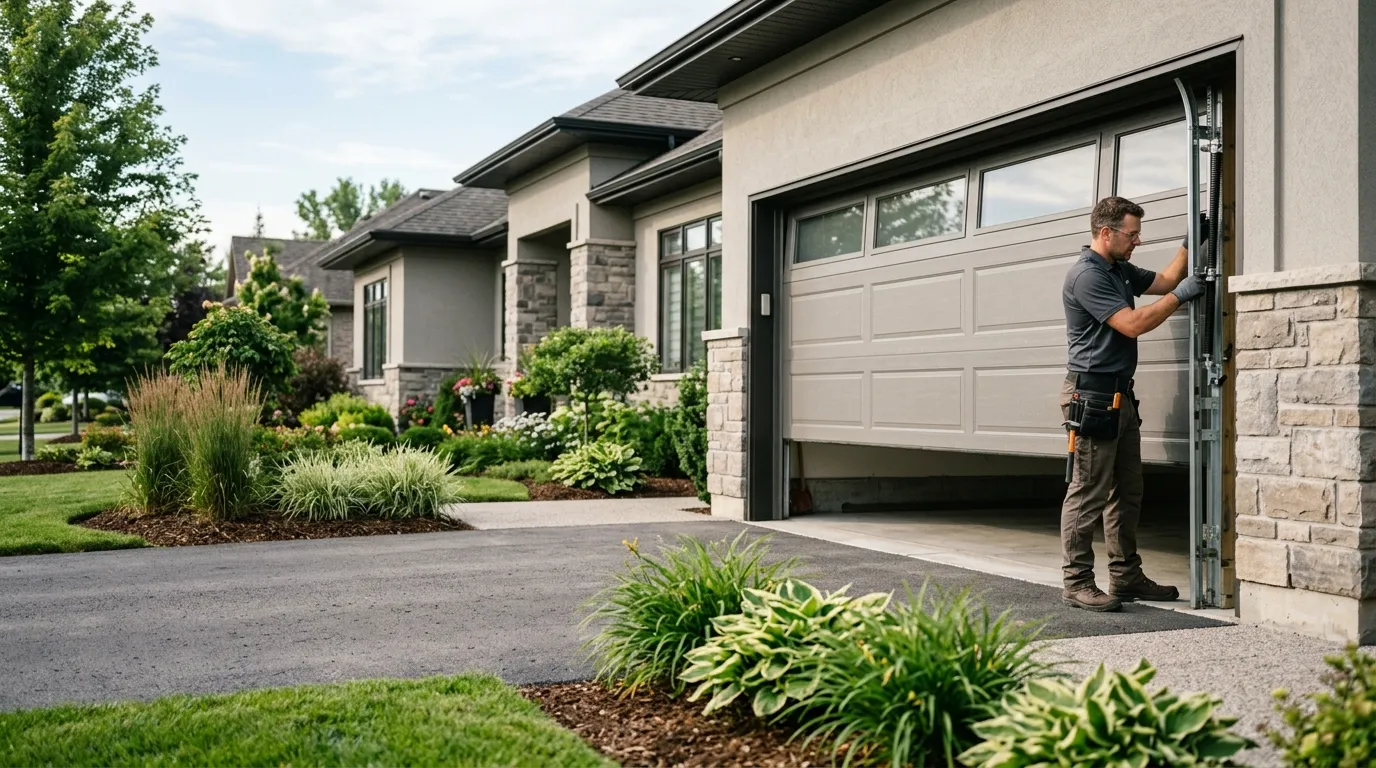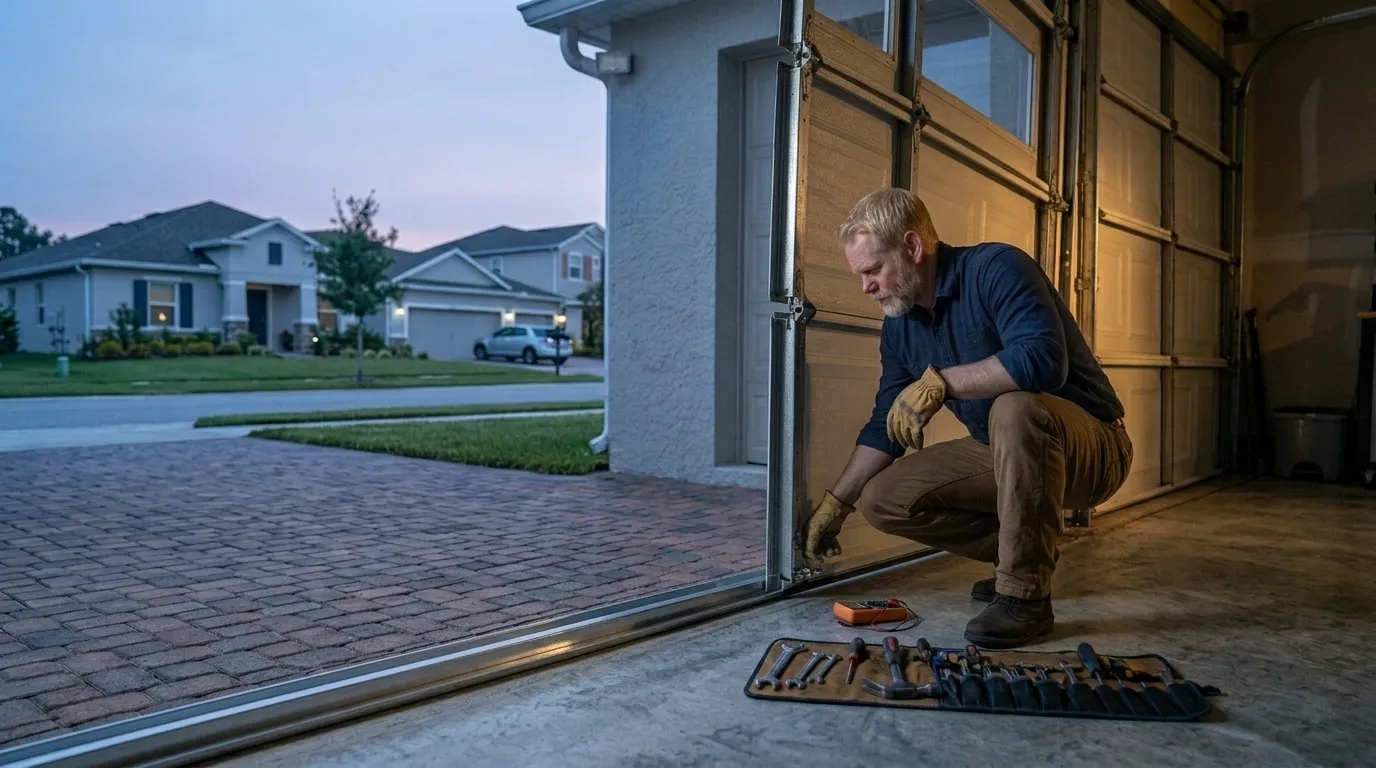
How to Book
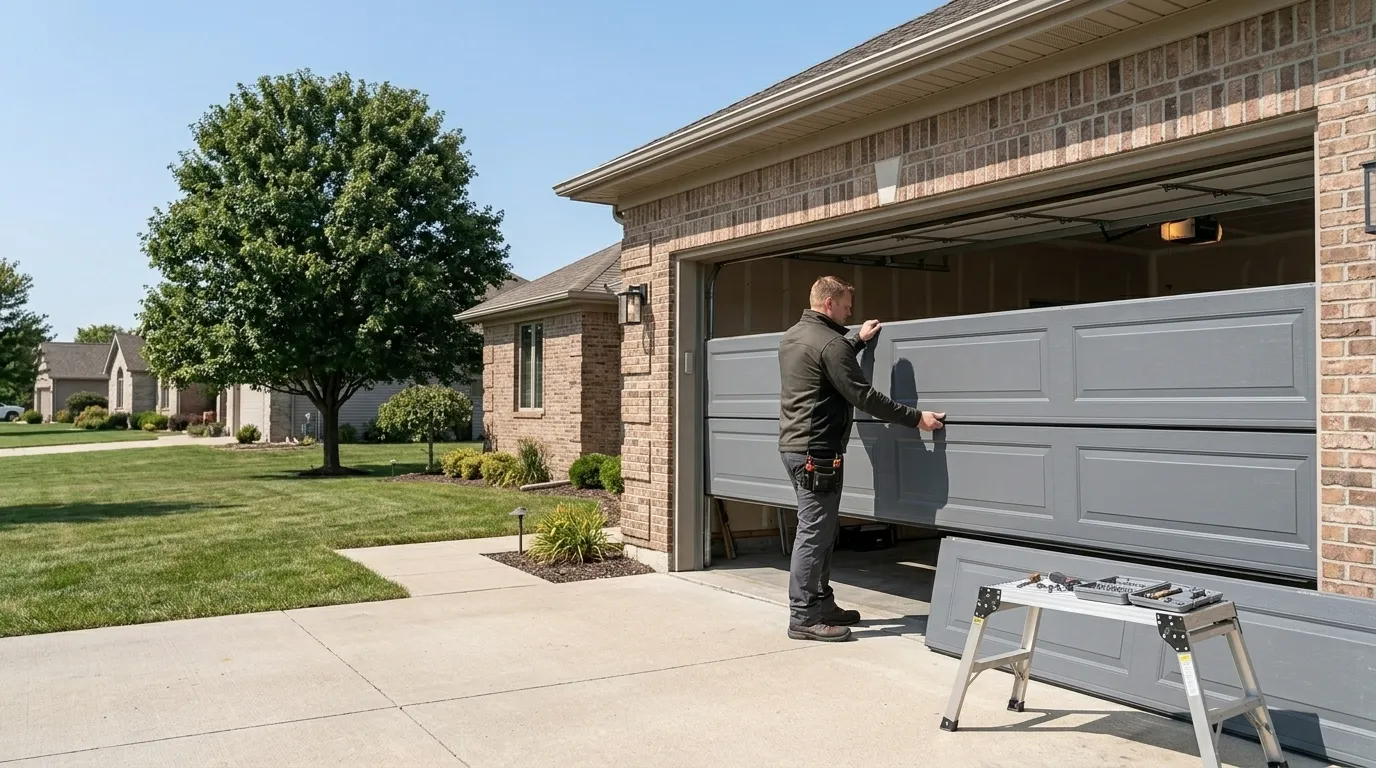
Call and tell us it's a broken spring - the door won't open, or it slammed down hard and now won't budge. That one detail changes what we load before we leave Loveland for the 19-mile drive out to Firestone. We'll ask the size of the door (single or double) and roughly how old the house is, since that tells us whether we're looking at standard torsion hardware from the 2000s building boom that shaped most of this town, or something older that needs a different spring wind and cone.
We don't run a Firestone location - we dispatch from Loveland, so there's a drive built into every visit here. We're upfront about that instead of pretending otherwise. If you can tell us what's on the door (a wind direction sticker, a model number, anything printed on the spring or the end bracket), it saves a trip back to the truck once we're on site.
Doing It Yourself
We'll say this plainly: don't try to replace a torsion spring yourself. A wound torsion spring holds enough force to break a wrist or worse, and the winding bars and vice grips that make it safe aren't things most garages have lying around. This isn't a warranty-voiding scare tactic - it's the actual reason garage door techs still have work.
What you can safely do is diagnose. If the door won't budge and you hear a bang before it happened, that's a spring. If the door drifts down slowly on its own, that's usually a spring losing tension, not the opener failing. Knowing which one you've got before you call saves time on the phone and helps us load the right spring size before the drive out from Loveland. Beyond that - don't cut a spring, don't remove the winding bars, don't disconnect the opener and try to lift the door manually if it's stuck. Call it in.
How We Fix It
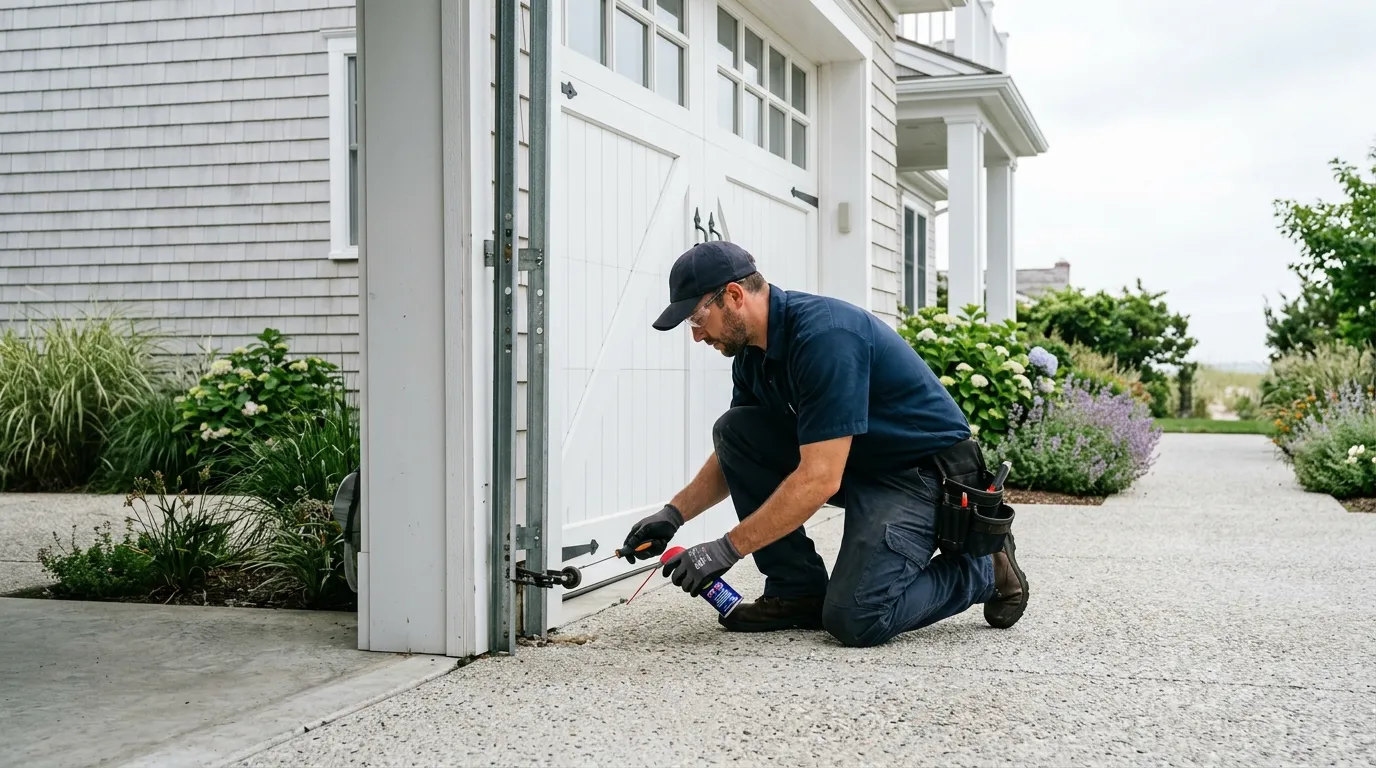
The job starts with unplugging the opener and locking the door in place, because you never work on a spring with the opener still able to engage. We back off the set screws on the broken spring's winding cone, remove both springs (if it's a double, both come off even if only one failed), and check the bearing plate and drums for wear while everything's off the shaft.
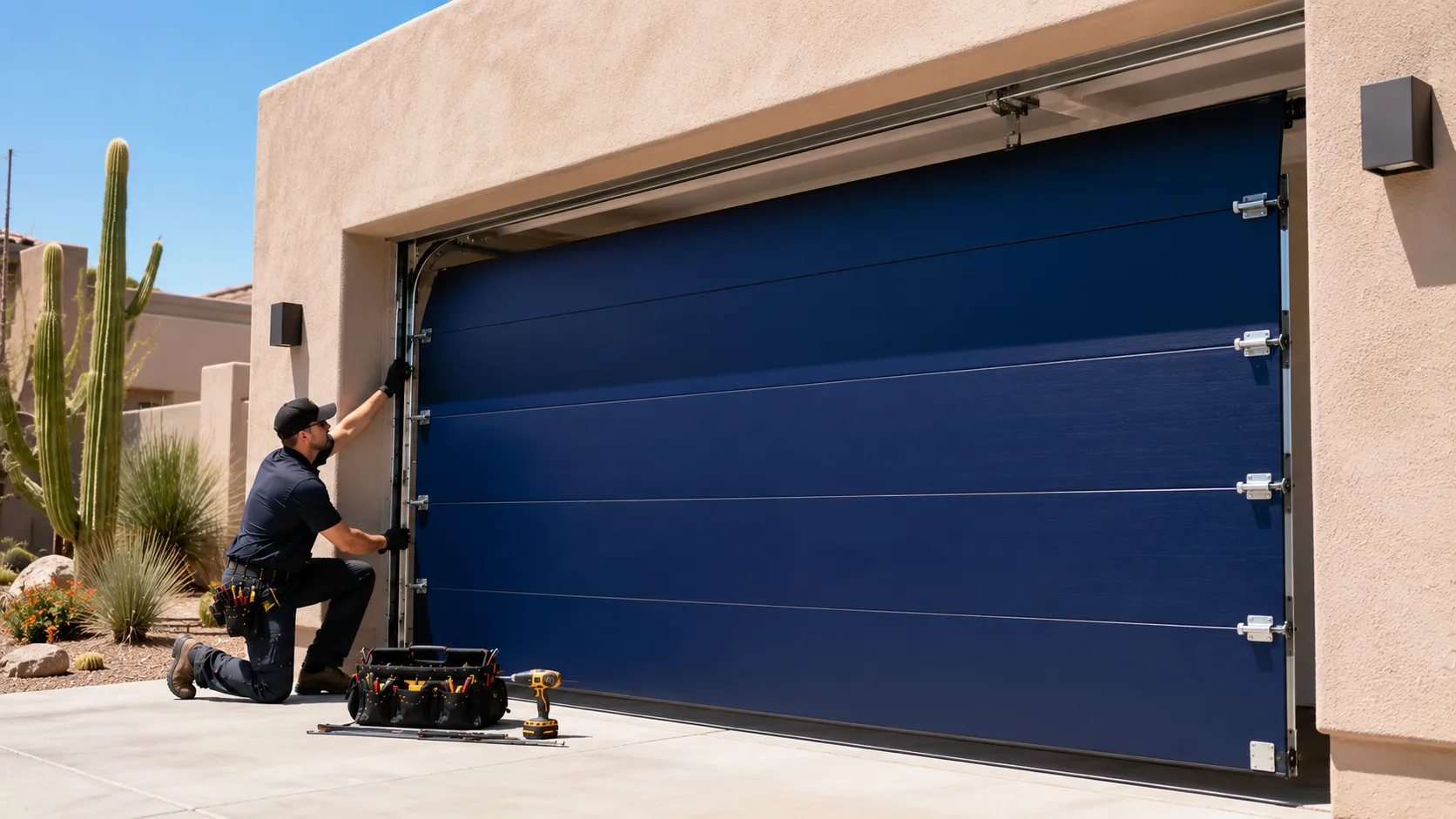
New torsion springs go on matched to the door's weight and the shaft they came off - correct wind, correct wire gauge, correct length. We wind them to the tension the door's height calls for, then run the door up and down by hand before ever plugging the opener back in, checking it balances and doesn't drift. Firestone's winters get cold enough that cold steel behaves a little differently under tension, so we account for that when setting final tension rather than just matching the old numbers exactly.