How to Book
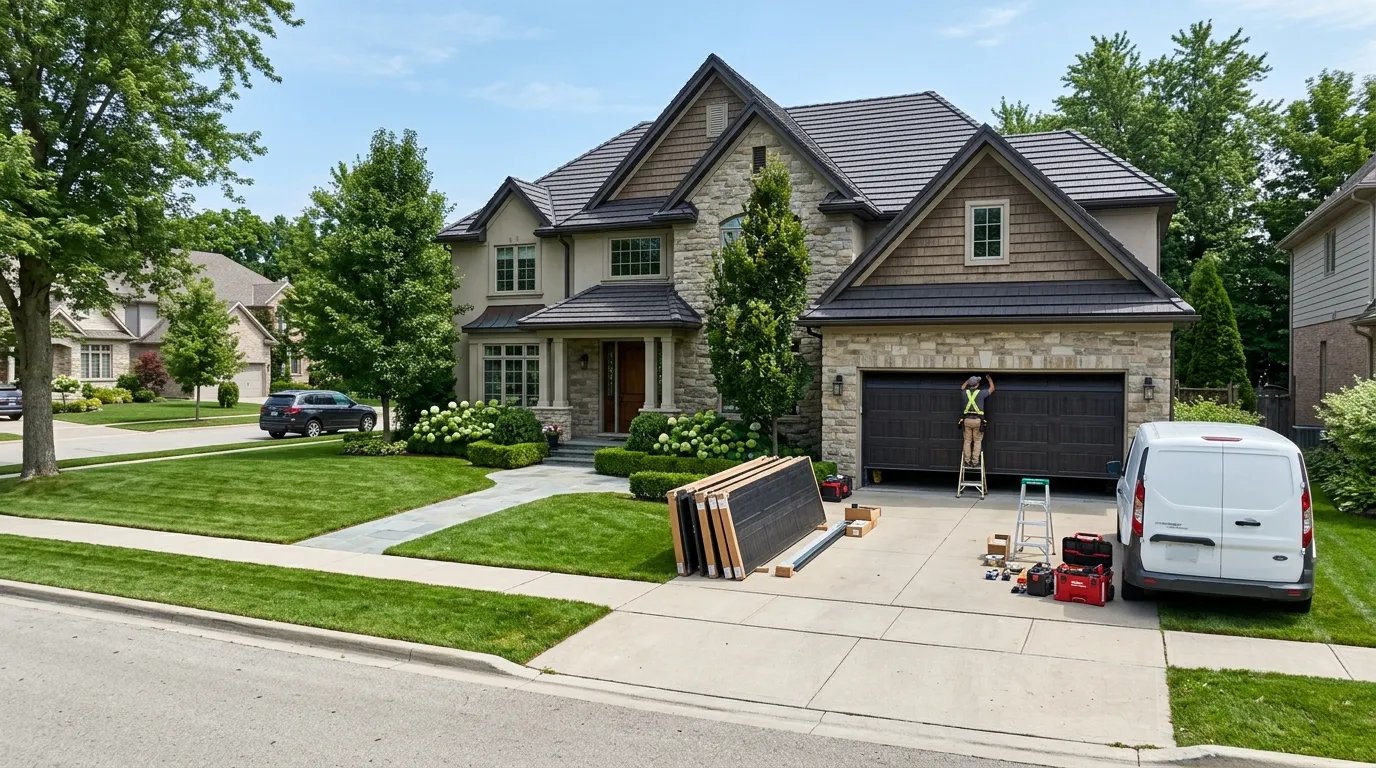
Call and tell us it's a Firestone address up front. Because the drive is 19 miles from our base, we plan routes by area rather than first-come order alone, so knowing the town lets us slot you against other calls headed the same direction instead of a separate trip.
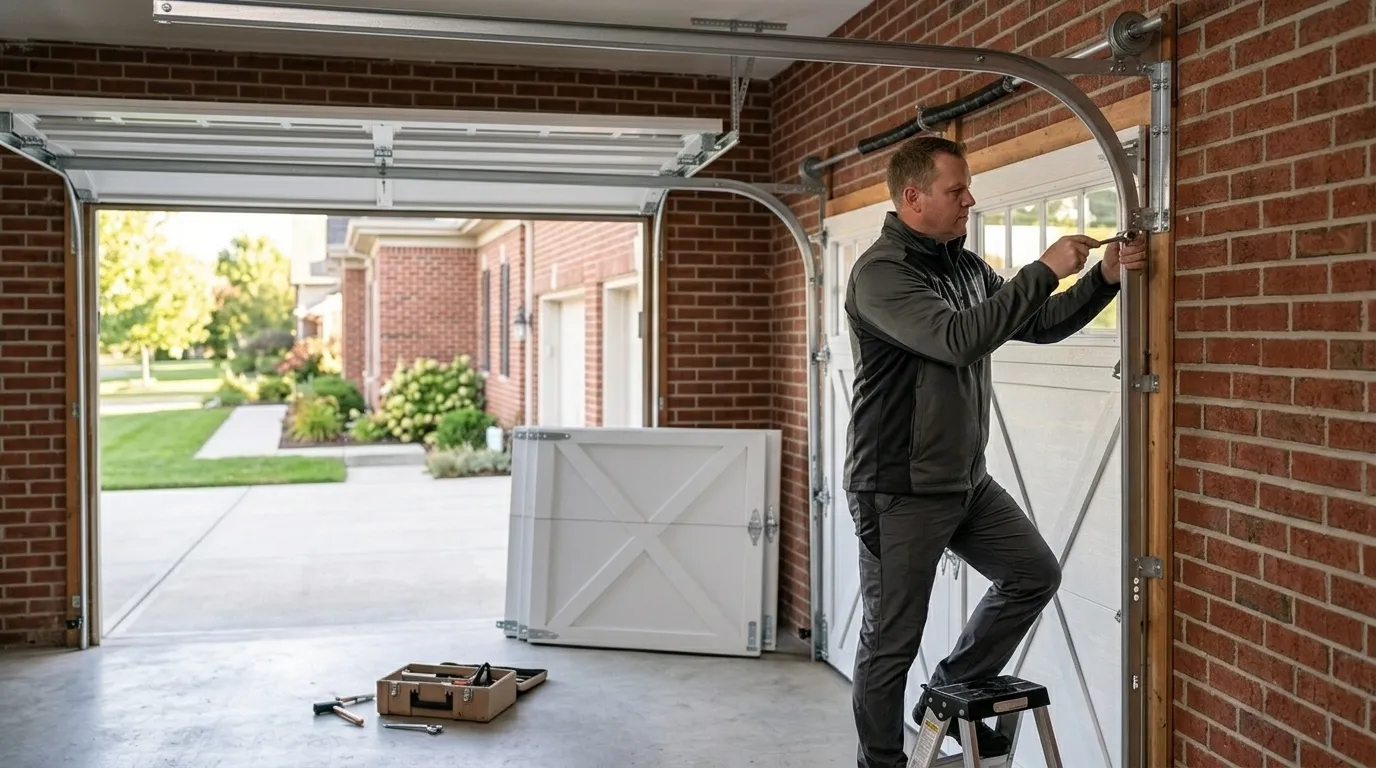
Have the door's approximate age or your home's build year handy if you know it. With most of Firestone built after 2007, that alone tells us a lot about what spring size and opener style you likely have before we even ask about the symptom. It's a newer mix of hardware than parts of the wider service area, where homes go back to the mid-1970s, and matching the right torsion spring or drive belt on the first trip out saves you a second wait.
If you're not sure what's wrong, describe what you hear and see, not just "it's broken." A grinding noise on the way up, a door that reverses before it closes, a spring that's visibly split in the middle of the coil, or a remote that stopped working from one side of the driveway but not the other. Details like that help us bring the correct part on the drive out instead of a guess.
Doing It Yourself
Some things on a Firestone garage door are safe to check yourself. If the opener won't respond, check the wall switch is still lit and that nothing's unplugged from the outlet in the ceiling. If the door won't close all the way, look at the safety sensors near the floor on each track. Newer builds like most of what's in this town have photo-eye sensors as standard, and a spider web or a nudged bracket is enough to trip them.
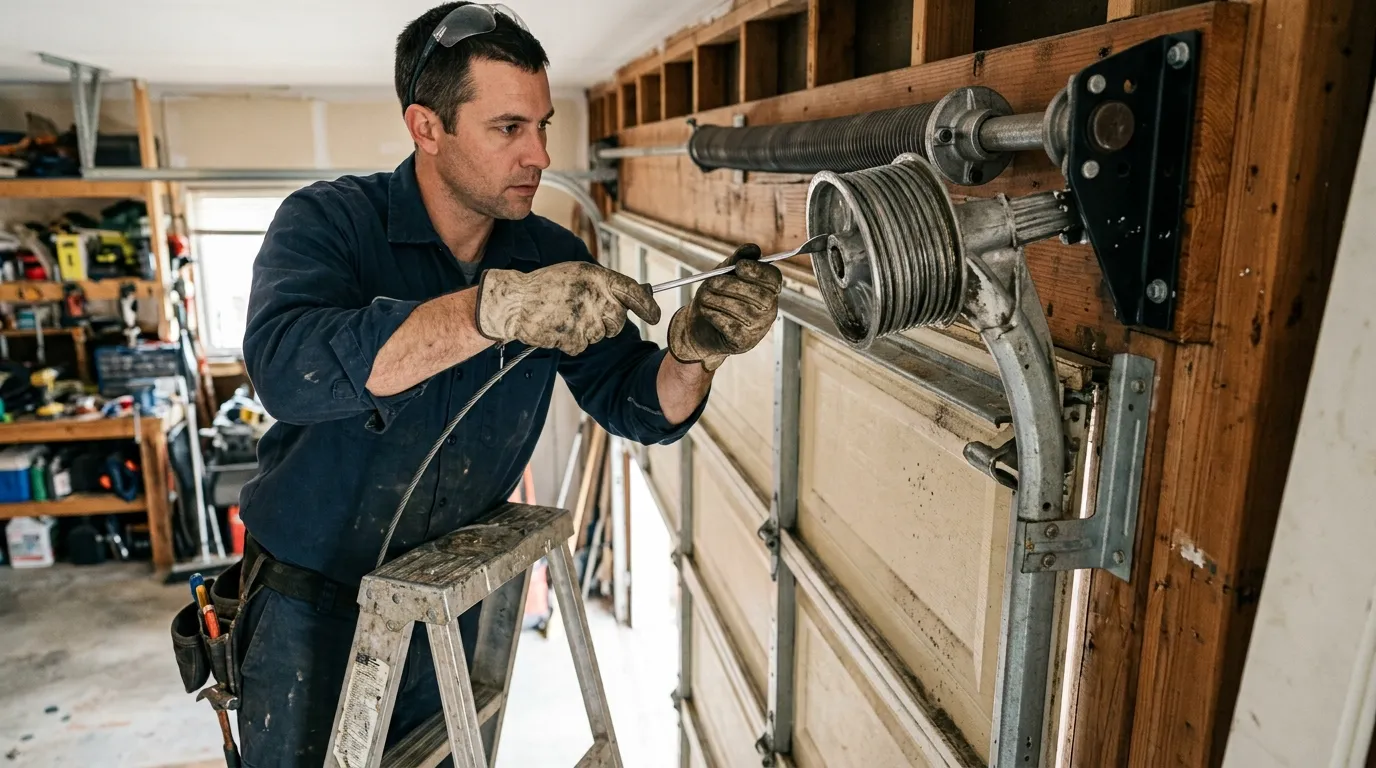
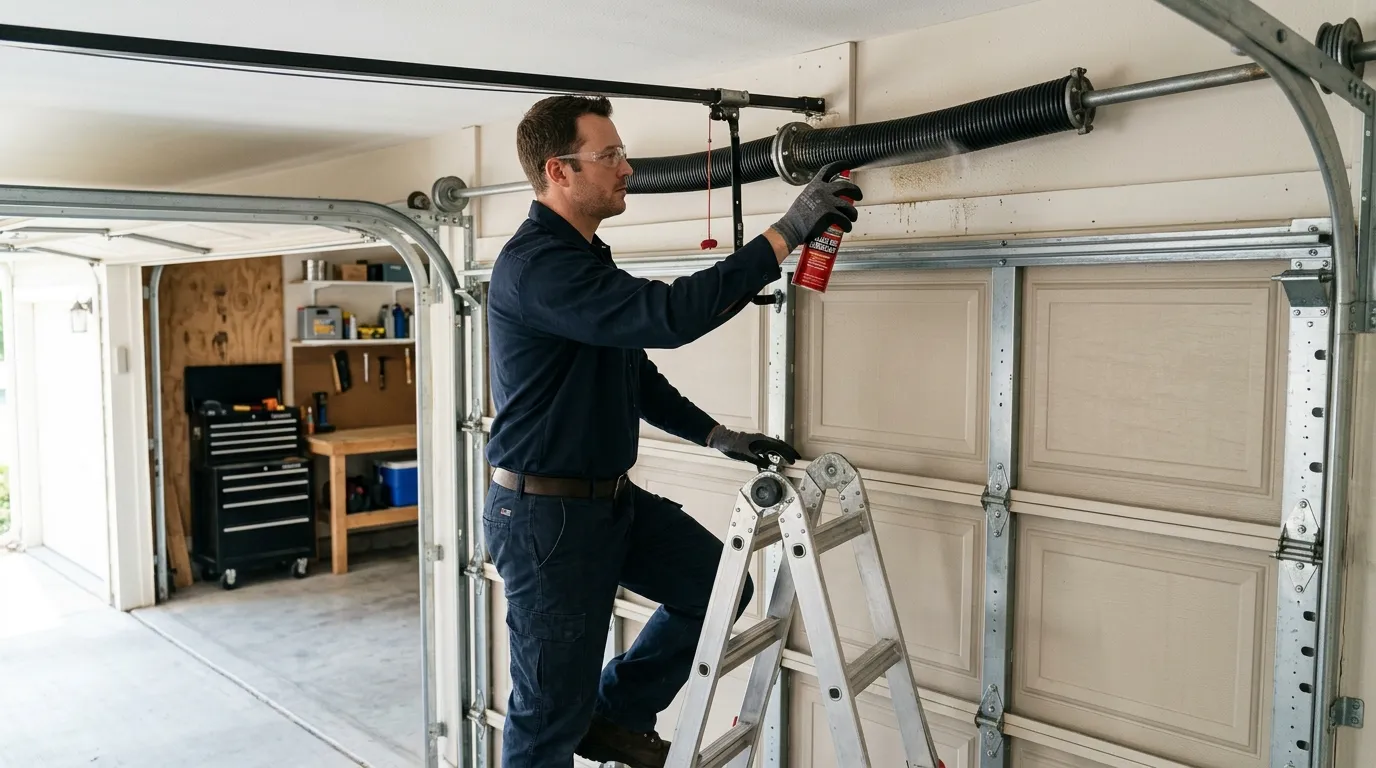
What you should not touch: the torsion spring itself. It's wound under real tension, and on the double-door widths common in newer construction here, that spring stores enough force to cause a serious injury if it lets go while you're working on it. Same goes for the cables running down to the bottom bracket. If a cable's frayed or off the drum, that's a call, not a fix.
One honest note: if your door is still within the builder's original warranty period, some manufacturers void that coverage if anyone other than a licensed tech has opened the spring system or opener housing. Check your paperwork before you start pulling anything apart, especially on a house built in the last decade or so.
How We Fix It
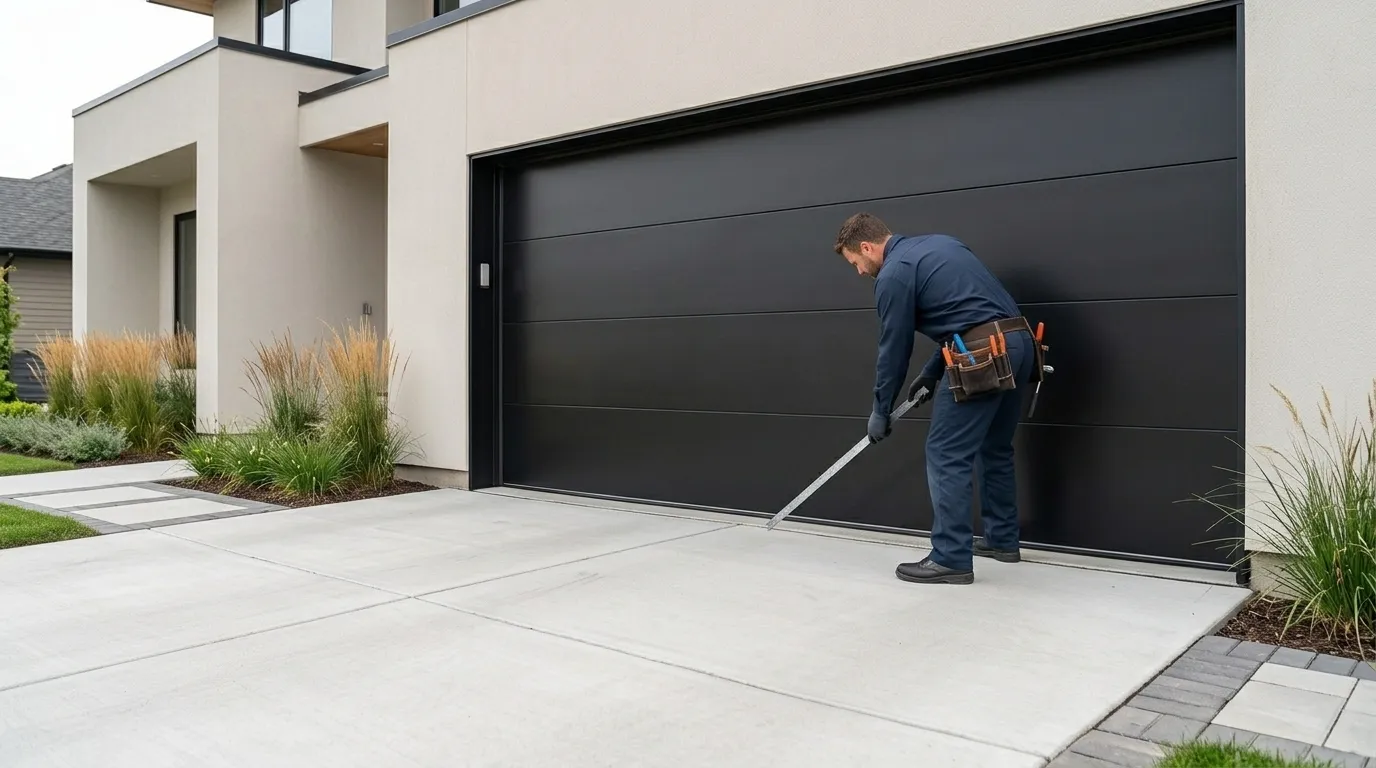
On a torsion spring job, we measure the wire gauge and coil length against your door's actual weight rather than assuming it matches the builder-standard spring, since even homes built in the same few years can carry slightly different door weights depending on insulation package. We wind to the correct cycle count for that spring, not a generic default.
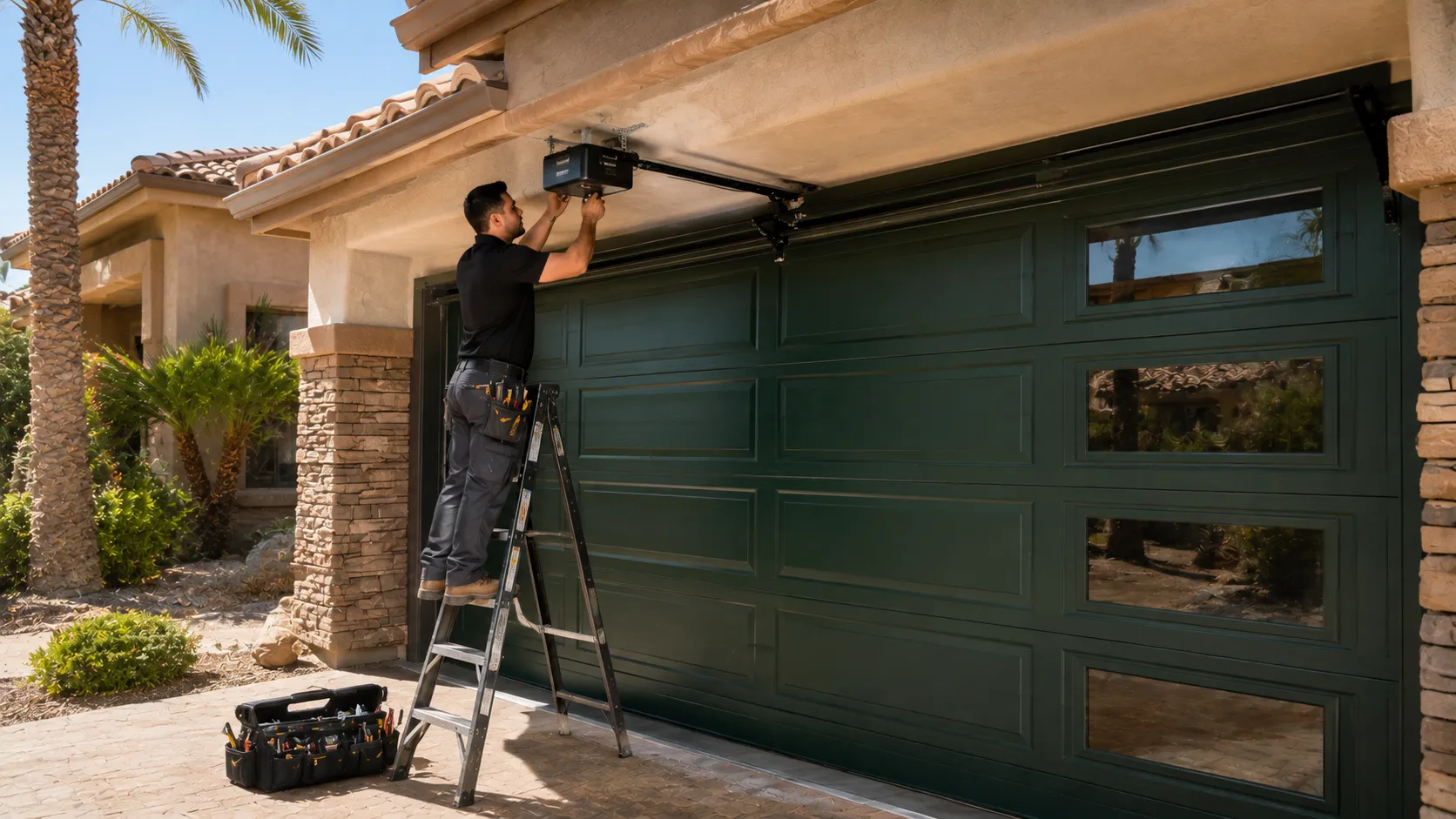
For opener issues, we start with the logic board and safety sensor alignment before assuming the motor's dead. Newer opener boards common in Firestone's post-2007 stock fail in patterns different from the decades-old chain-drive motors we see on older homes elsewhere in the area, and misdiagnosing that swaps a $40 board fix for an unnecessary opener replacement.
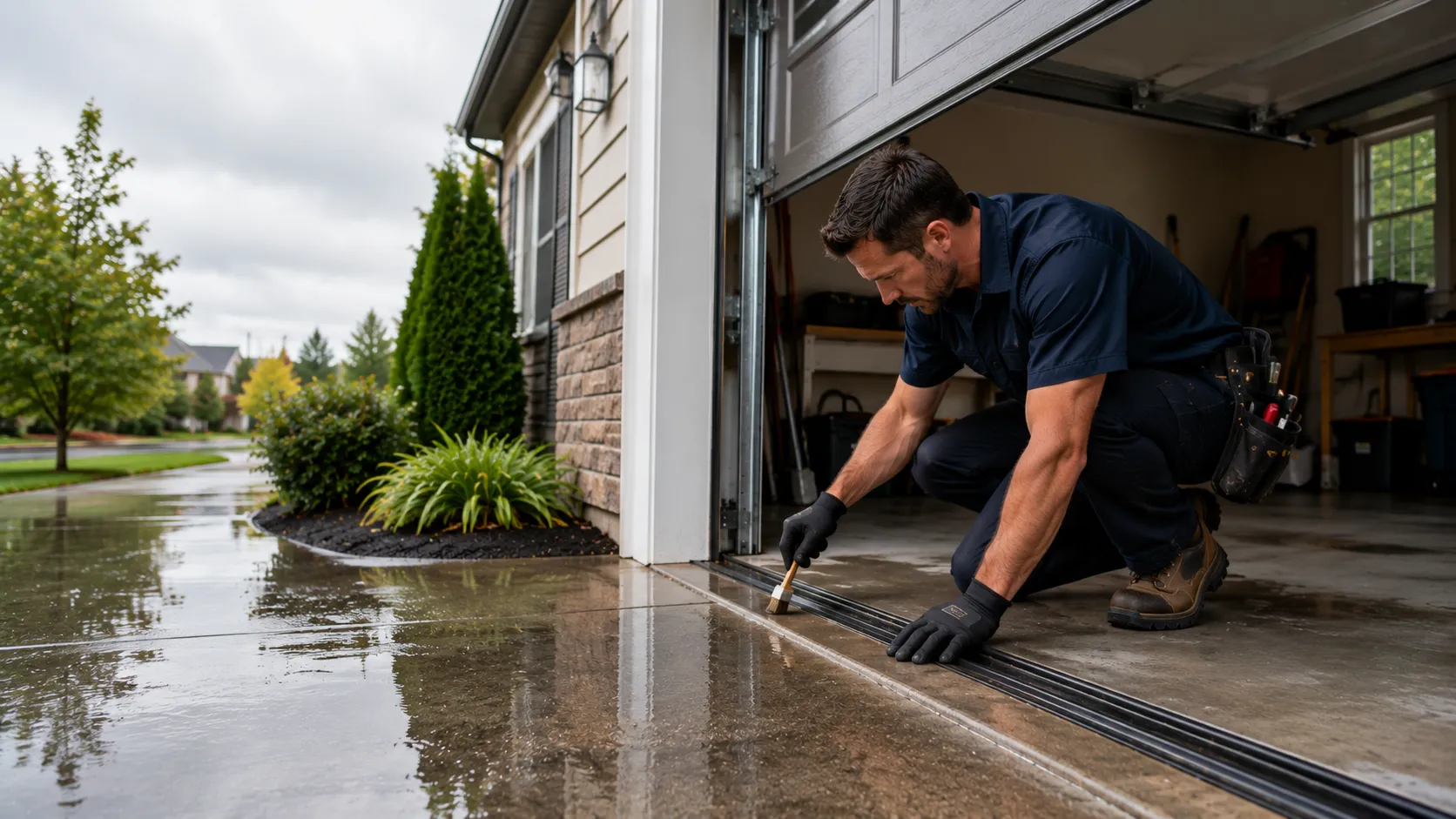
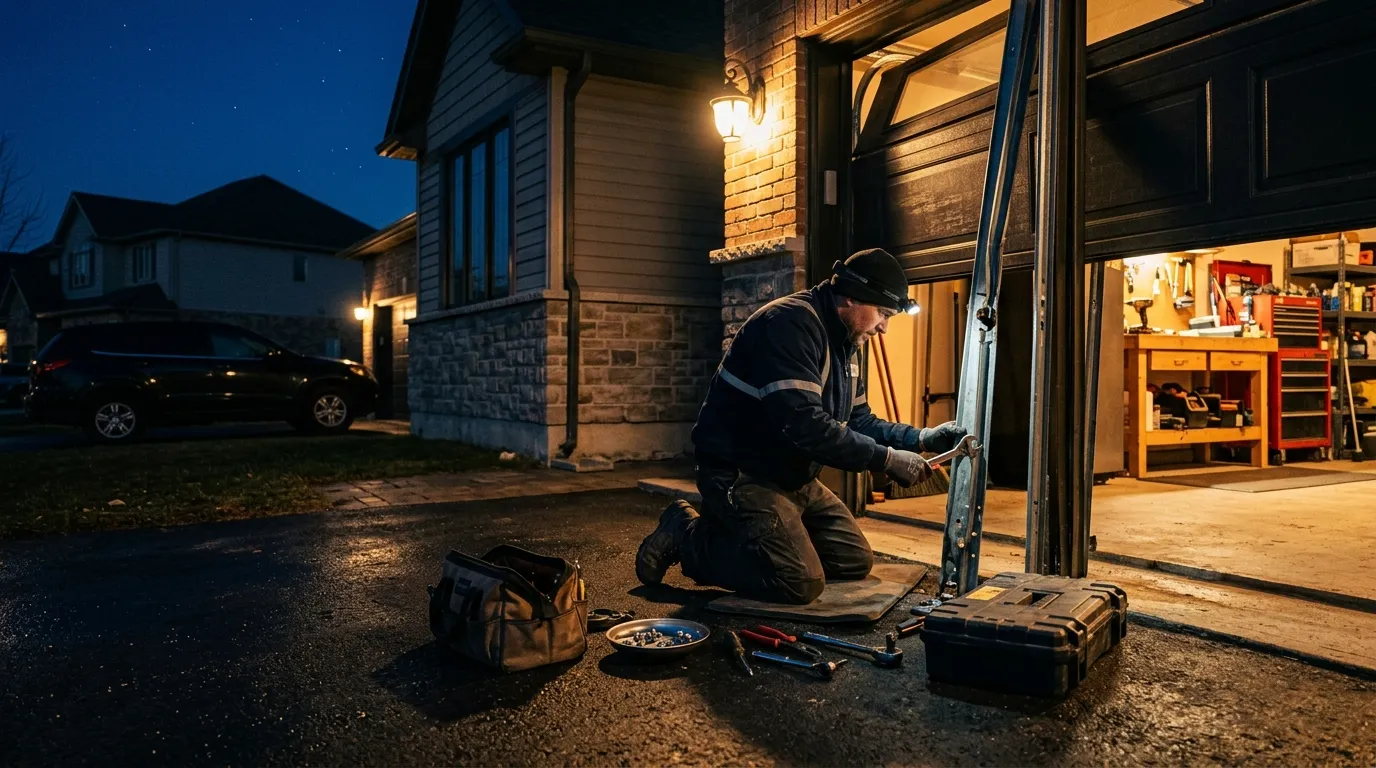
Track and roller repairs get checked against the frame square before we tighten anything back down, since a door that's binding on one side often means the track shifted, not that the rollers wore out.
We explain what failed and why before we start, and if a repair doesn't make sense against a straight replacement cost, we say so. Sometimes a 15-year-old spring set on an otherwise sound door is worth fixing. Sometimes the opener itself is the cheaper call. We'd rather tell you that up front than run the bill either direction.