How to Book
Call ahead and tell us what the door is doing: won't open, opens partway, opener runs but nothing moves, or a spring that's visibly separated. Because we're coming from Loveland, a clear description of the fault lets us load the right springs, cables, or opener parts before we leave, instead of making a second trip. If you know roughly when the house was built, that's useful too. Firestone's stock runs newer than a lot of our territory, and Loveland Garage Door Pros doesn't keep a branch or drop box in town, so the visit is scheduled from our Loveland base rather than dispatched on the spot. See our Firestone page for what we cover here, or check the Loveland service page if you want the full list of what we do across the area.
Doing It Yourself
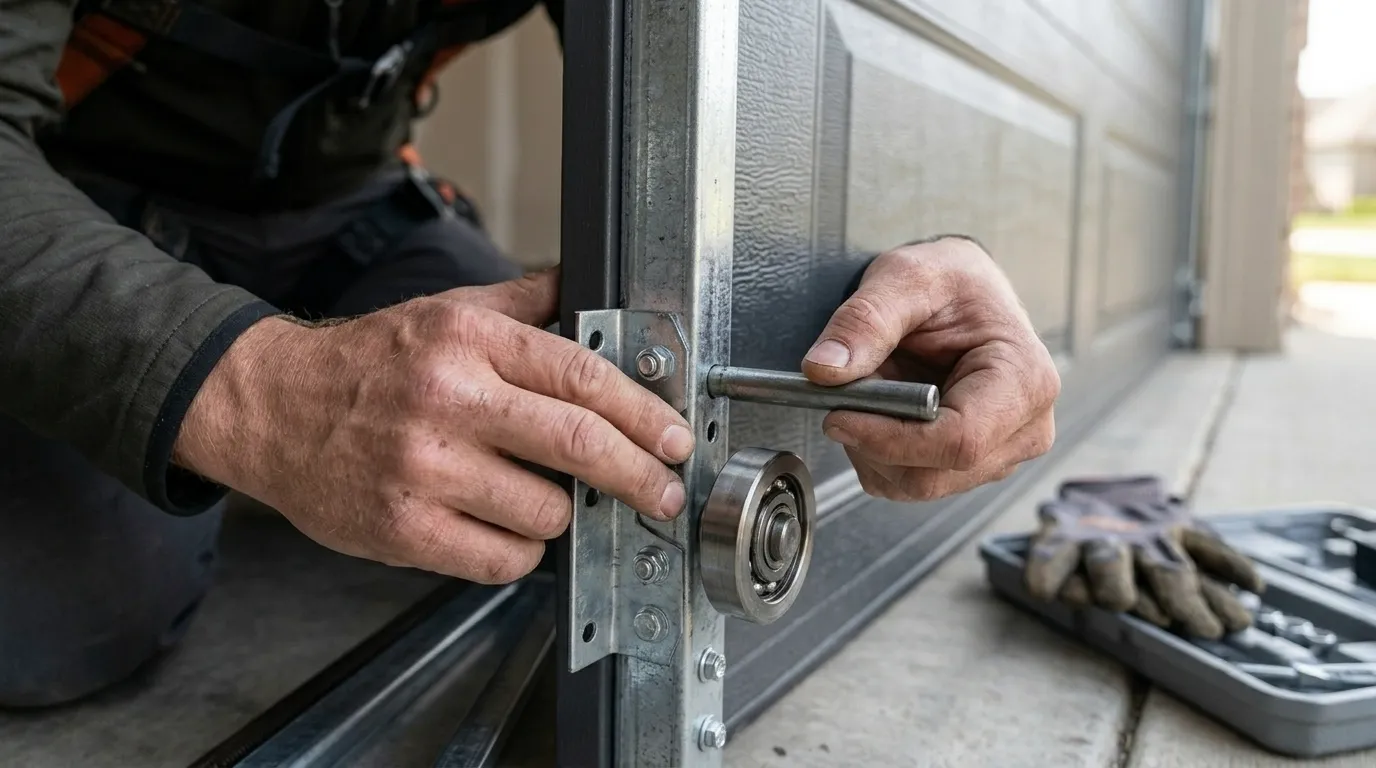
There's real work a homeowner can do safely on a 2000s-built door: replacing worn rollers, tightening loose hinge bolts, lubricating tracks, and swapping a photo-eye sensor that's knocked out of alignment. None of that requires touching a spring under tension. What we don't recommend is opening up the opener's control board or attempting a torsion spring adjustment yourself - that's the one honest limit we'll put on this page. Torsion springs store enough force to cause real injury, and on newer double-door setups the spring is sized to a heavier section than older single-panel doors, so guessing at the wind is worse than doing nothing. If the door is a newer standard steel model, which is most of what's in Firestone, a bent track from a car bump is often a same-visit fix once we're there - but it's still a job that needs the door taken off the track safely, not muscled back into place.
How We Fix It
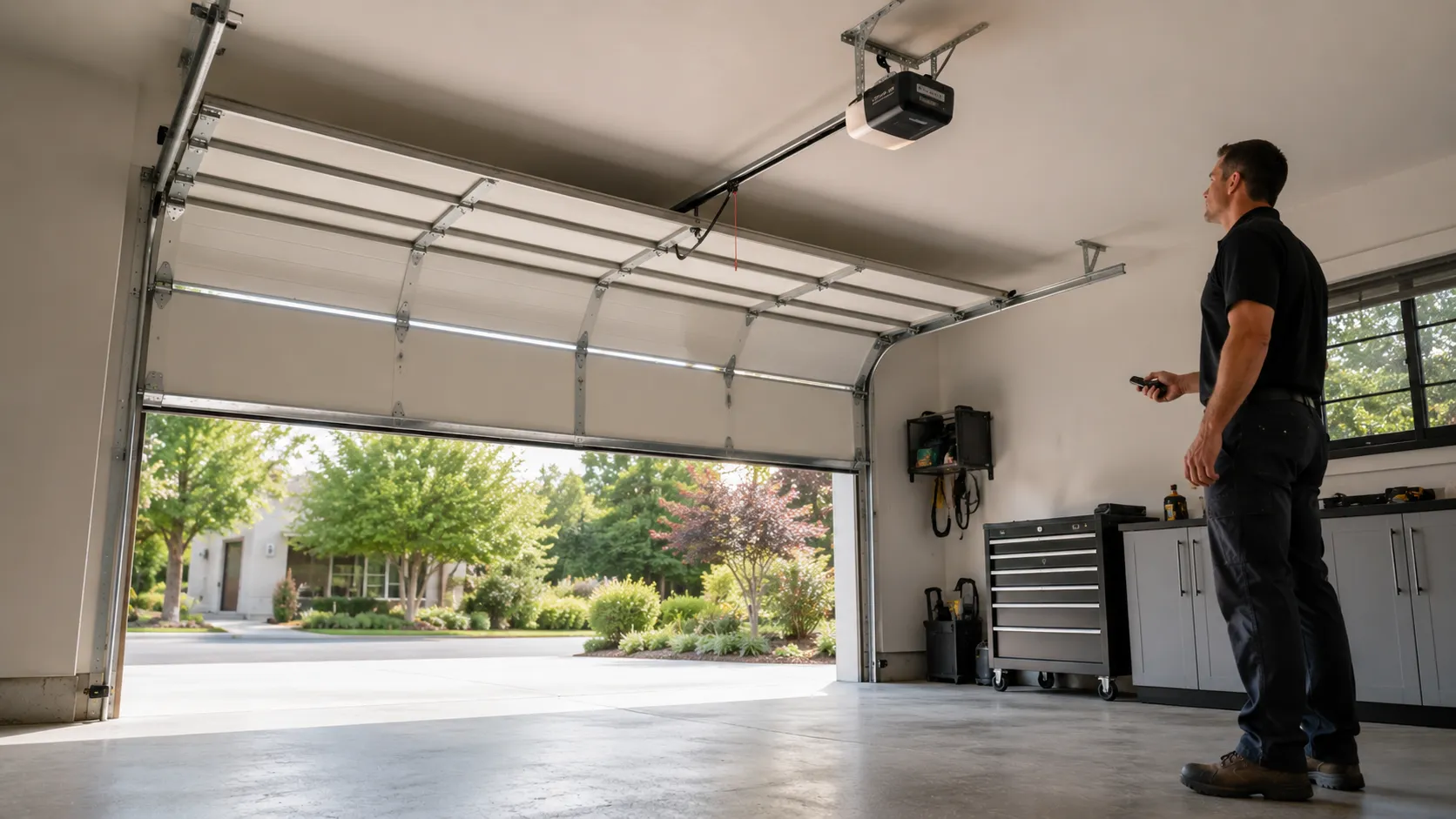
The fault pattern in Firestone leans toward openers and electronics more than structural door failure, which tracks with a median build year of 2007 - the doors themselves haven't had time to fatigue the way a 1970s one-piece door has. We check the opener's travel limits and force settings first, since misadjustment there causes more no-start calls than actual motor failure. If it's a spring, we match the wind and wire gauge to the section weight rather than assume a standard size, because household income here running higher than average often means larger, heavier insulated doors than the base models. Once the door is moving freely on the track and the opener's sensors are aligned, we test it through a full open-close cycle before calling the job done, not just a single try.