How to Book
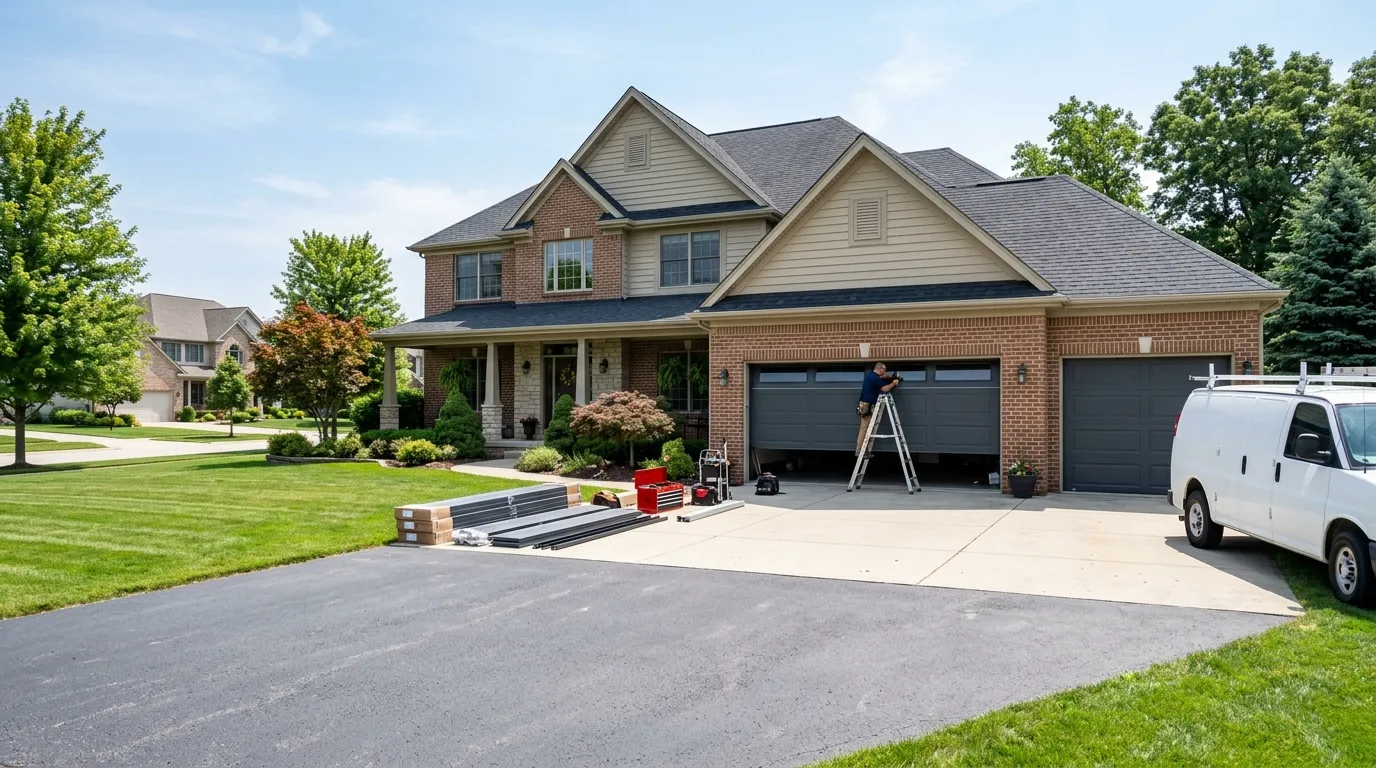
We work out of Loveland and cover Berthoud as part of the regular route - it's about 10 miles down, close enough that a repair call here isn't a special trip, it's just part of the day. Reach us through the Berthoud service page and tell us what the door is doing: won't open, opens crooked, makes a bang and stops, or the opener runs but the door doesn't move. That detail decides which truck stock we load before we head your way.
We don't run a branch or a depot in Berthoud itself, so we're not going to promise a same-hour arrival window - we'll give you a realistic one when you call, based on where the truck already is that day. If you're comparing this to what Loveland proper gets, the general repair page covers our full service area and standard scope; this page is specifically about what we see on Berthoud doors.
The Cost of This Job
We're not going to quote a number here that we can't stand behind sight unseen - a broken spring on a single door and a bent track on a double insulated door are two very different bills, and Berthoud's newer stock tends to run heavier insulated steel doors than the older single-layer doors you'll find in some of the neighboring towns, which changes both the parts and the labor.
What we can tell you is what drives the price on a call like this: whether it's a spring, a cable, or an opener board; whether the door is a single or a double; and whether the track or rollers took damage along with the original failure. Berthoud's median household income here runs a bit above the wider service area, and we see that reflected in the doors themselves - more double-car insulated units, fewer bare single-layer originals - which is worth mentioning because it's the insulated doors that tend to cost more to fix, not because a nicer street gets a different price from us. We give you the number before we start, not after.
Why It Happens Here
Berthoud sits in a cold-climate band with severe winter conditions, and that matters more here than in a lot of places because so much of the housing dates to right around 2008 - meaning the original torsion springs, weatherstripping, and opener electronics are all roughly the same age, all installed under the same building code, and all hitting the point in their service life where cold-weather cycling starts to matter.
A torsion spring is rated for a set number of open-close cycles, and every hard freeze adds strain the manufacturer's rating didn't fully account for - steel contracts, lubricant thickens, and the spring works harder to do the same lift. On a house built in 2008, that spring has had fifteen-plus winters of that. Add in that Berthoud's 4,495 households sit at a higher median income than the wider service area, which tends to mean larger, heavier insulated doors - more spring load per cycle, not less. We see a lot of first-time spring failures in this town cluster right around this age band, and it's not coincidence.
What Is on the Truck
For a town built out mostly in the 2000s, we load differently than we would for an older neighborhood. Torsion springs sized for insulated steel doors, since that's the dominant door type on houses from this era, rather than the lighter springs an older single-layer door would need. Standard photo-eye sensor pairs and replacement cable, since factory-original cable on a 15-year-old door is a common failure point right alongside the spring itself.
We also carry opener circuit boards and remote receivers, since 2000s-era openers are old enough now that boards fail on their own timeline, independent of anything mechanical going on with the door. What we don't load heavy for Berthoud is extension-spring hardware or the older wood-panel door parts - that's more a fit for some of the older housing stock elsewhere in the region, and stocking for it here would just be dead weight on the truck.